


As we predicted it would after oral argument, today the U.S. Supreme Court ruled in the property owner’s favor in Marvin M. Brandt Revocable Trust v. United States, No.12-1173 (Mar. 10, 2014). Chief Justice Roberts wrote for the entire Court less Justice Sotomayor, who filed a solo dissent. SCOUTSblog posts a summary of the opinon here (“Victory – and money – for landowners“). 

As you might recall, the issue in the case was whether the federal government retained an “implied reversionary interest” when it issued these patents, or whether these grants were subject only to a railroad easement. The difference is that easements may be extinguished, while reversionary interests cannot. In this case, the railway abandoned its use, after which the federal government instituted a quiet title action in federal court asserting it owned the right of way, and that it did not revert to the property
Continue Reading SCOTUS Benchslap: Railroad Right Of Way Is An Easement, Just Like We Said A Long Time Ago

Here’s another one we’ve been meaning to post for a while. In Ex parte Alabama Dep’t of Transportation, No.1101439 (Dec. 6, 2013), the Alabama Supreme Court concluded that inverse condemnation is the right cause of action when the government causes contaminated water to enter an owner’s property, resulting in (alleged) damage. 

The plaintiff alleged that ALDOT used a chemical solvent or degreaser that was poured into sewers and eventually found its way into the groundwater which it pumped onto the plaintiff’s property. It sued ALDOT and Cooper (ALDOT’s director) for trespass and inverse condemnation, and later added a claim for fraud and bad faith. The owner asserted that if ALDOT wanted to use its property as a storage for its contaminated water, it should have condemned a drainage easement first. The defendants asserted they were immune, and when the trial court refused to dismiss the case, they sought a writ

Continue Reading Alabama: Recovering Compensation When The Govt Floods Your Land With Contaminated Water Is Just What Inverse Condemnation Is For

Here’s more on that bill which we noted the other day that is making its way through the Florida legislature. The bill would prohibit Florida municipal and local governments from inserting a condition in a development permit unless the exaction is related to the “direct impact of a proposed development.”

In “Bills would expand on U.S. Supreme Court ruling in Florida property ‘takings’ case,” in the Florida Current, Bruce Richie writes that “HB 1077 and SB 1310 appear to have backing from property rights supporters following a U.S. Supreme Court decision last year involving the St. Johns River Water Management District.” He was also kind enough to seek out our input:

Robert H. Thomas, a lawyer in Hawaii who represents the Pacific Legal Foundation in cases there, said having a state law in place provides another layer of protection beyond the U.S. Supreme Court decision. He said some legal

Continue Reading More On Florida’s Post-Koontz Legislation

No, not that Madison County, but rather Madison County, Montana

In Public Lands Access Ass’n v. Bd of County Commissioners of Madison County, No. DA 12-0312 (Jan. 16, 2014), the Montana Supreme Court held that a riparian owner’s efforts to fence his land to keep the public from crossing it and accessing the Ruby River were not effective. Montana has a statute that allows public access to and use of streams up to the high water mark, and the property owner asserted that the lower court’s ruling allowing access across his land and use of the River under the statute was an unconstitutional taking. The Supreme Court rejected this argument. As the court’s synopsis stated:

The Court also explained that Kennedy’s takings argument is precluded by well-settled law in Montana. Montana’s well-settled law provides that the State owns all waters in trust for the people; that a

Continue Reading The Fences Of Madison County: No Judicial Taking

We were all set to write up the latest case from the Federal Circuit, Banks v. United States, No. 12-5067 (Jan. 24, 2014), when our colleagues at Pacific Legal Foundation beat us to it with this post, “Federal Circuit revives Lake Michigan takings case.”

The Federal Circuit agreed, holding that the property owners’ awareness of that some erosion was occurring before 1952 was not sufficient for their takings claims to accrue. Indeed, the Court held that it was “unreasonable” for the trial court to “assume that a property owner should have been able to discern the difference between the naturally occurring erosion and that caused by the jetties.” The Court sent the Banks case back for a determination on its merits.

Read it if statutes of limitations are your thing. 

Banks v. United States, No. 12-5067 (Fed. Cir. Jan. 24, 2014)

Continue Reading Fed Cir: Takings Claim Did Not Accrue Until Property Owner Had Reason To Notice Permanent Damage

Coy Koontz, Jr., the prevailing property owner in Koontz v. St. Johns Water Management District, No. 11-1147 (June 25, 2013) joined our Pacific Legal Foundation colleague Jim Burling for an interview on Fox and Friends.

Kudos to Jim and Mr. Koontz for getting down to the studio in the wee hours of the morning — we shared dinner last night (Mr. Koontz has joined us to accept the 2014 Crystal Eagle award from Owners’ Counsel of America on Saturday), and even after all that a New Orleans meal involves, they were able to drag themselves to the studio and look remarkably fresh. Good work, guys.Continue Reading Coy Koontz, Prevailing Property Owner In SCOTUS Victory, Interviewed

DSCF1604

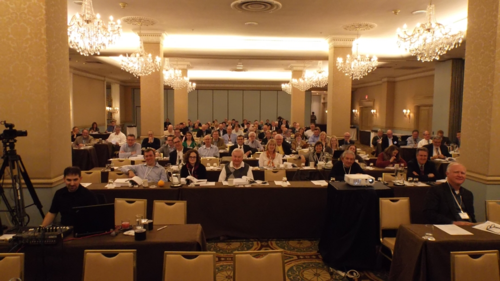
This morning, I joined my Owners’ Counsel colleagues Leslie Fields and Joe Waldo (the programming co-chairs), and more than 100 fellow eminent domain experts in New Orleans under the auspices of ALI-CLE at our annual gathering for the start of 2 1/2 days of legal education. 

Joe and Leslie asked me to join Professor James Ely to speak about “The Full and Perfect Equivalent for Just Compensation: The Historical Context and Practice.” Professor Ely led us off with a crash history of just compensation, starting with the Magna Carta and where we’ve been, and then handing it off to me for the “where we are and where we may be going” segment.

Just to prove to you all that while in New Orleans, I really did show up and not get distracted by the many (many) distractions that this city can offer, the above is a

Continue Reading A Dispatch From The ALI-CLE Eminent Domain Conference (With Links)

Next week, we’ll be in New Orleans for the 2014 edition of the ALI-CLE Eminent Domain program, now in its 31st year. 

As usual, my Owners’ Counsel colleagues Leslie Fields and Joe Waldo (the programming co-chairs) have put together a fantastic 2.5 day of programming, taught by expert faculty.  At 11:00 a.m. on the first day of the program, I will be joining Professor James Ely to speak about “The Full and Perfect Equivalent for Just Compensation: The Historical Context and Practice.” 

Should be fun. If you are not joining us in-person, ALI-CLE is producing it as a live webcast, and will make the coursebook and video and audio available for later listening or viewing. 

More details here, or download the brochure here, or below. 

31st Annual Eminent Domain and Land Valuation Litigation, ALI-CLE Program (CV023) (Jan. 23-25, 2014) New Or…

Continue Reading 31st Annual ALI-CLE Eminent Domain And Land Valuation Litigation (New Orleans)

In Powell v. County of Humboldt, No. A137238 (Jan. 16, 2014), the California Court of Appeal held the County’s demand that landowners who sought an after-the-fact building permit for a carport and porch for their mobile home dedicate an overflight easement for the nearby Eureka airport did not run afoul of NollanDolanKoontz

The court concluded that the overflight easement did not consitute a per se physical taking of the Powell’s property, and thus they did not meet that part of the NDK standard which prohibits the conditioning of a permit on the surrender of the right to compensation for a taking. Here, the court held, the Powells did not show that the easement was a taking. See slip op. at 15. Although property owners generally have airspace rights, there is no right to exclude aircraft from the “navigable airspace above their property in accordance

Continue Reading Cal App: County Can Condition Building Permit On Landowner Allowing Aircraft Overflight Easement

Here’s the first of two amicus briefs filed in support of the petitioner in the judicial takings case we mentioned last week.

This brief, filed by the New England Legal Foundation, the Cato Institute, the National Federation of Independent Businesses, and the Southeastern Legal Foundation, urges the Court to take the case, arguing that the Connecticut legislature’s raiding of the bottle fund is a “classic case” of the type of burden-shifting that Armstrong tells us is a taking.  The judicial takings problem arose because in order to uphold the legislative action, the Connecticut Supreme Court had to blow by established property rights:

Amici’s interest in this case arises out of their commitment to the protection of private property rights and economic freedom. The case involves Connecticut’s assertion of the power to take private property (i.e., targeted funds of money) for public use without compensation, in violation of the U.S. Constitution. 

In the midst of

Continue Reading Amici Brief In Judicial Takings Case