6a00d83451707369e20240a4699139200c-800wi

Check out these two amici briefs, just filed in a case we’ve been following, about what a property owner who is awarded just compensation in a state court eminent domain lawsuit is supposed to do if the local government that is ordered to pay the just compensation judgment … doesn’t. 

The property owner sued the local government — a Louisiana Port District — in U.S. District Court, alleging a violation of 42 U.S.C. § 1983. That court dismissed for failure to state a claim. The property owner appealed to the Fifth Circuit. 

Several amici have joined together to file two briefs in support of the property owner: 

The IJ brief focuses on the long-standing requirement that just
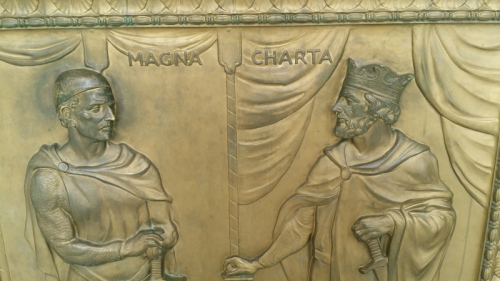
Continue Reading Amici Briefs: What Do You Do With A Recalcitrant Condemnor Who Won’t Pay The Judgment? Magna Carta ‘Em!

W Su cover page

Be sure to download and read this article, recently published in the Virginia Law Review by legal scholar Wanling Su with the deceptively simple title, “What is Just Compensation?

The article delves into the history of ad quod damnum and concludes that “just” compensation means a jury must determine compensation. That’s an issue that we’ve addressed here before, but the Supreme Court has declined to decide

Here’s the abstract:

The Supreme Court has held that “[t]he word ‘just’ in [‘just compensation’] . . . evokes ideas of ‘fairness.’” But the Court has not been able to discern how it ensures fairness. Scholars have responded with a number of novel policy proposals designed to assess a fairer compensation in takings.

This Article approaches the ambiguity as a problem of history. It traces the history of the “just compensation” clause to the English writ of ad quod

Continue Reading New Must-Read Article: “What is Just Compensation?” (Wanling Su, Virginia L. Rev.)

You all know the movie trope of the good guy setting off an explosion and then coolly turning and (in slow-motion) walking away framed by the blast (so cleverly parodied above)? Well, here’s the judicial equivalent.

In UGI Sunbury LLC v. 1.75 Acres, No. 18-3126 (Feb. 11, 2020), the U.S. Court of Appeals concluded that in a bench trial to determine valuation for the taking of property for a pipeline easement under the Natural Gas Act, an expert who opined on behalf of the property owner that the proximity of a pipeline to the remainder property resulted in “stigma damages,” should not have been allowed to testify about this “damaged goods” theory. The district court abused its “wide discretion” under Federal Rules of Evidence 702 and Daubert by allowing the testimony. 

Rather than paraphrase the Third Circuit’s reasons for reaching this conclusion that the expert’s testimony was “speculative and subjective,”

Continue Reading Cool Courts Don’t Look At Explosions: Third Circuit Rejects Stigma Damage Theory For Adjacent Gas Pipelines

IMG_20200123_170539

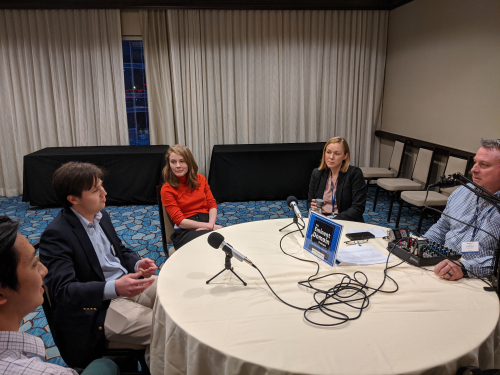
L to R: Benming Zhang, Andrew Parslow, Kelsey Abell,
Kacie Couch, Clint Schumacher

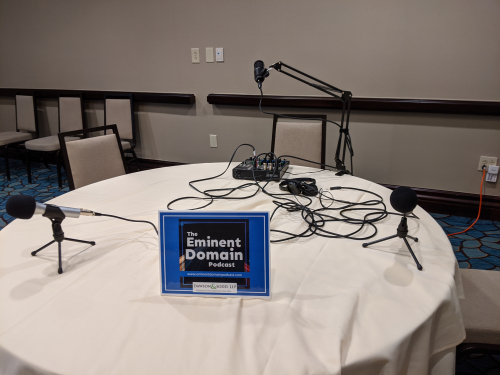
At the recent ALI-CLE Eminent Domain and Land Valuation Litigation Conference in Nashville, our colleague Clint Schumacher set up his portable studio and recorded future episodes of his Eminent Domain Podcast. (Barista’s note: Clint was also one of the three featured presenters for Friday’s Ethics panel, and the feedback we’ve been receiving on that program is uniformly excellent.)

Eight of my William and Mary Law School students took several days out of their busy Spring semester schedule to travel to Nashville and participate in-person in the Conference, applying the theories and concepts we learned in the fall semester’s class (Eminent Domain and Property Rights) to the real world of lawyering. (More on their Conference participation in a future post.)

Between sessions, they had a chance to sit down individually and in groups

Continue Reading Eminent Domain Podcast Interviews William & Mary Law Students

You know how the process is supposed to work. A condemnor exercises its eminent domain power and files a lawsuit to take property for public use. If the owner believes the condemnor’s price is too low, the court adjudicates the just compensation that must be paid. As we know, the point of that lawsuit is to establish the price. If the price eventually adjudicated is too dear (from the condemnor’s perspective), it isn’t required to acquire the property (unless, in some jurisdictions, it has taken advantage of the quick-take or immediate possession process). But if the condemnor wants the property, it must pay the adjudicated compensation. So far, so good.   

But what about those cases where the court adjudicates the price the condemnor must pay to acquire the property, and the condemnor actually takes the property — but the condemnor does not actually pay the compensation adjudicated by the

Continue Reading Does A Property Owner Have A § 1983 Claim If A Condemnor Doesn’t Pay A Just Comp Judgment In A Reasonable Time?

As we briefly mentioned in the “National Eminent Domain Update” at the recent ALI-CLE Eminent Domain and Land Valuation Litigation Conference in Nashville, the U.S. Court of Appeals for the Eleventh Circuit in Sabal Trail Transmission, LLC v. 3.921 Acres, No.18-11836 (Jan. 22, 2020), recently held that it isn’t an abuse of discretion for a trial court to allow a property owner to testify about value if she meets the standards in Federal Rule of Evidence 701.

Two interesting aspects to this case:

1.    The owner’s opinion of value was higher than the owner’s appraiser’s opinion of value. 

2. The owner testified about severance damages. 

The district court allowed the testimony because the property owner had direct experience with the property and sales of other parcels the company owned, even though she lacked experience with the particular use for which this parcel was taken (a

Continue Reading CA11: Owner May Provide Opinion Of Value, Including Severance Damages

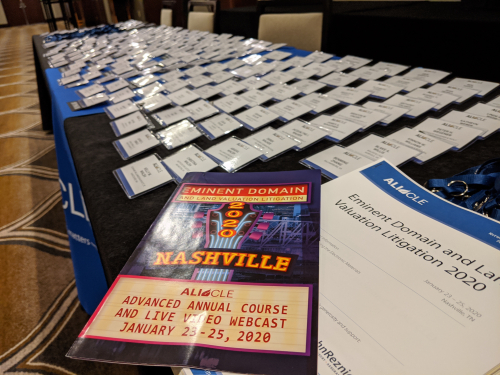
IMG_20200123_070935

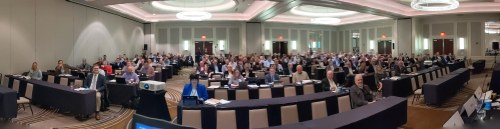
We’re in Nashville for the next three days, where we have record attendance (see above for the name-tag matrix), with nearly 300 attendees spread out over three rooms. 

IMG_20200123_070704

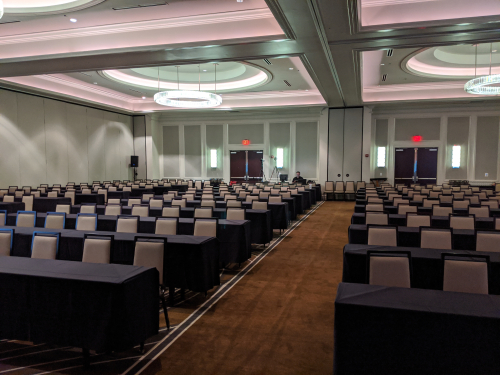
The Big Room, before. 

PANO_20200123_090701.vr

The Big Room, during. Like we said, record attendance. 

IMG_20200123_070830

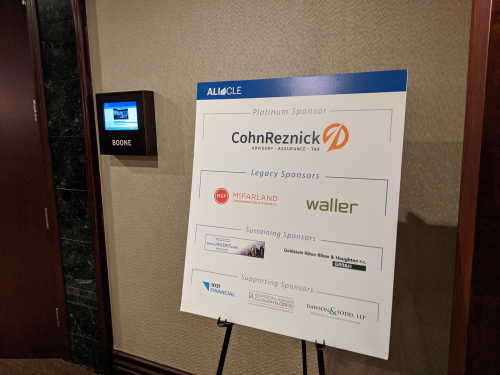
Thanks to the generosity of our sponsors, we have very good social events. Like the lunch, below.

IMG_20200123_122053

IMG_20200123_125822

Clint Schumacher brought his Eminent Domain Podcast studio to Nashville to record future episodes.Continue Reading Greetings From The 37th Annual ALI-CLE Eminent Domain & Land Valuation Litigation Conference, Nashville

A very short one (4 pages and 1 line) from the South Carolina Court of Appeals. And a good thing, too, because we’re on the road this week at the 37th Annual ALI-CLE Eminent Domain and Land Valuation Litigation Conference. See you there! 

In Burke v. S.C. Dep’t of Transportation, No. 5709 (Jan. 15, 2020), the court concluded that the judge, not the jury, calculates statutory prejudgment interest in inverse cases the same way it does it straight takings. Although the court acknowledged the “considerable tension” in past decisions about the issue, it concluded the issue was actually one of first impression. 

In the end the court relied on the notion that inverse and straight takings should not be subject to different rules — see slip op. at 3 (“there is no good reason to treat the two differently”) — and held that because the rule in straight

Continue Reading SC App: Judge, Not Jury, Calculates Prejudgment Interest In Inverse Condemnation Cases

The Virginia Supreme Court is set to consider a case that asks whether less than a total loss of access to a parcel is a taking, and is the government’s mere invocation of a “police power” rationale to cut off access is enough to insulate it from the payment of compensation. 

When Hooked proposed to develop its property, the City of Chesapeake closed Callison Drive, the street adjacent to Hooked’s property after the neighbors complained. This cut off Hooked’s direct access to Callison Drive, even though it still had access from its property from another street.

The trial court dismissed (demurred) Hooked’s inverse condemnation claim, concluding that the City was exercising its police power when it closed the street, and thus there was no taking as a matter of law. Hooked argued that Virginia property owners have a property right for direct access to adjacent roads, especially after the Virginia

Continue Reading Virginia Supreme Court Asks: Must A Parcel Be Completely Cut Off For Loss Of Access To Be A Taking?