


Dominionstorage

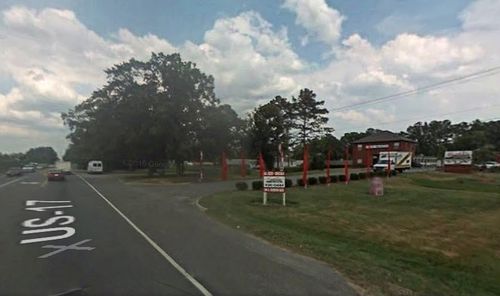
Is the forced acquisition of property by the government’s power of eminent domain a “purchase?” To the Virginia Supreme Court, the answer to that question is yes. Why, we’re not really sure, because the court doesn’t tell us why.

In City of Chesapeake v. Dominion SecurityPlus Self Storage, LLC, No. 150328 (Apr. 29, 2016), the court held that the use of the word in a subdivision plat in which the owner agreed that it “reserve for future purchase by the City” a part of its property with no compensation for any improvements on that land, meant that the owner also agreed to let the city condemn the land without paying for the improvements.  

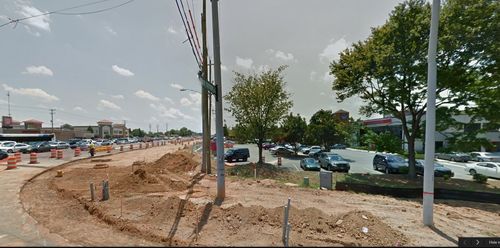
This case involved a highway widening and elevation project in southern Virginia. The current owner of the property, which operates a self-storage facility on the parcel, purchased it from the prior owners who had subdivided it
Continue Reading Virginia: Taking By Eminent Domain Is “Purchasing” Property. Why? Because We Said So.

We’re tied up today, so can’t write much, but wanted to post this recent decision from the Court of Federal Claims. Here’s the court’s own summary:

Plaintiffs Love Terminal Partners, L.P. (“Love Terminal Partners”) and Virginia Aerospace, LLC (“Virginia Aerospace”) are leaseholders of property at Dallas Love Field Airport (“Love Field”), located in Dallas, Texas. In their complaint, filed in the United States Court of Federal Claims (“Court of Federal Claims”) on July 23, 2008, plaintiffs allege that the federal government, through the enactment of the Wright Amendment Reform Act of 2006 (“WARA”), prohibited the use of their property, thereby destroying all economic value or benefit of their leasehold and effecting a taking without just compensation, in contravention of the Fifth Amendment to the United States Constitution. Plaintiffs seek compensation for the taking as well as interest from the date of the taking, attorneys’ fees, appraiser and expert witness fees

Continue Reading $133,500,000 CFC Verdict For A Categorical Lucas Taking

Kauaipark

A longer post to start the week because it involves an eminent domain case, a somewhat rare occurrence from the Hawaii appellate courts. The issues determined by the Hawaii Intermediate Court of Appeals are important, and because we have an old eminent domain code and don’t have a whole lot of current decisional law applying it — and we think the ICA got some critical things wrong (even though it may not matter for this case) — we’re going hit this one in some detail.    

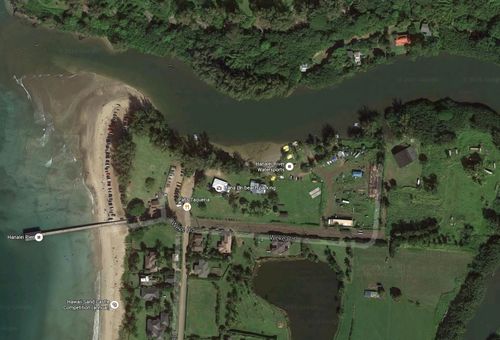
This one involves three parcels on Kauai — some of which were owned by a fellow who has been a thorn in the County’s side — which were condemned by the County for the expansion of a public beach park.  

In County of Kauai v. Hanalei River Holdings, Ltd., No. CAAP-14-0000828 (Mar. 31, 2016), the ICA addressed three issues:

  • Can a


Continue Reading Hawaii Court Of Appeals Draws A Bright Line In Eminent Domain: In Larger Parcel Analysis, Unity Of Contiguity Means Parcels Must Touch

Guam land titles can be seriously messed up. This case, Gov’t of Guam v. 162.40 Square Meters of Land, No. CVA14-011 (Mar. 17, 2016), about which we posted earlier (when it went up to the U.S. Supreme Court and was denied review) is an example. To reconfigure irregular lot lines left over from the World War II Japanese occupation and American liberation and the resulting destruction of records, Guam adopted the “Agana Plan,” which it viewed as a redevelopment plan of sorts. Or at least that’s how it was employed, even though the Plan had until 1981, never been used to take any property.

But 1981 was different. Ilagan owned land in Agana on which he ran an apartment building. Ungacta — who was then the Mayor of Agana — owned a neighboring residentially-zoned lot. In 1981, the Ungacta property did not have access to a road. Ungacta appraised a

Continue Reading Guam SCT: Eminent Domain Statute Cannot Limit Right To Just Compensation

Charlotte

Urban property at the intersection of two main thoroughfares can be pretty valuable. It’s about location, for sure, but it’s also about visibility and the ability to be seen from four directions.

Charlotte, NC needed a part of such property for a rail line extension. The rail will be in the middle of the road, so the road needed widening, necessitating the partial taking. The rail “Bridge” will be part of that middle-of-the-road construction in an existing public right of way, but will partially block views of the owner’s remaining property (a bank branch).

But the Bridge won’t be on the condemned property, and the city asserted that means it isn’t liable for damages resulting from the loss of visibility. The trial court concluded that the jury could consider evidence of loss of visibility, and the city’s interlocutory appeal followed.

In City of Charlotte v. University Financial Properties, LLC

Continue Reading No Compensation For Bridge That Blocks View Of Taken Property, But Isn’t On Taken Property

When you raise 13 issues on appeal, you shouldn’t be surprised if the court balks at analyzing them all. That was the case in City of Gulfport v. Dedeaux Utility Co., No. 2014-CA-00556-SCT (Mar. 24, 2016), where the Mississippi Supreme Court didn’t address the majority of the points raised by the city on appeal, but narrowed down the list to five. And of those five, the court found error in only one. 

You can slog through the details in the court’s opinion, but let’s see if we can’t give you the highlights.

Most of the issues raised on appeal were the result of the city’s delay in actually taking possession of Dedeaux, a PUC-regulated utility. The city waited eight years after it filed the taking action to do so. The city filed its condemnation action in 1996, but did not physically take possession until 2004, after the eminent

Continue Reading “Interesting” Eminent Domain Opinion: No Evidence Of Jury Compromise Verdict In City’s Taking Of Utility

Early next month, the California Supreme Court will hear oral arguments in two cases which we’ve been closely following:

  • Tuesday, May 3, 2016, 9:00 amProperty Reserve, Inc. v. Superior Court, No. S217738. The court is considering whether California’s “entry statute” which allows a condemning agency to enter property for testing and inspection exempted the Department of Water Resources from adhering to the protections in the eminent domain code when the government physically invades property. We filed an amicus brief in that case arguing that “any non-trivial physical invasion of private property is a per se taking requiring just compensation and adherence to eminent domain procedures. The intrusions sought by DWR and ordered by the Superior Court cannot be dismissed as mere “entries.” This is not only a long-standing tenet of California constitutional law (see Jacobsen, supra, 192 Cal. at 329), it is a baseline Fifth Amendment principle, and


Continue Reading Big Eminent Domain Days Coming Up At The California Supreme Court

The only issue in Caffe Ribs, Inc. v. Texas, No. 14-0193 (Apr. 1, 2016) was whether the jury could hear evidence proffered by the property owner that the delay in cleaning up the land to make it marketable could have been attributable to the government. The trial court said no, and the court of appeals affirmed.

The Texas Supreme Court disagreed: “We hold that the trial court’s exclusion was an abuse of discretion, and further hold that the exclusion was harmful because it allowed the government to use an eight-year holding period to reduce the property’s value without allowing the jury to consider the role the government played in creating that holding period.” slip op. at 2.

The court’s opinion is a quick read and we recommend you digest the entire thing. But here’s the short version. Caffe purchased the property, which was already contaminated, and began its voluntary remediation efforts

Continue Reading Government’s Role In Delay In Cleanup Of Contaminated Property Admissible In Eminent Domain Case

Today’s post is by colleague William Wade, an economist in Nashville, Tennessee, who has thought a lot — and written extensively — about the just compensation and damages available in inverse condemnation and regulatory takings cases.

He provides his thoughts on a recent trial court decision in a closely-watched Texas water case, in which the appellate court earlier applied the Penn Central test to find liability, resulting in a remand to determine just compensation. As the title reveals, Bill takes issue with the way the issues were framed, and the conclusions the court reached. You may or may not agree with his conclusions, but Bill always considers these issues deeply, and his writings are always thought-provoking.  

Find him online at energyandwatereconomics.com

Bragg:  Wrong Question, Wrong Result in Texas to the Detriment of Sustainable Water Supply

by William W. Wade, Ph. D.[1]

Earlier in March, the Medina County Texas

Continue Reading Guest Post: Bragg – Wrong Question, Wrong Result In Texas, To The Detriment Of Sustainable Water Supply

One from the California Court of Appeal that may be interesting even though it is about municipal law, and not eminent domain or takings.

We present to you San Diegans for Open Gov’t v. City of San Diego, No. D067578 (Mar. 3, 2016, published Mar. 16, 2016), because the court concluded that an appraiser, hired by a tenant to value property leased from the city, was an “independent fee appraiser” as required by the city’s municipal code.

The code requires that when the city leases property it owns, an “independent fee appraiser” must value the property. BH, which owns and operates the Bahia Resort Hotel on city-owned land, wanted to extend its lease for another 40 years. The city council approved, and BH hired an appraiser to value the property. The city didn’t do its own appraisal, but the director of the city’s real estate assets division stated that

Continue Reading Appraiser Is “Independent” Even Where One Side Is Paying Him