Remember the Lost Tree case? That’s the one where the Federal Circuit concluded that a single parcel owned by the plaintiff was the relevant parcel against which the impact of the Corps of Engineers’ denial of a § 404 wetlands dredge and fill permit is to be measured. The court overturned a Court of Federal Claims decision which concluded the relevant parcel was that single plot plus an additional nearby lot, plus “scattered wetlands in the vicinity” also owned by the same owner. 

The case got remanded to the CFC, which now has issued its opinion determining the loss of economic value caused by the denial of the 404 permit. The CFC concluded that the “after” value was $27,500, and the “before” value was $4,245,388, a diminiution in value of a whopping 99.4%. Lost Tree Corp. v. United States, No. 08-117L (Fed. Cl. Mar. 14, 2014).

The court held that
Continue Reading CFC: Denial Of Wetlands Dredge And Fill § 404 Permit = Taking = $4.2M Just Compensation

It’s Friday, so we’re slacking a bit on the blogging. But our colleagues at the Nossaman firm have given us a couple of good pieces for our reading enjoyment.

  • First is “9th Circ. Simplifies Enviro Process For Transit Projects,” by Robert D. Thornton. If his name sounds familiar, it’s because he’s the lawyer who represented the City and County of Honolulu in its succcessful defense of a federal lawsuit. The Ninth Circuit and the District Court recently sided with the City on the project (see our summary of the Ninth Circuit and the District Court rulings), and the plaintiffs have stated that they are not going to seek further review. In other words, this is probably the final substantive chapter in the major legal challenges to the Honolulu rail project. Mr. Thornton notes that the decision is one “of national importance for transit and highway projects” because


Continue Reading Worth Reading – The Last Word On Honolulu Rail, And 2013 Eminent Domain Year In Review

This is a longer post, but we think it’s worthy of your time. That’s because even though there’s a lot going on in the opinion by the California Court of Appeal in Property Reserve, Inc. v. Superior Court, No. C067758 (Mar. 13, 2014), it cuts through much of the unnecessary doctrinal fog surrounding takings law, especially the U.S. Supreme Court’s bizarre ripeness requirement first enunciated in Williamson County Regional Planning Comm’n v. Hamilton Bank, 473 U.S. 172 (1985).

The Bottom Line

Although the entire thing is worth reading (44 pages of majority opinion, followed by 46 pages of dissent), if we had to pick out one passage as the takeaway, here it is: 

Eminent domain authority must be exercised in strict conformity to the constitutional protections and procedures that limit its operation. If a condemnor intends to take private property or intends to perform actions that will result

Continue Reading Cal App States The Inconvenient Truth: There’s No Substitute For Eminent Domain – Gov’t Must Condemn First If It Wants To Enter Land

In addition to the initial media coverage of and commentary about the Supreme Court’s 8-1 decision in Marvin M. Brandt Revocable Trust v. United States, No. 12-1173 (Mar. 10, 2014) rendered earlier this week, there has been more, mostly focused on the final lines of Justice Sotomayor’s solo dissent:

By changing course today, the Court undermines the legality of thousands of miles of former rights of way that the public now enjoys as means of transportation and recreation. And lawsuits challenging the conversion of former rails to recreational trails alone may well cost American taxpayers hundreds of millions of dollars.

Dissent at 8 (emphasis added).

What she was getting at, of course, was the fact — not stated anywhere in the majority opinion but made clear by the amicus briefs — that by holding that the interest granted was only an easement and did not revert to the United States

Continue Reading Brandt: No Free Ride For Rails-To-Trails

Here’s one that we meant to post earlier, but slipped through the cracks.

In Oklahoma eminent domain actions, the issue of valuation is first presented to a board of three commissioners (“disinterested landowners”) from the county in which the condemned property is located. The commissioners report to the court, and if one party doesn’t care for the recommended compensation, the party may demand a jury trial. 

In Independent School District v Taylor, No.110,709 (Nov. 27, 2013), the Oklahoma Court of Appeals held that a jury in such a case is entitled to hear evidence regarding value, even if the commissioners did not consider it. In that case, the commissioners recommended a value, but after a trial, the jury came back in with a higher award after the owner introduced evidence about the value of a billboard lease which had not been presented to the commissioners. The trial court granted the

Continue Reading Nichols On Eminent Domain: Oklahoma Appeals Court Upholds Jury Rights In Condemnation

Here’s the Answer Brief on the Merits, filed last week in the California Supreme Court in City of Perris v. Stamper.

That’s the case in which the court is considering whether, in the context of determining just compensation, the judge or the jury gets to decide whether a city’s exaction is something that is so reasonably likely to happen that it can be taken into account. That, of course, raises the Nollan/Dolan issue, and although this seems like a question of law, the California Court of Appeal concluded that, on the whole, the jury gets this one. We reported on the Court of Appeal decision here.

This brief responds to the Opening Brief, filed last month by the City (and posted here), which argues that the issue is one reserved solely to judges.  The Answer Brief makes two points:

  • The court can solve this case


Continue Reading Answering Brief In Stamper: Jury Decides Nollan/Dolan When A Factor In Compensation

One portion of the federal Uniform Relocation Act, 42 U.S.C. § 4651, requires Federal agencies participating in projects requiring the acquisition of private property to be guided by certain policies that “assure consistent treatment for owners . . . and . . . .promote public confidence in Federal land acquisition practices,” such as (and we’re paraphrasing here), do it as quickly as possible, try to get it by negotation, don’t use condemnation to leverage a lower negotiated price, and so forth. 

These policies apply to state and local condemnors when their projects involve federal funding, and in Clear Sky Car Wash LLC v. City of Chesapeake, No. 13-1492 (4th Cir. Feb. 21, 2014), the owner whose property was being condemned by the Virginia Department of Transportation asserted VDOT was not following the rules. VDOT instituted a “quick take” eminent domain action in state court, and Clear Sky went to federal

Continue Reading 4th Cir: Uniform Relocation Act Requirements Are Like The Pirate’s Code – “More What You’d Call ‘Guidelines,’ Than Actual Rules”

Property

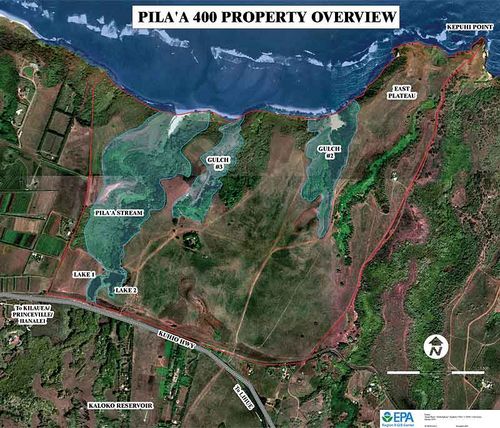
There’s not much doubt that the now-notorious large-scale unpermitted upland grading and grubbing by a Kauai property owner on its private land caused the runoff that catastrophically damaged the adjacent beach and the reef offshore. The damage was pretty bad, and resulted in the “largest storm water settlement [with the federal EPA] in the United States for violations at a single site by a single landowner.” See also the photo above (much larger version here).

The state also pursued the owner, and after a contested case, the Board of Land and Natural Resources assessed approximately $4 million in damages, and $70k for administrative costs. To reach this assessment, It did not apply a preexisting damage formula, but used a method it crafted for the case:

The value of Pilaa beach, bay and reef includes use value, option value, commodity value, existence value, bequest value, cultural values, including

Continue Reading HAWSCT: Damage To Unique Property Subject To Unique Rules

Blog-Logo

One of the perks of attending the annual ALI-CLE Eminent Domain and Land Valuation conference (this year in New Orleans) is that in addition to 2 1/2 days of high-level CLE programming involving our favorite topic, you get to meet colleagues from across the nation (and internationally – expropriation lawyers from Canada were also with us, and gave us an update on the Antrim Truck decision). 

You also find out things that, despite the seemingly infinite resource that is the internet, you didn’t know before. And that’s how we came to find out about a new law blog, covering Wisconsin issues in eminent domain and related topics, “The Preeminent Domain” (http://thepreeminentdomain.com/). As an aside, we love that URL. 

Steve Streck, a partner at Axley Brynelson leads the blogging team, and thus far, their posts look pretty interesting (underwater mortgages, rails-to-trails, and, of course, Wisconsin-centric eminent domain

Continue Reading New Eminent Domain (And Related) Law Blog

DSCF1604

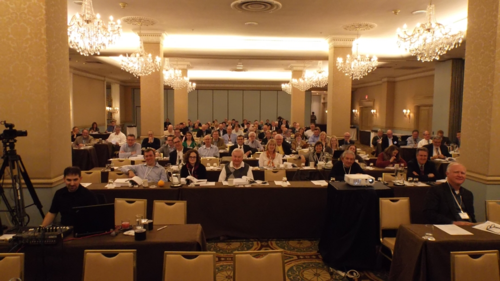
This morning, I joined my Owners’ Counsel colleagues Leslie Fields and Joe Waldo (the programming co-chairs), and more than 100 fellow eminent domain experts in New Orleans under the auspices of ALI-CLE at our annual gathering for the start of 2 1/2 days of legal education. 

Joe and Leslie asked me to join Professor James Ely to speak about “The Full and Perfect Equivalent for Just Compensation: The Historical Context and Practice.” Professor Ely led us off with a crash history of just compensation, starting with the Magna Carta and where we’ve been, and then handing it off to me for the “where we are and where we may be going” segment.

Just to prove to you all that while in New Orleans, I really did show up and not get distracted by the many (many) distractions that this city can offer, the above is a

Continue Reading A Dispatch From The ALI-CLE Eminent Domain Conference (With Links)