


The case that would not go away, the “Hawaii Superferry” litigation, is back in the Hawaii Supreme Court this week for Round 2, with oral arguments scheduled for 9 a.m. on Thursday, December 18, 2008.  The Court generally allocates 1/2 hour per side, for a total of one hour of argument (which may be extended at the Court’s discretion, but it rarely is).

I’ll be attending the arguments, and technology and typing skills permitting, live blogging it.  Visit this page to sign up for an email reminder, or just visit at 8:45 a.m. on Thursday to tune in.

The key briefs of the parties are posted below:

  • (Hawaii Superferry filed an Answering Brief, which “incorporatesby reference the arguments set forth in the State’s Answering Brief,filed August 18, 2008.”)

The Court’s web site describes the issues in
Continue Reading Hawaii Superferry Supreme Court Briefs

A “SLAPP suit” is a “strategic lawsuit against publicparticipation,” and many states have anti-SLAPP suit statutes designed to thwartretaliatory lawsuits that may chill the public’s willingness to exerciseFirst Amendment rights.  For example, California’s statute definesSLAPP suits as:

lawsuits brought primarily to chill the valid exercise of the constitutional rights of freedom of speech and petition for the redress of grievances.

Cal. Code. Civ. Proc. § 425.16. The anti-SLAPP statute provides that such lawsuits may be dismissed. In Club Members for an Honest Election v. Sierra Club, No. S143087 (Dec. 15, 2008), the California Supreme Court held:

Code of Civil Procedure section 425.16, commonly referred to as the anti-SLAPP statute, provides that a civil cause of action may be dismissed as a strategic lawsuit against public participation (SLAPP). Section 425.17, subdivision (b) (section 425.17(b)) provides an exception to the anti-SLAPP statute by exempting some actions from dismissal. Here, we

Continue Reading Cal. Supreme Court: Anti-SLAPP Suit Exemption Not Applicable Unless Entirety Of Case For Public Benefit

An interesting op-ed piece in Sunday’s Honolulu Star-Bulletin, “Thank zoning laws for your peaceful home,” extols the virtues of zoning:

It has now been more than 85 years since the residents and city councilof the little village of Euclid, Ohio, found that their quietneighborhoods, where their children played, where they walked theirdogs and spent their quiet hours after a hard day’s work, had no legalgovernment protection from what could be built next door; not from ahorse stable, a cement factory or even a slaughterhouse. So to theircredit, Euclidian zoning was born, and upheld by the courts as areasonable protection for residential areas.

The case the author is referring to, of course, is Village of Euclid v. Ambler Realty Co., 272 U.S. 365 (1926), the case in which the U.S. Supreme Court first upheld the segregation of land uses in an Ohio suburban town into districts against

Continue Reading The Dark Side of Zoning

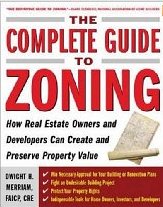
Complete guide Ever wished you’d have the chance to sit down over a cup of coffee and talk one-on-one with an expert in his or her area of law, especially our favorite topic, Land Use Law? Well, here’s your chance to come awfully close to that, for a cost that’s well below the usual hourly rates attorneys charge.

I’ve just completed Dwight H. Merriam’s The Complete Guide to Zoning (available on Amazon here), and for anyone who plays the land use game — property owner, planner, developer, agency official, regulator, judge, or lawyer — the book is a plain-language guide to the process by an insider who is both a planner and an attorney, and who has been on both sides of the table.  

The book contains explanations of the law and the zoning process, and is replete with practical advice and tips. It walks the reader through the regulatory maze

Continue Reading Book Review: The Complete Guide To Zoning

In a significant development and unexpected move, the Solicitor General has filed in the U.S. Supreme Court an amicus brief on behalf of the United States strongly supporting the State of Hawaii’s position in the ceded lands case, asserting the Apology Resolution was “hortatory, not substantive,” and that the ceded lands trust is supposed to benefit all, not just one of five classes of beneficiaries. 

The brief is available here. The Court generally pays special attention to arguments made by the SG (who is sometimes known as the “tenth Justice”), especially its amicus positions.

The brief makes the point that the United States had undisputed and unclouded title to the ceded lands, and that interest was conveyed to the State in 1959 at statehood:

The Supreme court of Hawaii misread the Apology Resolution to reverse a century’s worth of federal law and policy governing the United States’ 1898 annexation

Continue Reading Federal Government in Ceded Lands Case: Sorry Seems To Be The Hardest Word

In an significant development, on December 11, 2008, the Solicitor General filed an amicus brief in the ceded lands case now pending before the U.S. Supreme Court. We’ll post the brief shortly. The federal government’s participation was not expected. 

This amicus brief has the potential to influence the Court, as the Solicitor General is sometimes known as the “tenth Justice,” because of the attention the Court pays to his arguments. Continue Reading Ceded Lands Case: Federal Government Files Amicus Supporting Hawaii

Thanks to Professor Patty Salkin for posting a summary of the Hawaii Intermediate Court of Appeals decision in Pono v. Molokai Ranch, Ltd., 119 Haw. 163, 194 P.3d 1126 (2008), in which “the court concluded, a private citizen does not have standing to enforce the land-use law, because such authority is not explicitly or implicitly contained in the law, and implying such authority would be contrary to the legislature’s intent in enacting the law.” 

Pono has since applied to the Hawaii Supreme Court for a writ of certiorari, asserting that the statewide zoning law is a “law relating to environmental quality.”  We filed filed a response for Molokai Ranch. Both briefs are posted here

Also of interest is the recent New York Times story about land use issues on Molokai.Continue Reading Intermediate Court of Appeals Land Use Decision Summarized

The Grassroot Institute of Hawaii and the Southeastern Legal Foundation filed an amicus brief in the Hawaii ceded lands case, available here.  The brief argues:

Hawaii is justly admired as an integrated, racially blended society. It has been called a model for the rest of the country, perhaps for the world. But some people in Hawaii find no comfort in integration and equality. For over two decades, a counter-current promoting special privileges for persons of Hawaiian ancestry has gradually developed and, to some extent become the accepted norm among those in Hawaii with a vested interest in continuing such racial distinctions between citizens. This case is just a glimpse of the internal forces working to destroy the ideals of aloha and equal opportunity for every individual whatever his or her ancestry, embraced by the founding fathers of both the Kingdom of Hawaii (Kamehameha I, II and III) and the

Continue Reading SCOTUS Ceded Lands Case: Another Amicus Brief

The brief of the Commissioner of Public Lands for the State of New Mexico is posted here.  The brief of the Center for Constitutional Jurisprudence is posted here.

The New Mexico brief explains:

Because the express trust created under the Hawaii Admission Act was based on principles established in the New Mexico and Arizona Enabling Acts, the Commissioner is well situated to provide background and analysis regarding the federal law issues raised by the Hawaii Supreme Court’s unprecedented injunction barring state alienation of lands held in a similar federal law trust.

Brief at 2-3. The Center’s brief argues:

This case raises the question of whether Congress can impose limits on the sovereign powers of states—long after the states have been admitted into the union. As interpreted by the Hawaii Supreme Court, the resolution adopted by Congress achieved that limit on state power. The state court acted in what

Continue Reading More Amicus Briefs in SCOTUS Ceded Lands Case

Today, we filed an amicus brief in the ceded lands case on behalf of Pacific Legal Foundation, the Cato Institute, and the Center for Equal Opportunity, available here.

The core issue of this case is whether a state court, interpreting federal law, may enjoin the State of Hawaii from exercising its sovereign authority to sell,
lease, or rent the “ceded lands” for the benefit of all Hawaiian citizens, pending some resolution, as yet unknowable, of the claims of native Hawaiians to those lands. As this Court recognized in Rice, 528 U.S. at 505, the Republic of Hawaii ceded all of its former Crown, government, and public lands to the United States upon annexation in 1898. Revenues from the public lands were to be “used solely for the benefit of the inhabitants of the Hawaiian Islands for educational and other public purposes.” Newlands Resolution, J. Res. 55, 55th Cong.

Continue Reading Ceded Lands Case: Pacific Legal Foundation, Cato Institute, Center for Equal Opportunity Amicus Brief