


Screenshot_2021-05-15 18th Annual Brigham-Kanner Prize Recipient

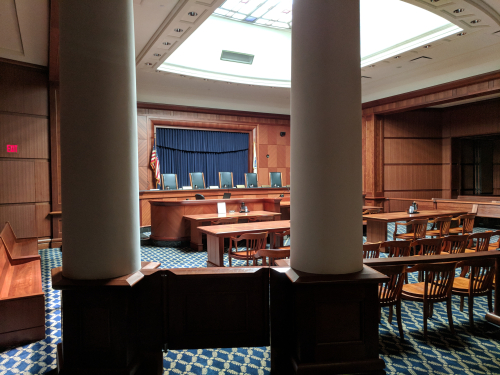
Mark your calendars for September 30 – October 1, 2021, and join us at the William and Mary Law School in Williamsburg, Virginia for the 18th Annual Brigham-Kanner Property Rights Conference. It’s planned to be in-person, so when we mean “join us” we really mean join us.

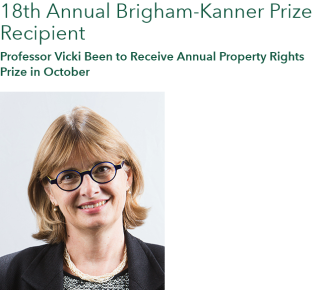
This year the Conference will recognize the lifetime work of Professor Vicki Been (NYU Law) with the Brigham–Kanner Property Rights Prize. As noted in the Law School’s press release:

The Brigham-Kanner Property Rights Prize is named in honor of the lifetime contributions to property rights of Toby Prince Brigham, founding partner of Brigham Moore, LLP, and Gideon Kanner, professor of law emeritus at Loyola Law School in Los Angeles. Brigham died earlier this month in Miami. A true legend in the law, he was esteemed by colleagues for the invaluable counsel, knowledge and skills he possessed and shared so generously. The prize
Continue Reading Mark Your Calendars: 2021 Brigham-Kanner Property Rights Conference, Williamsburg, Virginia, Sept 30-Oct 1 (in-person)

R.S. Radford’s most-recent article, Knick and the Elephant in the Courtroom: Who Cares Least About Property Rights? in the latest issue of the Texas A&M Journal of Property Law, should be next on your to-read list. 

Here’s the summary of the article:

Throughout the thirty-four-year history of Williamson County, one fact was taken for granted. Never directly mentioned but always looming in the background of two rounds of oral argument before the Supreme Court in Knick was the premise that relegating takings claims to state court made it less likely that property owners would prevail on those claims than if they could be filed in federal court in the first instance. This Article examines that premise and finds little support for it in the historical record.

Part I of this Article discusses Williamson County and highlights the logical, doctrinal, and procedural confusion associated with the opinion, both in its

Continue Reading New L Rev Article: Knick Won’t Mean Much Until Federal Courts Get Over “Strong Distate, If Not Outright Contempt” For Land Use Matters

IMG_20180720_152126_1

Under a Massachusetts statute, local redevelopment agencies have the power to respond to “decadent, substandard, and blighted open areas” either by creating an urban renewal project (redeveloping an area pursuant to a “detailed” and “comprehensive” plan; the statute expressly includes the power of eminent domain for urban renewal projects), or by a “demonstration” development (a term not defined by the statute, and therefore lacks an express delegation of eminent domain power).

In Cobble Hill Center LLC v. Somerville Redev. Auth., No. SJC13028 (Apr. 22, 2021), the Supreme Judicial Court addressed an issue left open the last time it dealt with the power of redevelopment agencies: do they have the power to take property by eminent domain when they choose to undertake a “demonstration?” 

Cobble Hill had intended to do its own private redevelopment on its vacant property in Somerville, Massachusetts. But due to some internal disputes, construction

Continue Reading Mass SJC: New And Improved Means For Blight Elimination Uses Old And Worn Method: Eminent Domain

In which we join the Pendulum Land Podcast (again, thank you hosts!) to talk about the Virginia Supreme Court’s recent opinion in Johnson v. City of Suffolk, the case we label the “oyster takings” case in which Hampton Roads oystermen claimed that their property was taken when the City of Suffolk and the Sanitation District dumped sewage into the river and declared a “condemnation zone” (i.e., no oyster harvesting).

Short story: the court concluded that the leases of Commonwealth-owned bottomlands in the Nansemond River did not confer a property interest. Or at least not a property interest worthy of constitutional protection. Thus, no takings claim when Suffolk and the Sanitation District dumped sewage into the river and pretty plainly interfered with some kind of right the plaintiffs owned in the lease. Just not enough of a right to require compensation.  

Our thoughts on the court’s decision

Continue Reading We Join Pendulum Podcast To Debate Oysters, Property Rights, Takings

Dig this: property owners assert that the County’s right of way dedication ordinance is an unlawful exaction. You know the drill – logical nexus, rough proportionality, etc. Nollan, Dolan, Koontz. Here’s the short story: the owners sought subdivision plat approval without the dedication for public roads required by the ordinance. No deal. The County’s process allows for consideration of variances based on extraordinary hardship. The owners assert that the variance procedures violate their right to procedural due process. The District Court granted the County summary judgment.

In Pietsch v. Ward County, No. 20-1728 (Mar. 16, 2021), the Eighth Circuit affirmed. This is a Nollan/Dolan/Koontz claim. The property owners disavow that they are raising a takings claim. But you can’t fool us, property owners, we know a takings claim when we see one. “Plaintiffs’ due process and unconstitutional conditions claims are an impermissible attempt to recast a Takings claim.” Slip

Continue Reading CA8: You Can’t Fool Us, Property Owner, We Know That Nollan/Dollan/Koontz Claim Isn’t A Due Process Or Unconstitutional Conditions Claim, But Really A Takings Claim

Read the allegations in the complaint that the Illinois Appellate Court recounted in Strauss v. City of Chicago, No. 1-19-1977 (Mar. 5, 2021), and they will make your hair curl in horror.

In short: a family rented the ground floor of its mixed residential-commercial building in Chicago to Double Door Liquors (a live music venue). The local alderman “had a personal and financial relationship with the Double Door’s owners.” Slip op. at 3. He “told defendant that only Double Door would be allowed in the building.” Id. (It’s good to have friends, no?) But Double Door was not an ideal tenant, and the noise, drug and alcohol use, and property damage by patrons were a problem to the owners and neighbors. So the owners evicted the club. 

So, according to the family’s complaint, the alderman struck back. Read pages 3- 6 for the details. If true, the allegations are

Continue Reading Complaint Alleged That Chicago Pol Zoned The Chicago Way – But Still No Taking Because Family Owners Only Lost $1 Million

For you original MTV folks

Here’s the latest in a case we’ve been following for a while (even since before the last time it went up to the Court). See this post (“The Chicago Way: City Taking Non-Blighted Property For Economic Development Was Not Pretextual Because…Studies“) and this one (“Illinois App: We Haven’t Changed Our Mind – Chicago’s Sketchy Redevelopment Taking Is Still For Public Use“), for example.

After the latest ruling from the Illinois Appellate Court, we guessed that we had not seen the last of the case. And it turns out that our prognostications were accurate: the property owner has filed a cert petition asking once again for the Supreme Court to take up (ha) a Public Use Clause case.

Have I got your attention now?

Five years ago, in City of Chicago v. Eychaner, 26 N.E.3d 501 (Ill. Ct. App. 2015), the

Continue Reading The Future’s So Blight, I Gotta Wear Shades: New Cert Petition Asks To Reconsider Kelo In A Case Where The Stated Public Use Is To Avoid Possible Future Blight

It’s Monday, so we’re just going to ease into the week by (inter alia) reading a couple of law review articles:

  • Federal Courts and Takings Litigation, by Prof. Ann Woolhandler & Prof. Julia D. Mahoney: “While Knick clearly expands the lower federal court role in takings claims, many questions remain, for it is not yet clear whether federal courts will embrace a robust federal judicial role in land use cases. This Article surveys the history of takings claims in the federal courts and recommends that going forward federal courts develop an abstention doctrine particular to takings cases in order to ensure prudent deployment of judicial resources. This Article also explains why § 1331 actions may be superior vehicles for takings cases than § 1983 actions.”
  • Swallowing its Own Tail: The Circular Grammar of Background Principles Under Lucas, by Prof Gregory M. Stein: the article “argues that


Continue Reading Today’s Readings: “Federal Courts and Takings Litigation” (Woolhandler & Mahoney), “Swallowing its Own Tail: The Circular Grammar of Background Principles Under Lucas” (Stein)

6a00d83451707369e20240a51cc266200b-800wi

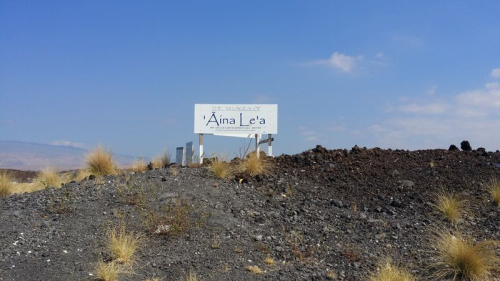
We were hoping for better news in a case we’ve been following in its various forms for what seems like forever. But today, the U.S. Supreme Court in this order declined to issue a writ of certiorari to review the Ninth Circuit’s decision in Bridge Aina Lea, LLC v. Hawaii Land Use Comm’n, No. 20-54, a case in which a federal court jury concluded the property owner suffered both a Lucas and Penn Central taking, but the Ninth Circuit reversed, concluding that no reasonable jury could have found a taking.

We’ve always been told that bright lines are not appropriate in takings. That there are myriad ways in which government can affect property interests and property rights. That the courts should defer to the government’s exercise of regulatory power. That per se rules such as Lucas and Loretto are not generally applicable. Instead, we’re told, go prove a taking

Continue Reading Thomas, J., Dissenting From Denial Of Cert In Penn Central And Lucas Takings Case: “If there is no such thing as a regulatory taking, we should say so. And if there is, we should make clear when one occurs.”

Regulatory takings challenges are no doubt tough. Especially Penn Central regulatory takings challenges. Facial Penn Central regulatory takings claims, moreso.

The U.S. Court of Appeals’ opinion in Clayland Farm Ents, LLC v. Talbot County, No. 19-2102 (Feb. 9, 2021) – the latest in this case we’ve been following – proves the point. The court affirmed the district court’s summary judgment on the property owner’s takings, due process, and civil conspiracy claims.

The property owner brought its claims in Maryland state court claiming, among other things, that the County’s two indefinite moratoria on development and sewer availability — which prohibited owners from seeking or obtaining County subdivision — was a facial taking:

Clayland’s appellate briefing asserts that Bill Nos. 1214, 1257, and 1229 constitute a facial regulatory taking under both federal and state law. Bill No. 1214 temporarily reduced the permissible density of VC-zoned properties from four units per acre

Continue Reading CA4: No Facial Penn Central Taking By Development Moratoria