Descendants-kauai After the New York Court of Appeals’ decisions in the Goldstein (Atlantic Yards) and Kaur (Columbia) cases, we opined that there were not many limits remaining on the government’s exercise of eminent domain in that state.

But even after those cases, there’s got to be some limits, no?

Our Owners’ Counsel of America colleague Michael Rikon is currently testing that hypothesis in a case arising from Willets Point, a Queens neighborhood adjacent to Citi Field (new home of the Mets). Mike represents property owners (mostly small businesses) in the case, their public use challenge to the City of New York’s attempt to take their Willets Point properties for “redevelopment.” For more, see Willets Point United, and this video.

The problem is, the city doesn’t have a redevelopment plan, or any plan regarding what it intends to do with the land beyond making it a “lively, mixed-use, sustainable

Continue Reading Amicus Brief In Willets Point Case: Condemnation For Redevelopment Needs A Plan

The appellate courts in California haven’t been too friendly to the medical marijuana dispensaries when it comes to land use and zoning. See here, here for example (the latter case is being considered by the California Supreme Court, so we may see some major pronouncement this year).

Here’s the latest decision, City of Lake Forest v. Evergreen Holistic Collective, No. G043909 (Feb. 29, 2012), in which the Fourth District (six SoCal counties, including San Diego, Orange, and the Inland Empire) concluded that the city could not adopt an outright ban on medical marijuana dispensaries under the local zoning code, because state law authorizes “collective[] and cooperative[]” medicial marijiana acitvities.

The city instituted a nuisance abatement proceeding against the Collective, arguing that because the zoning code prohibits dispensaries, the it was was a “nuisance per se.” The trial court sided with the city and entered an injunction. The court

Continue Reading Smoke Em If You Got Em – Cal Ct App: Med Marijuana Dispensary Is Not A Per Se Nuisance

In Town of Bozrah v. Chmurynski, No. SC 18424 (Feb. 14, 2012), the Connecticut Supreme Court held that in order for the town’s zoning enforcement officer to inspect private property, he must obtain an injunction (similar to a warrant in the criminal context) that is based on probable cause:

In conclusion, we hold that a zoning official may inspect a single property—not part of a routine or area wide search—pursuant to § 8-12 if the zoning official first obtains an injunction issued upon probable cause by a judicial officer as articulated in this opinion. Because the trial court failed to make a preliminary determination of probable cause to believe that a zoning violation existed on the property, its order permitting a search of the defendants’ property violates the fourth amendment.

Slip op. at 13. The opinion also set out the criteria that a court must consider when it determines

Continue Reading Connecticut: Zoning Officials Need Probable Cause To Search Private Property

Descendants-kauaiMatthew King, the Honolulu lawyer at the center of Alexander Payne’s The Descendants, has two problems, one of which I will never have, and one of which, God willing, I hope never to have.

The first is his status as the sole trustee of an alii trust in possession of 25,000 acres of prime land on Kauai. The trust’s fuse is running down as a result of the rule against perpetuities and King (George Clooney) must therefore decide what to do with the trust’s largest asset: sell it to Developer A or to Developer B, or do something else with it. His fellow descendants are letting their desires known, and he’s feeling the pressure.

The second is that his wife is in an irreversible coma as a result of a boating accident, and her “living will” dictates that she be allowed to die with dignity; to make it even

Continue Reading Movie Review: “The Descendants”

This just arrived: in Edwards Aquifer Auth. v. Day, No. 08-0964 (Feb. 24, 2012), the Texas Supreme Court, applying the Penn Central test, held that the government is not entitled to summary judgment because “the three Penn Central factors do not support summary judgment for the Authority and the State. A full development of the record may demonstrate that … regulation is too restrictive of Day’s groundwater right and without justification in the overall regulatory scheme.” Slip op. at 45. The court began the unanimous opinion with this summary:

We decide in this case whether land ownership includes an interest in groundwater in place that cannot be taken for public use without adequate compensation guaranteed by article I, section 17(a) of the Texas Constitution. We hold that it does.

I’m liking the Texas Supreme Court these days.

We’re getting a brief ready for filing today, so I haven’t

Continue Reading Texas: “The requirement of compensation may make the regulatory scheme more expensive, but it does not affect the regulations themselves or their goals for groundwater production.”

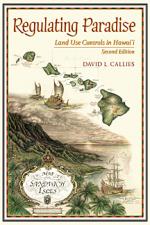
Regulatingparadise Professor Patricia E. Salkin (of the Law of the Land blog) has written this review of Professor David Callies’ Regulating Paradise: Land Use Controls in Hawaii (2d ed. 2010). The review is in the latest edition of the Urban Lawyer (43 Urb. Lawyer 1107 (2011)), the law review published by the ABA’s Section of State & Local Government Law.

Professor Salkin writes:

Unlike mainland states, the history of land ownership and regulation in Hawai’i—dating back to the mid 1800s—is unique and deeply rooted in centralized control both before and after the State became a territory. Callies explains how the State’s oft-studied 1961 land use law continued this trend, with zoning accomplished at the state level. He points out that from this strong tradition of centralized control, however, a new system of land use regulation has emerged with layers of county laws and the influence of myriad federal statutes and

Continue Reading Book Review: Callies, Regulating Paradise (2d ed. 2010)

Check this out: the Hawaii Legislature is considering two bills (HB1707 and SB2089) that will require “nonresident” property owners who rent their property for thirty days or less (transient vacation rentals) to use a licensed real estate broker to rent the property, and to employ a property manager to operate it. “Nonresident owner” is defined as an out-of-state owner or someone who lives “on a different island” from their rental property.

Not surprisingly, much of the testimony in favor of these measures has been submitted by the counties (these bills purportedly would make it easier to collect TVR taxes), and by property managers and real estate agents. 

Putting aside any questions of whether this is good policy or not, think there might be any problems with this? Continue Reading “Nonresident” Property Owners Must Employ Property Managers For TVRs?

Professor Richard Epstein, in his own inimitable and unequivocal style, opines on rent control and the Harmon cert petition in a Federalist Society podcast. A must-listen. Here’s the description:

In March 2011, the Second Circuit Court of Appeals issued summary judgment in Harmon v. Markus, a challenge to New York’s rent stabilization law by Mr. John Harmon, whose townhouse has been occupied for years by tenants paying rent equal to about 60% of market value. The Second Circuit ruled that “government regulation of the rental relationship does not constitute a physical taking” in light of the Supreme Court precedent, and that Mr. Harmon was therefore not entitled to just compensation. The Supreme Court has asked New York City and the tenants to file a response to the certiorari petition filed by Mr. Harmon. On this previously recorded conference call, Prof. Richard Epstein provides analysis of the case and

Continue Reading Federalist Society Podcast On New York Rent Control Takings Challenge With Professor Richard Epstein

Here are the links to the cases and other items discussed today at the International Municipal Lawyers Association webinar with Dan Mandelker and Dwight Merriam. Most of these cases are also in your written materials.

  • South Carolina Bar’s


Continue Reading Links From Today’s IMLA Regulatory Takings Webinar