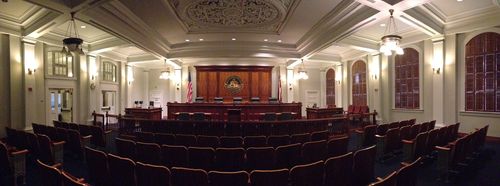
Photo

After the Hawaii Supreme Court decided GATRI v. Blane, 962 P.2d 367 (Haw. 1998) one big question remained.

In GATRI, the court held that in the coastal zone, a county Community Plan (also known as a “General Plan” in some counties) is a binding land use regulation, and thus has the force and effect of law. (Outside the coastal zone, the CP/GP’s don’t actually control any land uses, and are general statements of long-term planning goals. The zoning, and the zoning alone, regulates the uses of land.)

But the state legislature in the Coastal Zone Management Act mandated a different result in the coastal zone and there, the planning also controls land use, as the court held in GATRI. Thus, in order to develop property in the coastal zone in accordance with the applicable zoning, the applicable CP/GP must also permit the use. This is know as “plan-zone consistency,” and
Continue Reading Hawaii Supreme Court Oral Arguments In Lucas “Economically Beneficial Use” Taking Case

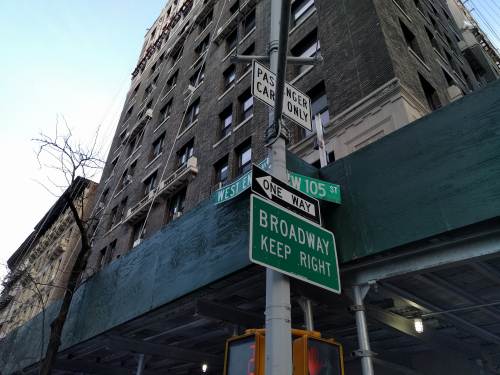
You take the uptown subway, the 1 train, destination the Bronx — the IRT for those of you who still refer to New York City’s subway lines that way — and exit at the 103rd Street Station, just before you cross the unofficial border to Harlem. Walking north on Broadway for a couple of blocks, turning on West 105th Street west towards the Hudson, crossing West End Avenue. 

IMG_20170109_152104 (1)

This is the formerly rural part of the city now known as the Upper West Side, then known as Bloomingdale. The Dutch, who originally named it that back when this was all New Amsterdam, didn’t spell it that way, of course. They wrote Bloemendael, because it reminded them of a flower growing area in Holland. Not too many flowers to be found here these days, unless you continue on towards Riverside Park. 

A quarter of a block down on your right

Continue Reading Takings Pilgrimage, Upper West Side Edition

Heads up for a case to watch being argued next week in the Hawaii Supreme Court.

This is a regulatory takings case that’s been up to the Hawaii appellate courts before (see here). In that opinion, the court of appeals correctly held that a property owner raising a regulatory takings case has no obligation to change the law to ripen her claims. [Note: we filed an amicus brief in that appeal in support of the property owner.] The court vacated the trial court’s dismissal, and remanded the case for trial.

The backstory to that case is long and complex.It involves beachfront property, the relationship between planning and zoning, and what exactly “economically beneficial use” means under the U.S. Supreme Court’s Lucas test for wipeout takings, especially in the context of what instructions that juries are given. [Another note: we represented a neighboring property owner in a similar case that

Continue Reading HAWSCT Considering Wipeout Regulatory Takings: What Is An Economically Beneficial Use?

Here’s what we’re reading today:


Continue Reading Monday Reading: Raisin Redux, Beach Appeal Dismissal, Zoning, And More

HSBA 2017 Land Use Conference

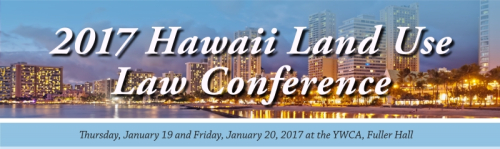
Registration is now open for the 2017 Hawaii Land Use Conference, presented by the Hawaii State Bar Association and the University of Hawaii Law School, at the downtown Honolulu YWCA’s Fuller Hall on January 19-20, 2017. “This 2 day conference is a must attend for any attorney or professional whose practice involves land use and development,” as the registration web site says (we agree).  

Topics include the latest in Transit-Oriented Development, the Thirty Meter Telescope, GMO (including the recent rulings from the Ninth Circuit), and the topic we’ll be presenting, “Takings: Regulatory and Physical.”

The final agenda has not yet been released, but if experience is any guide, Planning Chair Professor David Callies will put together two days of timely topics, presented by distinguished faculty. 

And the cost can’t be beat: $200 for members of the Real Property and Financial Services Section and government lawyers, $300

Continue Reading 2017 Hawaii Land Use Law Conference, January 19-20, 2017

We don’t usually post unpublished opinions, but the Fourth Circuit’s recent decision in Clayland Farm Enterprises, LLC v. Talbot County, No. 15-1755 (Dec. 2, 2016), raised some issues worth your time. 

The property owner brought its claim in Maryland state court claiming, among other things, that the County’s two indefinite moratoria on development and sewer availability — which prohibited owners from seeking or obtaining County subdivision — was a facial taking. The lawsuit asserted “the moratorium is facially unconstitutional,” although it’s not clear from the majority opinion what remedy the complaint sought. 

The County removed the case to federal court and moved to dismiss. The district court granted the motion, because “[i]t is beyond the province and competence of this court to make zoning decisions[.]” 

The Fourth Circuit reversed. “Count I is a facial challenge to the moratoriums and is thus clearly ripe.” Slip op. at 7. Because a

Continue Reading 4th Circuit (Unpublished): Federal Court Facial Takings Claim Ripe After Removal By Govt To Fed Court

Here’s what we’re reading today:


Continue Reading Monday Round-Up: Food Takings; Honolulu And Nebraska Takings; Property Rights And The Environment

  2-017_MIAMI_LUI header_small

After a short absence and a change of lead sponsor (from ALI-CLE, to the American Bar Association’s Section of State and Local Government Law), the Land Use Institute is back on.

Download the print brochure here, or visit the LUI web site for more. It will be held February 1-2, 2017, in Miami, Florida, at the Brickell City Centre‘s Akerman Conference Center, in conjunction with the ABA’s Midyear Meeting. One of the best aspects of this program is the registration fee, a mere $300, $250 if you are a judge, an academic, young lawyer, or government attorney (perhaps the best deal in CLE). Register on line here. For those who cannot attend in-person, the LUI will be live-streamed. Register here

Planning Chairs Frank Schnidman and Dean Patrica Salkin have assembled a very good faculty and program. Topics include: “Nuts and Bolts of Land Use

Continue Reading Mark Your Calendars: The Land Use Institute Is Returning – February 1-2, 2017, Miami

Here are the remarks we were to have presented today, the second day of the 2016 Brigham-Kanner Property Rights Conference, being held in The Hague, Netherlands at the International Court of Justice. The panel subject was “Property Rights in Intangible Assets.” We were unable to deliver them due to the panel running of of time, one of the dangers of being the last speaker in a lineup of four. [Protip: if ever you’re on a speaking panel, you might want to think about slotting yourself ahead of the others; some pay no regard to those behind them in the queue, exceed their allotted time significantly (even after being notified that their time is up), and don’t even bother to acknowledge their lack of respect for others.] But no matter, here we go.

Defining and Protecting Property Rights in Intangible Assets:
New Frontiers, Uncharted Waters

As you might already be able

Continue Reading Brigham-Kanner Property Rights Conference, The Hague: Property Rights In Intangible Assets

Recall that in the wake of the overwhelmingly negative reaction to the U.S. Supreme Court’s decision in Kelo v. New London, at least one of the Connecticut Supreme Court justices whose previous ruling was upheld, expressed his regrets. Others have made similar remarks. 

Well, here may be a chance for the Connecticut Supreme Court to right the ship, so to speak. Later this month, the court will be hearing oral arguments in a case asking whether a state agency’s power to take “land, buildings, equipment or facilities” includes bus companies’ exclusive state-granted rights to operate bus routes. The bus companies have what amounts to a monopoly under state-granted certificates.

While this case doesn’t squarely present the same issue as in Kelo (that may be coming later, in other cases which are making their way up the Connecticut chain), it does represent a chance to see whether the Connecticut Supreme

Continue Reading Sorry Not Sorry? Connecticut Supreme Court Has A Chance To Make Amends For Kelo