


Denials of rehearing and motions for en banc review from a state intermediate appellate court generally do not catch our attention. But Ganson v. City of Marathon, No. 3D12-777 (Sep. 14, 2016) is the exception to that rule.

This is a long-running regulatory takings dispute between property owners in the Florida Keys — who are making a Lucas claim that the City’s regulations prohibit economically beneficial use of their island — and the appropriately-named City of Marathon (see here and here, for example). 

The majority ruling is just what you’d expect in a disposition such as this: a one word per curiam “Denied,” with 6 judges concurring. The reason we’re posting the ruling, however, is the 3-judge dissent, which starts off like this:

This is a significant regulatory takings case, the holding of which is that a local government can regulate private property to an extent that is
Continue Reading Wasting* Away Again In Margaritaville: En Banc Denied In Lucas Takings Case, Over Compelling Dissent

We love quo warranto cases. Not just because “if it ain’t Latin, it ain’t the law’ (as one of our favorite law school profs informed us), but because they are yet another means for citizens to challenge those holding and exercising power.  

Here’s the latest from the Hawaii appellate courts, Ford v. Leithead-Todd, No. CAAP-15-0000561 (Sep. 8, 2016).

The case involved the requirement in the County of Hawaii Charter that the Director of the Department of Environmental Management possess “an engineering degree or a degree in a related field.” The mayor and county council hired a lawyer who did not have an engineering degree — only a bachelors with a major in English and a minor in Hawaiian studies, plus a JD — and a citizen brought a quo warranto suit challenging her qualification for office.  

The circuit court granted the County’s motion for summary judgment

Continue Reading Quo Warranto Fu: Does County Environmental Manager’s Law Degree Qualify As “Engineering … or related?”

Here’s a newly published article from University of Virginia lawprof Maureen Brady, “Property’s Ceiling: State Courts and the Expansion of Takings Clause Property” 102 U. Va. L. Rev. 1167 (2916). We think it is worth your time reading.

What particularly caught our eyes about the article was its focus on municipal “regrade” projects (such as Seattle’s famous “Denny Regrade” (see our recent post on that here), and how they influenced state courts’ development of constitutional property rights.  

Here’s the abstract:

The Federal Constitution and nearly all state constitutions include takings clauses providing that private property shall not be taken for public use without just compensation. To the extent that scholars have considered the role of state courts with regard to these takings clauses, they have focused around constitutional limits on judicial restrictions of what constitutes property. Little attention has been paid, however, to how

Continue Reading New Article: “Property’s Ceiling: State Courts and the Expansion of Takings Clause Property”

Some states (mostly in the Midwest, to our knowledge) don’t really recognize inverse condemnation” claims, at least as we in other jurisdictions use that term. Instead of recognizing a direct cause of action for compensation and damages when government has taken property physically or by regulation without first instituting an eminent domain case, these jurisdictions require a property owner to sue in mandamus, to compel the government to formally condemn the property and pay. Minnesota is one of those jurisdictions.

Property owners better follow that mandamus process strictly, at least according to the Eighth Circuit in American Family Ins. v. City of Minneapolis, No. 15-3216 (Sep. 6, 2016). Wait, you say, what’s this — an inverse condemnation/takings case in federal court … how can that be?

The case — a claim by insurance companies on behalf of their insureds after the city’s water main broke and flooded a condo —

Continue Reading Eighth Circuit: Mandamus By Any Other Name … Still Mandamus

In the course of negotiating a successful hostage situation with tear gas, flash-bang grenades, and a bulldozer, the Spartanville, SC police department damaged a convenience store. So badly that the owners “were later asked by the City to tear it down as it did not comply with ordinances regarding vacant commercial buildings.” After the owners said no, the City demolished it. 

In Carolina Conveniece Stores, Inc. v. City of Spartanburg, No. 27663 (Aug. 31, 2016), the South Carolina Supreme Court held that this wasn’t an inverse condemnation. The court didn’t provide any substantial analysis, holding merely that the South Carolina Constitution does not contemplate that damage occasioned to private property by law enforcement in the course of performing their duties constitute a taking.” Slip op, at 4-5. Why? Because “the framers of the Constitution did not intend that law enforcement operate under the fear that their actions could lead to

Continue Reading SC: Damage Caused By SWAT Isn’t A Taking

Kauaipark

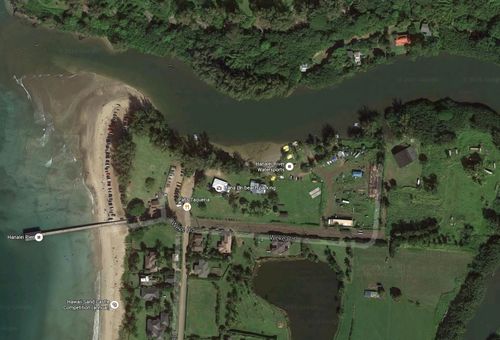
In a case we’ve been following in which the County of Kauai is condemning several Hanalei-area parcels to expand an adjacent public beach park, the Hawaii Supreme Court has accepted certiorari and agreed to review these three questions:

QUESTION NO. 1.: Must two parcels physically abut in order for the jury to consider whether they are part of a larger parcel?

QUESTION NO. 2: Where there are multiple properties being condemned from different owners, does statutory interest on a conditional deposit only accrue after each condemnee establishes an entitlement to its portion of the deposit?

QUESTION NO. 3: Does Haw.Rev.Stat. § 101-19 enable a condemnor to withdraw a portion of its estimate of just compensation after deposit with the Court and after taking possession of the property?

We filed an amici brief on Question 1, arguing that “[t]wo parcels need not abut in order for an eminent domain jury

Continue Reading HAWSCT Agrees To Review Eminent Domain Case: Larger Parcel, Interest, And Reducing The Deposit

This just in, in a case we’ve been following closely.

In City of Perris v. Stemper, No. S2133468 (Aug. 15, 2016), the California Supreme Court held that the judge, and not the jury, determines the validity of a dedication which a condemnor asserts it would impose to get the condemned property “for free” if the owner ever asked it to develop the property to its highest and best use. The case involves whether the city can avoid paying just compensation by showing that it would, in the future, exact from the owners the very same property which the city is condemning. The only way the city wouldn’t require dedication of this property is if the owner continued to use it for agricultural purposes. The second issue which the court considered was the “project influence” rule, and whether the city’s dedication requirement must be ignored in determining just compensation.  

Continue Reading California Supreme Court: In Just Comp Trial, Judge, Not Jury, Determines Reasonable Probability Of Nollan-Dolan Exaction

Forgive me for the length of this post, but I’m writing while the thoughts are fresh, and before I get back to the real world. Those of you who may have emailed me in the past week, or who saw this post know that I’ve been occupied with the American Bar Association Annual Meeting in San Francisco. Meetings, CLE’s, and more meetings. Some of it very useful, some merely necessary.  

As usual, I spent most of my time with my main group, the Section of State and Local Government Law, where, unless my colleagues change their minds soon (there’s still time, guys), I will become the Chair of the Section at about this time next year.

This is the ABA we’re talking about — an organization with a mixed reputation among members of our profession — and some of you have asked me why it is I am

Continue Reading ABA State And Local Government Law Section: The Hows, Whens, And Most Importantly, Whys

One for you land users. We’re not going to analyze the Hawaii Intermediate Court of Appeals’ published opinion in Robert D. Ferris Trust v. Planning Comm’n of the County of Kauai, No. CAAP-15-0000581 (Aug. 9, 2016) in too much detail, because our Damon Key colleagues Greg Kugle and Chris Leong represent the prevailing appellant. But here’s a short summary, after which you can read the opinion itself.

The narrow issue in the case involves the definition of the term “applicant” in two different sections in the County’s zoning ordinance. The underlying issue is one that’s hot right now across Hawaii and elsewhere: short-term or transient vacation rentals, defined in the Kauai zoning ordinance as rental for less than 6 months.  

Here, the homeowner had a parcel in an agricultural district, with a single-family residence on the lot. It began renting the home to vacationers in 2003, prior to

Continue Reading HAWICA Rejects Planning Department’s Formalistic Definition Of “Applicant” In Vacation Rental Case

IMG_20160804_161355 (1)

We’re experiencing the madness that is the ABA Annual Meeting — this time in San Francisco — hanging with colleagues from the State and Local Government Law Section (where we’re slated to be the Chair-Elect this year), and at the Council of Appellate Lawyers. These meetings are a lot of … meetings .. but there’s also a healthy dose of CLE programming, some of it focused on things like eminent domain and land use, and other topics near and dear. 

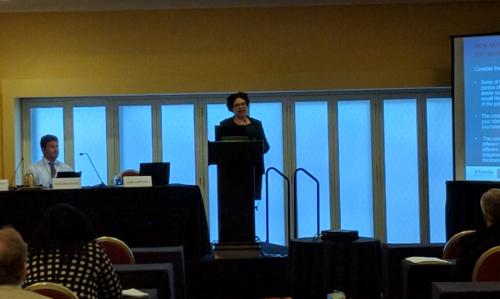
Pictured above is our friend and colleague from the Northwest, Jamila Johnson, who gave a spirited defense of the Fifth Amendment and property rights in her session on energy corridors. We were discussing the pros and cons of “quick take” statutes, and to counter the assertion that these things allow for efficient, convenient, and cost-effective government projects, Jamila responded (and we’re recalling this from memory here), “the government has

Continue Reading Eminent Domain Programming At The ABA Annual Meeting