A new(er) law review article, worth reading, from Dean Shelly Saxer, “When Local Government Misbehaves,” 2016 Utah L. Rev. 105 (2016). Here’s the abstract:

In this article, Dean Saxer examines the Supreme Court’s decision in Koontz v. St. Johns River Water Management District. In that land use case, the Court held that proposed local government monetary exactions from property owners to permit land development were subject to the same heightened scrutiny test as imposed physical exactions. The Court left unanswered the question of how broadly this heightened scrutiny should be applied to other monetary obligations imposed by the government. Saxer argues that “in lieu” exactions that are individually assessed as part of the permitting process should be treated differently than the impact fees that are developed through the legislative process and are applied equally to all developers without regarding to a specific project. Accordingly, Koontz’s application should be

Continue Reading New Article On Nollan/Dolan/Koontz: “When Local Government Misbehaves”
All you preemption, agriculture, municipal and local government law junkies, take note: later today, a panel of the U.S. Court of Appeals will hear arguments in three cases, each of which is an appeal of the District Court’s seriatim invalidation of county ordinances which regulated GMO and pesticide use in Kauai, Maui, and Hawaii Counties, respectively. The Ninth Circuit live streams its arguments, so those of you not able to be present in the downtown Honolulu courthouse today can follow along. 

In each of the three cases, the District Court invalidated the ordinances, mainly on the ground that county ordinances regulating GMO production and pesticide use are preempted by state law. 

We won’t go into the details of the cases, having covered them many times previously. Disclosure: we also filed an amicus brief in one of the cases in the District Court, and represented the “vote no” campaign in

Continue Reading Today: Ninth Circuit Oral Arguments In Hawaii Anti-GMO Cases

20160609_095451

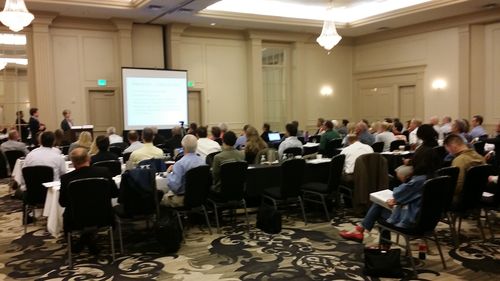
A very good crowd for today’s Oregon Eminent Domain Conference in Portland. 

Here are the links to the cases and other materials that we spoke about today in our session “Inverse Condemnation and Regulatory Takings – Issues and Trends.”  

Our thanks to Planning Chairs Jill Geleneau and Paul Sundermier for putting together a great program, and for inviting us to speak. 


Continue Reading Links From Today’s Oregon Eminent Domain Conference

20160603_075340

As we head into the weekend, one more reminder about two worthwhile eventss being staged next week: 

  • Monday, June 6, 2016:Airbnb & Zoning: A Planner & Lawyer’s Guide to Short-Term Rentals,” with our ABA and Owners’ Counsel colleague Dwight Merriam, FAICP. From the Planning and Law Division of the American Planning Association. Details here. If issues about the “sharing economy” like AirBnB, Uber, Lyft, and similar operations, and how they work in the regulatory environment are of interest, you might want to consider joining us at the ABA: we’ve just formally launched a new group within the Section of State and Local Government Law dedicated to these pressing legal questions. Stay tuned here for a separate post on how to join us.  
  • Thursday & Friday, June 9-10, 2016: Oregon Eminent Domain Conference, Portland. We’ll be speaking at that one. The focus is on Oregon


Continue Reading Seminar Reminder: Oregon Eminent Domain; Sharing Economy Issues

Frisco

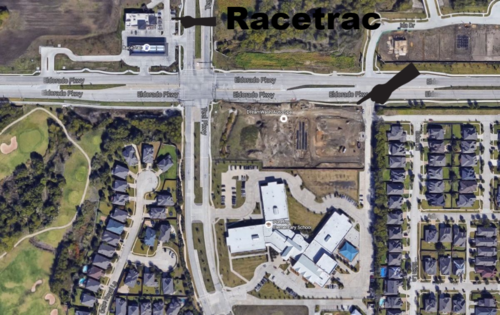
The plaintiffs in FLCT, Ltd. v. City of Frisco, No. 02-14-00335-CV (May 26, 2016), owned two adjoining parcels in the Dallas-Ft Worth area at the southeast corner what could be a very busy (and therefore profitable) intersection of two parkways. After checking with the city that the restriction in the Commercial zoning which prohibited the sale of beer and wine within 300 feet of a school wasn’t going to prohibit such sales if they sold the southern portion of the parcels for a school, the owners did so. The owners and their new southern neighbor the school district executed a development agreement that acknowledged that the sale of alcohol on the remaining parcels was okay. Building permit issued. 

A Racetrac gas/convenience store was what they had in mind. But the City amended the zoning code. And that was enough, apparently, to make the planning department change its mind about

Continue Reading Tex App: How To State A Penn Central Regulatory Takings Claim

1

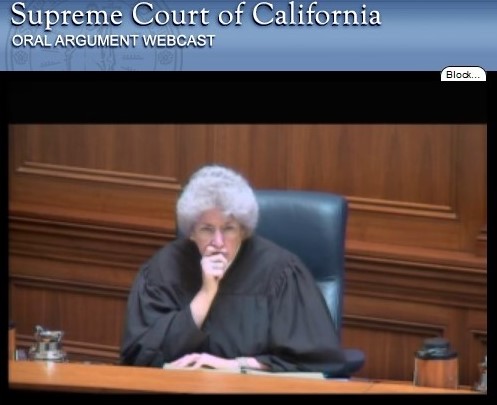
The dramatic moment of the day during last Thursday’s California Supreme Court oral arguments in City of Perris v. Stamper, No. S213468 (which we previewed here: “Cal Supreme Court Oral Argument Preview: In Just Comp Trial, Does Jury Determine Reasonable Probability Of Exaction?“), occurred during the rebuttal arguments by the city’s lawyer. The case involves whether the city can avoid paying just compensation by showing that it would, in the future, exact from the owners the very same property which the city is condemning. The only way the city wouldn’t require dedication of this property is if the owner continued to use it for agricultural purposes. 

Counsel for the city had opened her initial argument time with this:

May it please the court…The project effect doctrine, Your Honors, categorically does not apply to dedication. The city can validly get a piece of land for free because it is roughly proportional

Continue Reading Perris When It Sizzles: Why Pay When “we can get it for free” — California Supreme Court Oral Argument Recording

Tomorrow morning, Thursday, May 26, 2016, starting at 9:00 a.m., the California Supreme Court will be hearing oral arguments in an eminent domain case that sits at the intersection of jury determinations of just compensation, and the Nollan/Dolan unconstitutional conditions issue. 

Here is the link to the argument live stream

The court is now live-streaming video of oral arguments, so you can follow along in real time. We’ll post the link when it goes live at the court’s web site.

Programming note: the argument is second on the 9:00 calendar, which means that the case will most likely be called some time after 10:00 a.m., after the first case is done. 

In City of Perris v. Stamper, No. E054495 (Cal. App. Aug. 9, 2013), the Court of Appeal held that in a condemnation action, “issues surrounding the dedication requirement are essential to the determination of ‘just

Continue Reading Cal Supreme Court Oral Argument Preview: In Just Comp Trial, Does Jury Determine Reasonable Probability Of Exaction?

Here’s the amicus brief we filed yesterday on behalf of lawprof David Callies and our colleagues at Owners’ Counsel of America in an important case involving ownership and use of the “dry sand” beach, now pending in the North Carolina Supreme Court.  

In Nies v. Town of Emerald Isle, No. COA15-169 (N.C. App. Nov. 17, 2015), the court of appeals held that the dry sand portion of the beach — the part between the mean high water mark and the dune or vegetation line — is subject to the public trust. Consequently, the Town was not liable for a regulatory taking when it allowed the public, for a fee, to drive on the beach. The Nies family, which thought it owned the property inland of the MHWM under long-standing North Carolina law, and that the public trust only applied to property seaward of the MHWM, sought compensation.  The North Carolina

Continue Reading Amici Brief: If A Legislature Or Court Moves The Public Trust Shoreline Inland, It’s A Taking

Check out this post (“Did the Sixth Circuit Unintentionally Adopt an RLUIPA Equal Terms Test?“) from RLUIPA gurus Evan Seeman, Karla Chaffee, and Dwight Merriam on their RLUIPA Defense blog, analyzing the Sixth Circuit’s recent opinion in Tree of Life Christian Schools v. City of Upper Arlington, No. 14-3469 (May 18, 2016).

We won’t go into the details because our colleagues cover them pretty well, but wanted to point this one thing out. The issue in the case was whether the city could be held liable under RLUIPA’s “equal terms” provision (which requires local governments to impose land use regulations on religious and nonreligious users on an equal basis), after it refused to allow a religious school to rezone property in an economic development zone to allow the school.

The school didn’t conform to the area master plan, which allowed only uses which would increase the government’s

Continue Reading 6th Cir: Avoid Your RLUIPA Problems By Condemning Church-Owned Property, Then Selling It “to a buyer that the government thinks offers superior economic benefits”