ALI2017 - Copy
ALI2017

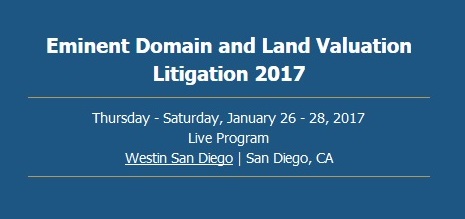
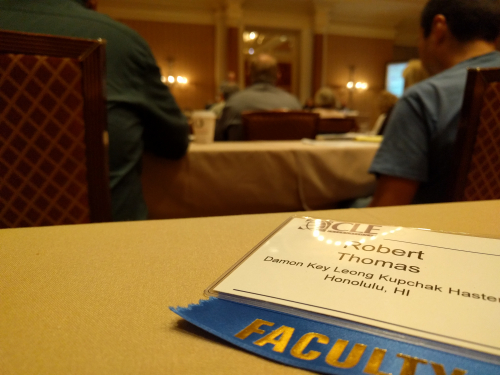
We’ve teased some of the details on the 2017 ALI-CLE Eminent Domain and Land Valuation Litigation and Condemnation 101 Conference, to be held at the Westin San Diego, January 26-28, 2017, but here are the details you’ve been waiting for.

This is the “big one,” our annual 3-day festival of all things eminent domain, property, takings, inverse condemnation, and just compensation. Truly national in scope, this is the 34th annual edition, and the one conference you must attend. Our 2016 conference in Austin was one of the best in years, and we’re on the way to replicating it in 2017, with a great venue in an exciting city. 

Look for the web and printed brochures to show up in your mailboxes, but in the meantime, here are some of the highlights (we’ll post more in the next few days):

  • Relocation, relocation, relocation: we are featuring two sessions on this

Continue Reading Details: ALI-CLE Eminent Domain And Land Valuation Conference – San Diego, January 26-28, 2017

 IMG_20160929_102807
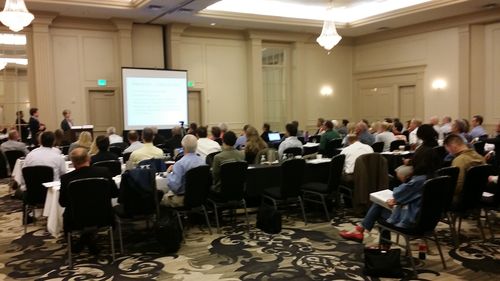
During. Good crowd.

20160929_074511
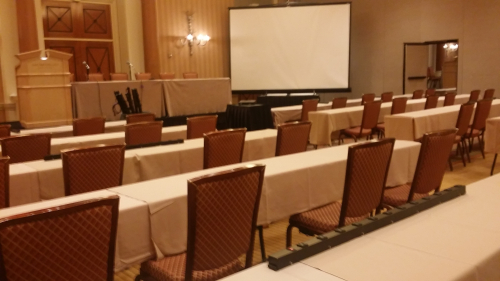
Before. Note the power strips on the tables.
Well played, Caesar’s, well played
.

To supplement your written materials, here are the decisions and other materials which we spoke about this morning at the CLE International Eminent Domain seminar:


Continue Reading Links And Notes From Today’s Las Vegas Eminent Domain Seminar

This just in, in a case we’ve been following closely.

In City of Perris v. Stemper, No. S2133468 (Aug. 15, 2016), the California Supreme Court held that the judge, and not the jury, determines the validity of a dedication which a condemnor asserts it would impose to get the condemned property “for free” if the owner ever asked it to develop the property to its highest and best use. The case involves whether the city can avoid paying just compensation by showing that it would, in the future, exact from the owners the very same property which the city is condemning. The only way the city wouldn’t require dedication of this property is if the owner continued to use it for agricultural purposes. The second issue which the court considered was the “project influence” rule, and whether the city’s dedication requirement must be ignored in determining just compensation.  

Continue Reading California Supreme Court: In Just Comp Trial, Judge, Not Jury, Determines Reasonable Probability Of Nollan-Dolan Exaction

A new(er) law review article, worth reading, from Dean Shelly Saxer, “When Local Government Misbehaves,” 2016 Utah L. Rev. 105 (2016). Here’s the abstract:

In this article, Dean Saxer examines the Supreme Court’s decision in Koontz v. St. Johns River Water Management District. In that land use case, the Court held that proposed local government monetary exactions from property owners to permit land development were subject to the same heightened scrutiny test as imposed physical exactions. The Court left unanswered the question of how broadly this heightened scrutiny should be applied to other monetary obligations imposed by the government. Saxer argues that “in lieu” exactions that are individually assessed as part of the permitting process should be treated differently than the impact fees that are developed through the legislative process and are applied equally to all developers without regarding to a specific project. Accordingly, Koontz’s application should be

Continue Reading New Article On Nollan/Dolan/Koontz: “When Local Government Misbehaves”

20160609_095451

A very good crowd for today’s Oregon Eminent Domain Conference in Portland. 

Here are the links to the cases and other materials that we spoke about today in our session “Inverse Condemnation and Regulatory Takings – Issues and Trends.”  

Our thanks to Planning Chairs Jill Geleneau and Paul Sundermier for putting together a great program, and for inviting us to speak. 


Continue Reading Links From Today’s Oregon Eminent Domain Conference

1

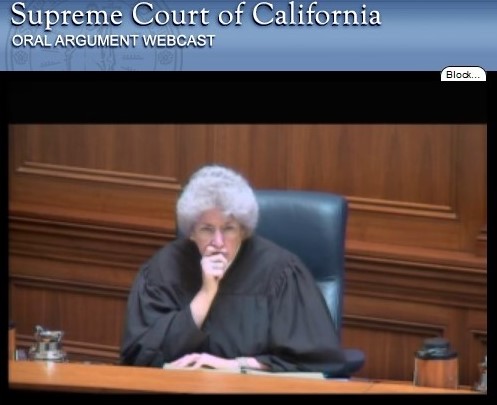
The dramatic moment of the day during last Thursday’s California Supreme Court oral arguments in City of Perris v. Stamper, No. S213468 (which we previewed here: “Cal Supreme Court Oral Argument Preview: In Just Comp Trial, Does Jury Determine Reasonable Probability Of Exaction?“), occurred during the rebuttal arguments by the city’s lawyer. The case involves whether the city can avoid paying just compensation by showing that it would, in the future, exact from the owners the very same property which the city is condemning. The only way the city wouldn’t require dedication of this property is if the owner continued to use it for agricultural purposes. 

Counsel for the city had opened her initial argument time with this:

May it please the court…The project effect doctrine, Your Honors, categorically does not apply to dedication. The city can validly get a piece of land for free because it is roughly proportional

Continue Reading Perris When It Sizzles: Why Pay When “we can get it for free” — California Supreme Court Oral Argument Recording

Tomorrow morning, Thursday, May 26, 2016, starting at 9:00 a.m., the California Supreme Court will be hearing oral arguments in an eminent domain case that sits at the intersection of jury determinations of just compensation, and the Nollan/Dolan unconstitutional conditions issue. 

Here is the link to the argument live stream

The court is now live-streaming video of oral arguments, so you can follow along in real time. We’ll post the link when it goes live at the court’s web site.

Programming note: the argument is second on the 9:00 calendar, which means that the case will most likely be called some time after 10:00 a.m., after the first case is done. 

In City of Perris v. Stamper, No. E054495 (Cal. App. Aug. 9, 2013), the Court of Appeal held that in a condemnation action, “issues surrounding the dedication requirement are essential to the determination of ‘just

Continue Reading Cal Supreme Court Oral Argument Preview: In Just Comp Trial, Does Jury Determine Reasonable Probability Of Exaction?

We thought there was a chance in a case out of San Jose, California, that the U.S. Supreme Court might take up the long-standing issue of whether legislatively-imposed exactions meet the nexus and proportionality unconstitutional conditions tests from Nollan, Dolan, and Koontz. Do those tests require an individualized determination, or is it enough that the conditions are imposed on everyone? 

But the Court declined to review that case. There was a question in whether San Jose’s affordable housing requirements were “exactions,” because the California Supreme Court disposed of the case by concluding that the regulations were mere run-of-the-mill zoning ordinances, and thus not subject at all to N-D-K. Thus, the heightened scrutiny required by N-D-K didn’t apply.  

This cert petition, recently filed, however, presents the legislatively-imposed question very clearly. In Common Sense Alliance v. Growth Management Hearings Bd., No. 72235-2-1 (Wash.

Continue Reading New Cert Petition: Are Legislative Exactions Immune From Nexus And Proportionality Requirements?

Dominionstorage

Is the forced acquisition of property by the government’s power of eminent domain a “purchase?” To the Virginia Supreme Court, the answer to that question is yes. Why, we’re not really sure, because the court doesn’t tell us why.

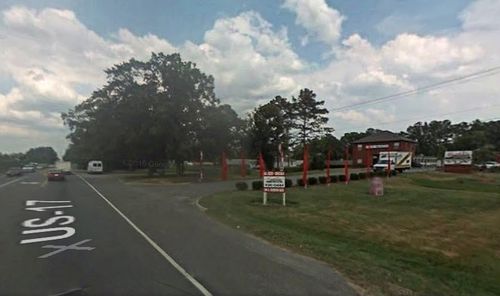
In City of Chesapeake v. Dominion SecurityPlus Self Storage, LLC, No. 150328 (Apr. 29, 2016), the court held that the use of the word in a subdivision plat in which the owner agreed that it “reserve for future purchase by the City” a part of its property with no compensation for any improvements on that land, meant that the owner also agreed to let the city condemn the land without paying for the improvements.  

This case involved a highway widening and elevation project in southern Virginia. The current owner of the property, which operates a self-storage facility on the parcel, purchased it from the prior owners who had subdivided it

Continue Reading Virginia: Taking By Eminent Domain Is “Purchasing” Property. Why? Because We Said So.

Another day that we’re tied up, so there won’t be too much analysis. But we wanted to post this fascinating case out of the California Court of Appeal, Friends of Martin Beach v. Martin Beach 1 LLC, No. A142035 (Apr. 27, 2016).

As the caption of the case indicates, it involves beach access. Specifically, access to a Northern California beach that, despite some junky Yelp reviews, is apparently popular enough to spawn a “friends of” activist defense group. The Friends want access across private property owned by a really rich Silicon Valley guy. Before he owned it, they alleged, the owners let the public cross to get to the beach. The Silicon Valley guy, however, didn’t continue that practice, and the lawsuit followed.

The owner claimed he had exceptionally good title, because the land, like much land in California, could trace title back to a Spanish or Mexican

Continue Reading Cal App On Tidelands And Mexican Title: Owner Has Title In Land Used For Beach Access, But May Have Lost It By Dedication