ALICLE-tagline-250x90

There’s still time to join us tomorrow, Friday, April 24, 2020 at 2-3pm Eastern Time, they will be presenting “Strategies for Litigating Regulatory Taking Cases” in a webinar produced by ALI-CLE. Register here (multiple attendee discounts available). 

At the recent ALI-CLE Eminent Domain and Land Valuation Litigation Conference in Nashville, our colleagues, New York’s Jon Houghton and Hawaii’s Dave Day presented a very informative program on litigating regulatory takings cases. Jon is a property owner-side lawyer, while Dave is a Deputy Attorney General who represents the State of Hawaii in such cases. So it was a practical and balanced presentation. Jon and Dave are taking it to the next level. This isn’t simply a repeat of their Nashville program, but they will be exploring in more detail the practicalities of building and defending these difficult cases. 

Here’s the description of the program:

The U.S. Constitution provides that
Continue Reading Still Time To Join Us (Tomorrow): ALI-CLE Webinar – Strategies for Litigating Regulatory Taking Cases

Here’s the latest complaint challenging a governmental business shut-down order. In this case, it is an order by the Michigan governor. We’ve seen similar lawsuits recently (see here, here and here, for example). So far, these complaints have have not met with receptive audiences. This one was tossed aside quickly. This one resulted in an opinion, but also lost.  

But unlike the other complaints, this latest one puts the takings argument front and center and lays out, in great detail, the theory behind the argument. It reads more like a brief (or maybe a press release) than the typical “short and plain statement” complaint. 

Does that mean we think it has any better chance than other efforts? No, for the same reasons that so far, we haven’t seen a takings claim that jumps out to us as one highly likely to get traction. Doesn’t mean the

Continue Reading A Clean Well-Pleaded Complaint: Latest Takings Challenge To Shut-Down Order

Lech

Today, along with our colleague Bill DeVinney, we filed this amicus brief in support of the property owners’ cert petition in a case we’ve been following for a while. 

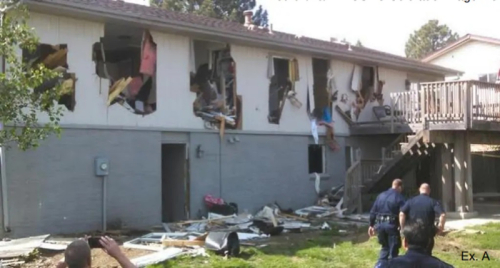
Yes, this is the case where the Village police pretty much destroyed a family home in the course of their efforts to dislodge a shoplifter who had taken refuge there while fleeing. Homeowner sought compensation for a taking. The Tenth Circuit, however, concluded “no taking” because the police were exercising the police power. And you can’t have a taking where the government is exercising the police power.

Instead of summarizing our brief, how about we just post the Summary of Argument:

This Court should review the Tenth Circuit’s holding that action taken by the government under its police power—as opposed to an exercise of eminent domain—can never trigger a taking under the Fifth Amendment’s Just Compensation Clause. This brief makes two main

Continue Reading Amicus Brief: Invocation Of “Police Power” Is Not Dispositive In Takings

20160114_125445

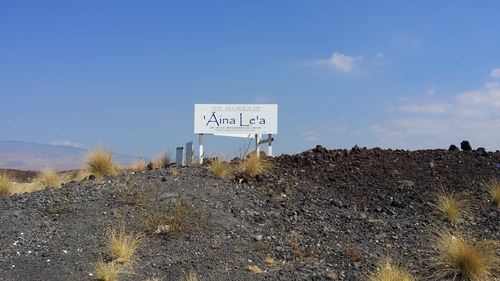
Here’s an article, just published in the American Planning Association’s monthly magazine, Planning (read the entire April issue here), summarizing the Ninth Circuit’s latest foray into regulatory takings, Bridge Aina Lea, LLC v. State of Hawaii Land Use Comm’n, No. 18-15738 (9th Cir. Feb. 19, 2020).

In Legal Lessons – What Constitutes Loss? we write about the decision and the court’s conclusion that losses short of 100% do not qualify for a per se Lucas taking, and are not enough to tip the scales for a Penn Central taking either. The opinion also adds to the growing confusion about whether the regulatory takings doctrine deals with use or value.  

Our thanks to the APA for asking us to contribute, for making the editing process so easy, and for allowing reprinting of the piece here. Check it out. 

Legal Lessons – What Constitutes a Loss? Planning Magazine (Apr. Continue Reading New Article: Ninth Circuit’s Latest Foray Into Lucas And Penn Central Takings

Real_liberty

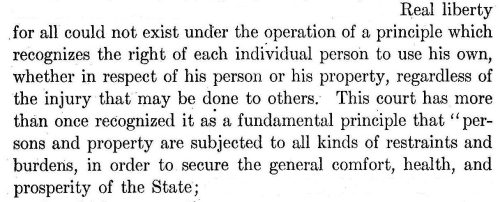
Here’s what we’re reading today, spurred by the headlines swirling around all of us. Mostly cases about the role of the courts when government curtails liberty or property rights under its police or emergency powers. We’ve now seen the first lawsuit claiming that an order to shut down businesses is a due process violation and is a regulatory taking requiring compensation, and we’re hearing about official quarantines, citations for people violating stay-home orders, and the like. 

We started with the vaccination cases. These got us to thinking that if the government can for the most part force people who don’t want vaccinations to get vaccinations (violating their bodily integrity), then how will a court treat seemingly less-invasive intrusions into liberty or property in the name of public health? 

In Jacobson v. Massachusetts, 197 U.S. 11 (1905), the Court distinguished “an absolute right in each person to be, at all

Continue Reading More Readings: “Real Liberty,” Vaccination, Plague, Police Power, And Takings

19-1277.Opinion

The work of the courts goes on, and as long as there’s stuff to report, we’ll keep reporting as usual.

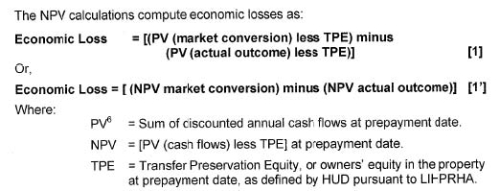
Yesterday, the U.S. Court of Appeals for the Federal Circuit issued an important takings decision in a case and issue we’ve been following for what seems like forever. In Anaheim Gardens, L.P. v. United States, No. 19-1277 (Mar. 25, 2020), the court held that a property owner in a regulatory takings case asserting a Penn Central taking may prove the “economic impact” factor by introducing evidence “by demonstrating their lost opportunity to earn market-rate rental income after prepaying their mortgages.” Slip op. at 17. The Court of Federal Claims had precluded such evidence, concluding instead that the before-the-regulation and after-the-regulation method was the only proper way. 

Here’s the short story: the feds adopted programs providing incentives to developers to build low-income housing. The programs offered below-market 40-year mortgages

Continue Reading Mi Casa Ain’t Su Casa: Proof Of Lost Opportunity Is Evidence Of Penn Central’s “Economic Impact” Factor

IMG_20170727_105403

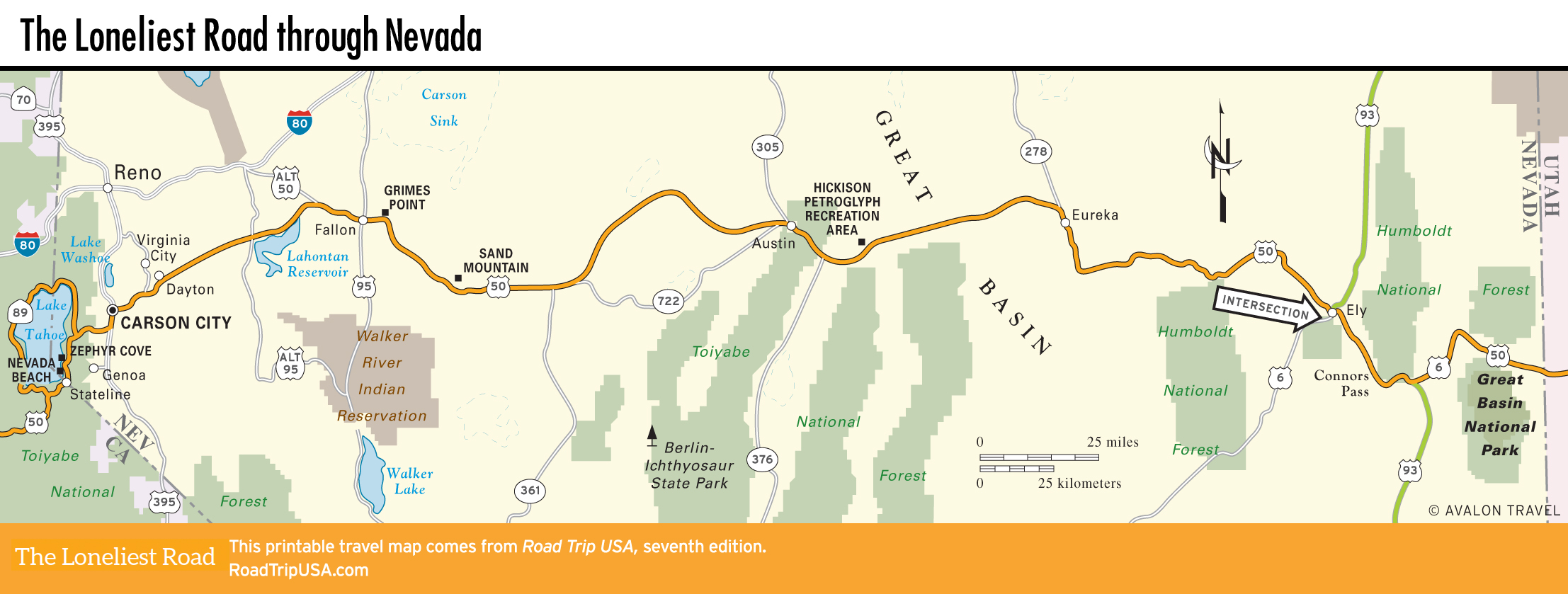
US 50 in Nevada – the “Loneliest Road”

Here’s the cert petition which we and our Nevada colleague Luke Busby filed today, asking the U.S. Supreme Court to review this Question Presented:

Conflicting with Loretto v. Teleprompter Manhattan CATV Corp., 458 U.S. 419 (1982), the Supreme Court of Nevada concluded that to prevail on a physical takings claim a property owner must show that a flood “effectually destroy[ed] or impair[ed] [the property’s] usefulness.”

The question presented is:

To constitute a taking under the Fifth and Fourteenth Amendments, must a physical invasion also destroy or substantially impair an owner’s economically beneficial uses of property?

Rather than summarize the case and the issues, here’s the Introduction: 

Physical occupations—as distinctly invasive public uses of private property—are treated by this Court differently than regulatory takings. Although the Court has consistently avoided adopting categorical rules in most takings cases, it has also long-recognized that

Continue Reading New Cert Petition (Ours): Must An Owner Whose Land Is Flooded Also Prove “Substantial” Loss Of Use?

Missed out on the 2021 ALI-CLE Eminent Domain and Land Valuation Litigation Conference swag?

Well fear not: here’s your chance to get your high-class reminder — a kit of road warrior essentials — to save the Conference date on your calendar. We’re already underway with planning the agenda and faculty, so it’s never too soon to block it off (January 28-30, 2021, at the 4-Diamond DoubleTree Resort, Scottsdale, Arizona). 

If you were not able to get your swag in Nashville, send us a note (rht@hawaiilawyer.com) and we shall gladly drop one or two in the mail to you.

While supplies last!  Continue Reading Unboxing The 2021 (Scottsdale) ALI-CLE Eminent Domain Conference Swag: Get Yours Today!

2587424782425260032

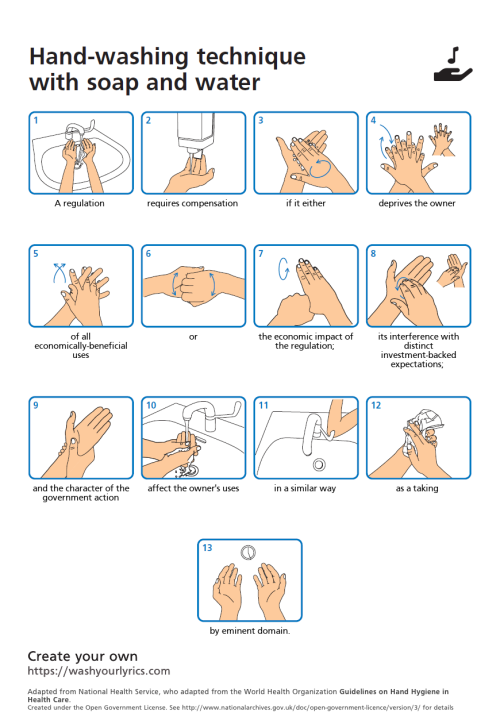
A minimum of twenty seconds, they say.

To help you do it right, here’s a mantra / mnemonic for you to say (silently, please) while you accomplish the task.

Keep healthy, everyone! Continue Reading Wash Your Hands!