


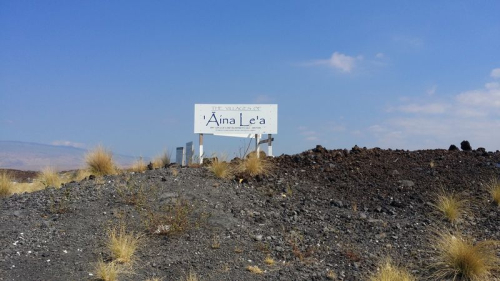
Ainalea

A short while ago, we featured the cert petition in a case from the Big Island that we’ve been following as various pieces of it went up and down through both the state and federal court systems. See “New (Mike Berger) Cert Petition: ‘This case is the proverbial ‘Exhibit A’ of much that is wrong [with takings law].

Now, after the State of Hawaii waived its right to file a BIO, five briefs of amici curiae (including one in which we played a small part) have been filed in support of the petition, urging the Court to review the Ninth Circuit’s opinion. We wrote about the case in a recent issue of the American Planning Association’s magazine. The short story is that a federal jury concluded that the State of Hawaii Land Use Commission took the owner’s property under both a Lucas and a

Continue Reading No Shortage Of Amicus Support For Takings Cert Petition (Lucas and Penn Central!)

In Utah Dep’t of Transportation v. Coalt, Inc., No. 20161063 (Aug. 17, 2020), the Utah Supreme Court dealt with a public use and a just comp issue.

The first is perhaps the more interesting. After a federal court upheld environmentalists’ challenge to the Environmental Impact Statement prepared by UDOT for its Legacy Parkway Project and enjoined highway construction, UDOT and the enviros settled. The settlement called for “additional measures to protect the wetlands and its wildlife inhabitants from the effects of the Parkway.” Slip op. at 6.

One of those measures? Get additional land for the Legacy Nature Preserve. Guess whose property was, as a consequence, now slated for eminent domain? You guessed it: Coalt’s. It objected to the taking, “arguing that UDOT did not have the authority to condemn Parcel 84 because it was not doing so for a transportation purpose or a public use, but to settle

Continue Reading Utah: As Long As A Taking Is For The Birds, Not The Enviro Plaintiffs, It’s A Public Use

A pipeline needed private property. Did it wait until it had actually taken the property before it started to build the pipeline? No. 

In Bayou Bridge Pipeline, LLC v. 38.00 Acres, No. CA 19-0565 (July 2020), the Louisiana Court of Appeal addressed a host of challenges:

  • A broad facial challenge to Louisiana’s expropriation system. The landowners asserted that allowing private entities to exercise the sovereign power violated due process, primarily because the delegation lacks concrete standards. The court rejected the argument, concluding that the state delegating the power to a common carrier pipeline and including a process that includes a predeprivation hearing to determine public use and necessity, is not a problem. Louisiana’s law “sets out appropriate standards to guide expropriating authorities and the courts, as well as providing for judicial review. Those standards are clearly set out in La.Const. art. 1, § 4, which requires that any taking


Continue Reading Louisiana Court Slaps Down Pipeline for Just Going Ahead And Building Before Actually Taking Property

In Altman v. Brevard County, No. 5D19-1839 (July 10, 2020), the Florida District Court of Appeal considered a host of owner objections to a taking of easements over five beachfront lots:

(1) the County was required to obtain separate resolutions for each taking; (2) the County’s petition in eminent domain did not strictly comply with the Florida Statutes; (3) the resolution on which the County based its petition was nullified by an amended resolution; (4) the trial court crafted takings outside of the pleadings; (5) the County failed to establish a reasonable necessity for the takings; and (6) the County failed to present a good faith estimate of value for each easement.

Slip op. at 2.

The court rejected most of the objections, but agreed with three: “[w]e find that the County’s petition failed because it did not provide clear legal descriptions of the properties to be acquired and

Continue Reading Condemnor Protip From Florida: Choose Wisely (Make Clear What You Want To Take)

A private pipeline company obtained a certificate of public convenience from FERC. Under the Natural Gas Act, FERC may issue such certificates conditioned on the applicant meeting the Clean Water Act’s requirement of obtaining state environmental check off on the project. The pipeline needed an easement across Schuecker’s land, and began the condemnation process under New York law. It attached to its condemnation petition the conditional FERC certificate. 

Schuecker objected, asserting that the FERC certificate was no good, because the pipeline had not met the condition: it had not certified to FERC that it had received all state approvals (as required by the federal Natural Gas Act). Indeed, the New York Department of Environmental Conservation had denied the pipeline’s water quality certification. The pipeline responded that it was seeking reconsideration with FERC, and that the NYDEC could not deny water quality certification because it was too late to do so.

Continue Reading NY Takes Eminent Domain Law From Worse To Worse* – Conditional FERC Certificate Only Prohibits Construction, Not Eminent Domain

In Natural Gas Pipeline Co. of America LLC v. Foster OK Resources LP, No. 118,185 (May 5, 2020), the Oklahoma Supreme Court upheld the necessity of a taking of an easement across private property by a private pipeline company that possessed a FERC certificate of public convenience. Nothing too surprising there. The bar for whether a taking is necessary to fulfill the stated public use is set about as low as a bar can be set in the law. Nearly total judicial deference (some might say “abdication,” but that’s a debate for another day). No different here.

But what really grabbed our attention was the court’s blithe conclusion that the private natural gas pipeline company could not contract away the federally-delegated power of eminent domain. You know this thread of argument: the government always retains its governmental power, and even where it expressly agrees to not exercise its

Continue Reading OK: Private Pipeline Company Is Like A Government: It Cannot Contract Away Its Right Of Eminent Domain

Our shut-in time has got us to thinking.

We’re all environmentalists now. This is the precautionary principle writ large. In a way, this is only part of a greater problem.

Welcome to the Twitterverse. We now have access to a vast amount of data — very often on a granular level — and this moves faster than the ability

Americans like to work

Americans are pretty wiling to give our elected leaders a lot of slack

playground Constitution has serious legs

Most don’t understand that their rights are, in normal time, highly restricted, at least in courts

takings lawyers are not really surprised as everyone else – we’re used to courts deferring to what may look like excessive and unwarranted assertions of governmental power. Unlike a lot of other litigation involving the government, representing property owners in eminent domain or takings cases

basic takings doctrine is really incoherent

we already

Continue Reading Things I’ve Learned (Am Learning) About #CoronavirusLaw

In Allard v. Big Rivers Elec. Corp., No. 2019-CA-000486 (May 15, 2020), the Kentucky Court of Appeals made short work of each of the property owner’s arguments objecting to a taking of land for a electric-transmission corridor, and we won’t go through each contention here.

But that one that we will mention briefly is the necessity argument. You know, the one you often hear from your property owner clients: “they shouldn’t put the [road, fire station, whatever the condemnor claims is the public use] on my property, it makes much more sense to put the [public use/purpose thing] somewhere else.” Makes intuitive sense doesn’t it? After all, how can a taking be “necessary” to accomplish the stated public use or purpose if it is not the best place for the thing, or even a rational place to locate it?

But despite this, you also know that in all

Continue Reading Ky App: Condemnor Can Choose Between Cemetery And Oak Tree, Same As It Ever Was (and there’s no necessity to tie a yellow ribbon round the old oak tree)

Texas Court of Appeals in Texas Central RR & Infrastructure, Inc. v. Miles, No. 13-19-000297 (May 7, 2020): sounds good.

We were going to write up this case, when Tiffany Dowell Lashmet (author of the fabulous Texas Agricultural Law Blog) posted her analysis: “Appellate Court Finds High-Speed Rail Meets Required Definitions for Eminent Domain Authority.”

We can’t add much to her excellent write-up, so we will simply recommend you read it.

More from the Dallas Morning News: “Texas bullet train inches another step closer to reality.” And from Engineering News-Record: “Court Ruling Elevates Eminent Domain Battle on $20B Texas Rail Project.”

Texas Central RR & Infrastructure, Inc. v. Miles, No. 13-19-00297-CV (Tex. App. May 7, 2020)

Continue Reading Private Condemnor: We’re A “Railroad” Because We Promise To Be A Railroad In The Future

In City of Chicago v. Eychaner, No. 1-19-1053 (May 11, 2020), the Illinois court of appeals revisited a case that it ruled on once before. 

Five years ago, in City of Chicago v. Eychaner, 26 N.E.3d 501 (Ill. Ct. App. 2015), the same court held that a redevelopment taking of Eychaner’s property qualified as a public use. We won’t go into the details of facts or that opinion’s reasoning. Instead, we’ll refer you to our summary, analysis (and criticism) of the opinion here (“The Chicago Way: City Taking Non-Blighted Property For Economic Development Was Not Pretextual Because … Studies“). After approving the taking, the court remanded the case for a determination of the compensation owed.

Flash forward. On remand, the jury determined just compensation was $7.1 million. Also while the case was remanded, the City changed its redevelopment plans. You know, the basis for the court

Continue Reading Illinois App: We Haven’t Changed Our Mind – Chicago’s Sketchy Redevelopment Taking Is Still For Public Use