You own a home built in 2002. A couple of years later, the county redevelopment authority decides that your home, and the properties your neighbors own, would together make a grand site for an industrial park. Your properties are “shovel-ready” (the authority’s term, not mine) and primed for industrial development.

So it decides your home is “blighted.” Nothing wrong with your property, mind you. No “urban decay,” no unsafe, unsanitary, inadequate, or overcrowded conditions (you know, attributes that come to mind when we think of a blighted property). Although acknowledging there is nothing wrong with your home, the authority maintains that your use of the property as a residence is “economically and socially undesirable” merely because industrial use is a “better” use and, therefore, you are underutilizing your land. Consequently, your property is blighted and the redevelopment authority can take it. The trial court finds that the authority’s claim of

Continue Reading Pa Court: No Public Use Because Residential Use Is Not “Blight”

Holdout The New York Times posts a story, “House Stands as Legacy to Fight Against Developers,” about one woman’s refusal to sell her modest Seattle, Washington area home to a redeveloper, even when offered $1 million.  If a picture is worth a thousand words…

While the case is not like Kelo — or the fictional The Castle — in that the developers apparently did not attempt to get the government to take Edith Macefield’s property forcefully by eminent domain once she refused to sell, it does illustrate at least one of the reasons people may have for refusing, even where the offer is obviously well in excess of the home’s value:

Everybody that’s come in and tried to talk about this has tried tocreate that image of her,” said Mike Semandiris, whose family has owneda chili parlor around the corner for more than 70 years. “But shedidn’t give a

Continue Reading A Holdout

In a major decision regarding eminent domain, whether the government must pay damages when its attempts to condemn property fail, and the standards applicable to challenging the government’s claim that a taking is for public use, the Hawaii Supreme Court today issued an opinion in County of Hawaii v. Richards, No. 28882, the consolidated appeal from two eminent domain lawsuitsfiled by the County in 2000 and 2005.

[Disclosure: we represent the property owner.]

The majority opinion by Justice Acoba, joined by Justices Nakayama and Duffy is posted here:

We hold that (1) a landowner in a condemnation action is entitled to damages under HRS § 101-27 where the property at issue is not finally taken in the context of a particular condemnation proceeding, irrespective of whether the government attempts to take the land through subsequent condemnation proceedings; (2) abatement does not apply where the relief sought in two

Continue Reading HAWSCT Opinion in Eminent Domain Abuse Cases – Kona Bypass Highway

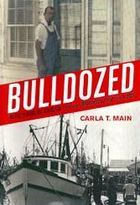
Overlawyered (chronicling the high cost of our legal system, it proclaims its mission to be) posts an item about the Bulldozed case, which we mentioned earlier today. In Royall pain to his critics, Walter Owens references a post by Jacob Sullum at Reason, and writes:

I can’t go on. I just can’t. I’m so scared of Royall that I can’t even repeat the colorful epithets that Sullum might apply to Royall if hedared (which he doesn’t) for fear that Royall will then find someexcuse to sue me too.

Also, Tim Sandefur at PLF on Eminent Domain has posted his thoughts on the case here.Continue Reading Overlawyered on Bulldozed: Royall pain to his critics

Bulldozed_home Following up on our earlier post, “‘No, I’m Spartacus!’” about the latest foul turn in the Bulldozed saga, the Institute for Justice (the folks who represented Susette Kelo) today announced that they are representing Carla T. Main, Bulldozed‘s author, in the defamation suit filed against her and and lawprof Richard Epstein (who had the temerity to review her book positively).  We reviewed Bulldozed here.  The IJ released this statement:

Dallas, Texas—Inperhaps the most striking example of a disturbing national trend,Dallas developer H. Walker Royall has launched a lawsuit spree tosilence any media or public affairs commentator who dares expose hisattempted abuse of eminent domain.  Similar suits have been filed inTennessee, Missouri and elsewhere by developers and governments lookingto silence critics of eminent domain for private gain.  

Royallworked with the city of Freeport, Texas, to try to condemn agenerations-old shrimp business owned by the Gore


Continue Reading The Fifth Amendment is Not Enough: Bulldozing Free Speech

Bulldozed_home Thanks to Alan Ackerman for alerting us to the latest horrible development in the eminent domain cases out of Freeport, Texas.  Recall that in Western Seafood Co. v. United States,No 04-41196 (5th Cir., Oct. 11, 2006), the court held that aprivate-to-private transfer for economic development that wasaccomplished as part of a “carefully considered development plan”passed muster.

That wasn’t the end of the story, since Carla T. Main authored a fantastic book about the case and the Gore family, whose property was taken.  We reviewed “Bulldozed: ‘Kelo,’ Eminent Domain, and the American Lust for LandhereAnd we weren’t the only ones who liked it.

Now, according to this report, Ms. Main has been sued for defamation by the developer who was the subject of Bulldozed.  Also included in the suit is University of Chicago law professor and eminent domain scholar Richard Epstein

Continue Reading “No, I’m Spartacus!”

In reviewing some of the comments posted on the Honolulu Advertiser’s November 1 report  “Rail study doesn’t list all affected properties,” it seems several of the commenters have fairly severe misconceptions about how eminent domain law works in Hawaii. Let’s clear some up some myths.

  • Myth #1: The city will offer a “premium” to property owners whose homes, businesses and churches will need to be acquired, because the city will want their properties quickly. Wrong on two counts. First, the city does not need to offer a premium since Hawaii law has a procedure by which the city can take immediate possession of property it wants, “ex parte” (without notice to the landowner). Second, the city will only offer what it believes to be the amount legally required to be paid for “just compensation” and damage, not a penny more. Indeed, the citywill claim it is


Continue Reading Clearing Up Myths About Hawaii Eminent Domain Law and the Rail

On November 4, 2008, Honolulu voters are being asked to say yes or no to a proposed amendment to the Honolulu charter:

Shall the powers, duties, and functions of the city, through its director of transportation services, include establishment of a steel wheel on steel rail transit system?

A “yes” vote means that the proposed $4+ billion rail project is full steam ahead, while a “no” vote would, by all accounts, kill it. Resolution 08-166, CD1, which put the issue on the ballot, is available here.

If the voters approve of the project, it will be the largest public works development in Hawaii’s history, and will require the acquisition of private property, either by purchase or eminent domain. In this post, we discussed an earlier report in the Honolulu Advertiser, “189 Hawaii properties in transit’s path,” which detailed the proposed rail route and some of the

Continue Reading D-Day Draws Nigh For Honolulu Rail, Condemnations

West Hawaii Today reports on yesterday’s oral arguments in the Supreme Court of Hawaii in County of Hawaii v. Richards, the appeal from two eminent domain actions on the Big Island of Hawaii.   [Disclosure: my Damon Key colleagues Ken Kupchak, Mark Murakami, and Christi-Anne Kudo Chock and I represent the property owners.]

“These arguments are not about a road. They’re about the law,” said Robert Thomas, an attorney for the trust. “Thegovernment in cases of eminent domain has a huge advantage. It createsthe facts. … If they lose, they’re not prohibited from trying againand again and again.”

. . . .

Hawaii County lost its first condemnationlawsuit when a Circuit Court judge found the condemnation served moreof a private purpose for Oceanside than a public purpose, as isrequired before government can take land by force. The county, under anew County Council, amended its condemnation plan, adding another

Continue Reading Oral Arguments in Kona Eminent Domain Abuse Appeals: Damages for Failed Condemnations, Abatement, and Pretext