The New York Appellate Division’s opinion in Huntley Power, LLC v. Town of Tonawanda, No. 22-011460 (June 9, 2023), is typically short (6 pages, including a dissent).

The town instituted eminent domain proceedings to take Huntley’s riverfront property, including an electric plant decommissioned in 2016, and water intake structures. The asserted public use is “revitalizing and redeveloping the former industrial property, which was a blight on the Town, and maintaining the critical raw water supply to significant industrial employers in the Town[.]” Slip op. at 2.

That was enough for the court to “reject reject petitioner’s contention that the condemnation will not serve a public use, benefit, or purpose[.]” Id. Rational basis, and so forth.

Nor was the condemnation “excessive,” because it allegedly took more than it needed.” There’s no obvious abuse — or at least any abuse that would qualify as an abuse of discretion. Slip op. at

Continue Reading NY App Div: OK To Condemn Blighted Property To Sell To Private Developer
Before you get too excited by the headline and think this is a Kelo issue, a word of caution: this short one from the Oklahoma Supreme Court is on a really niche topic: private condemnations that permit the private owner of property to institute a private-benefit taking to force a neighbor to sell an interest in its property if doing so is necessary

Childers v. Arrowood, No. 119815 (June 20, 2023), involved whether it is proper under Oklahoma’s private taking statute for the owner of property that isn’t landlocked and can physically access the outside world but has no utility service, to condemn an easement over an adjacent parcel to obtain such service.

Until 2008, Childers’ property was landlocked. But their predecessor-in-title secured an express access easement from the owner of the neighboring property, solving that problem. But then new owners bought the dominant parcel, and want to

Continue Reading Oklahoma: Private Necessity Takings Are OK, And Don’t Require A Public Use Or Purpose

At first, the Iowa Supreme Court’s opinion in Juckette v. Iowa Utilities Board, No. 21-1788 (June 16, 2023) looks like a promising read. The issue — is a utility expanding its use of an express road easement to install electric lines a taking? — is one that we’ve been following.

But by the time you get to the end of the short opinion (10 pages), you realize the court didn’t decide much, other than yeah, the utility has the statutory authority to use the easement this way. The court can’t reach a decision on whether that’s a taking for public use. Not because there’s some problem with the case or the way it was presented, but because one of the Justices on the seven-member court sat it out and the remaining six couldn’t agree. Affirmed by an equally divided court, 3-3. 

This apparently is not that unusual in

Continue Reading Iowa Supreme Court Can’t Decide Much Of Anything In Power To Take Challenge

Rindge

Continuing in our line of posts noting milestones in dirt law, we bring you Rindge Co. v. County of Los Angeles, 262 U.S. 700 (1923), decided 100 years ago today.

For any of you who have driven the Pacific Coast Highway through Malibu, you will know the site of this eminent domain case. As described by the Supreme Court in its opinion:

The plaintiffs in error are the owners of a large tract of land lying on the shore of the Pacific Ocean, known as the Malibu Ranch, extending in an easterly and westerly direction about twenty-two miles and varying in width from one-half mile to one and one-half miles. It lies at the base of a high and rugged mountain range which parallels the shore at a distance of from three to four miles, its northern line extending along the slope and foothills of this mountain

Continue Reading Has Not Aged Well – SCOTUS, June 11, 1923: “The necessity for appropriating private property for public use is not a judicial question.”

Screenshot 2023-04-20 at 19-13-52 Condemnation 101 2023 Preparing and Presenting an Eminent Domain Case ALI CLE

Missed out on the 2023 ALI-CLE Eminent Domain and Land Valuation Litigation Conference back in February in Austin, and the legendary “Condemnation 101” track?

Well, here’s your chance to get the knowledge. On May 18, 2023, ALI-CLE is going live with a rebroadcast of that program, including real-time Q & A with the program Planning Co-Chairs.

As we’ve noted before, the Condemnation 101 program is a great “basic training” program for lawyers new to the eminent domain and takings practice. But it is also a fantastic refresher course for those experienced dirt lawyers looking to brush up on the fundamentals.

CLE credits are available, of course. And unlike the in-person program back in February, there’s no danger of ice storm delays!

More about the program here, including registration information, fees, the agenda, and the faculty. And, just because you are a reader of this

Continue Reading Condemnation 101 (2023), Redux

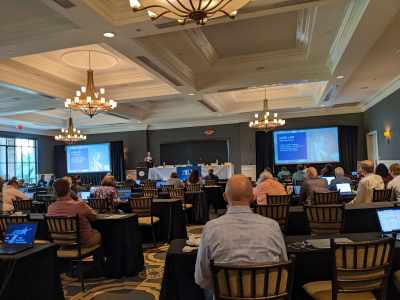
PXL_20230414_184043420
Good crowd.

Here are the cases and other materials we spoke about on Friday at the 22d Annual Texas Eminent Domain Conference, in Austin. A big thank you to the Planning Chairs and to our friends at CLE International for the speaking invite.

The other cases discussed are in your materials!

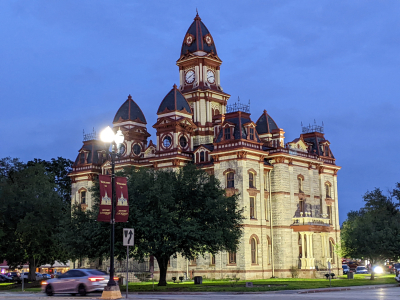
PXL_20230415_011347576
The nearby Caldwell County Courthouse. A classic.

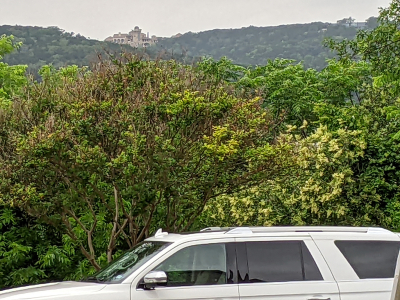
PXL_20230414_190735641
Why did no one tell me that Jabba’s Palace is in Austin?Continue Reading Links And Materials From The 22d Annual Texas Eminent Domain Conference

D Callies Retirement Celebration Invite 4-27-2023.f

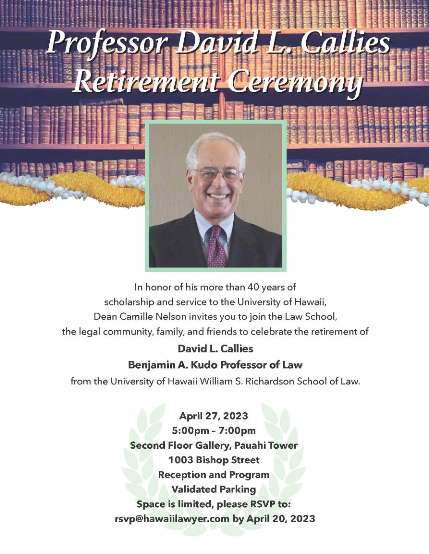
Come join us on Thursday, April 27, 2023, from 5-7pm, downtown Honolulu, to celebrate the retirement of Professor David L. Callies from the University of Hawaii Law School.

Join U.H. Law School Dean Camille Nelson, Professor Callies’ colleagues, his students (present and former), the Hawaii legal community, and family and friends as we honor 43 years of scholarship, teaching, service, and practice.

Professor Callies is a prolific scholar and author, and has mentored generations of lawyers. Known especially for his work in property, land use, takings, administrative law, and state and local government law, he has also been presented with numerous awards including William and Mary’s Brigham-Kanner Property Rights Prize, and the Owner’s Counsel of America’s Crystal Eagle

Invitation and how to RSVP (or click below). Space is limited, so please let us know you are attending as soon as you can.

Details:

Thursday,

Continue Reading April 27, 2023, 5-7pm, Honolulu: Join Us To Celebrate The Work And Career Of Professor David Callies

Screenshot 2023-04-04 at 09-45-09 Information - Texas Eminent Domain Conference

If you are in the Austin area (or anywhere in Texas for that matter), please consider joining us April 13 and 14, 2023 for the 22d Annual Texas Eminent Domain Conference.

Two days of great programming and talking shop, plus a chance to connect and re-connect with friends and colleagues. And, of course, all the things Austin has to offer. Yes were were there not that long ago, but come on…Austin is a great conference venue, right?

We’re speaking about “National Eminent Domain and Takings Trends,” and the balance of the program is pretty darn good also (see here or below for the full agenda).

Registration ongoing, but space is filling up fast so don’t miss out.

See you there.

Agenda & Program, 22d Annual Texas Eminent Domain Conference (CLE Int’l), Austin, Apr. 13-14, 2023)

Continue Reading Join Us At The 22d Annual Texas Eminent Domain Conference, April 13-14, Austin

A short one today from the Wisconsin Court of Appeals.

In Sojenhomer LLC v. Village of Egg Harbor, No. 2021AP1589 (Mar. 14, 2023), the court held that when a statute prohibits the use of eminent domain to acquire property for a “pedestrian way,” the village cannot take for a sidewalk.

Seems pretty obvious, no? Well, it took a 24-page opinion to work through it.

Here’s the statute. Sure enough it does say that “[p]roperty may not be acquired by condemnation to establish or extend a recreational trail; a bicycle way, as defined in s. 340.01 (5s)340.01 (5e)346.02 (8) (a).” And clicking on that last link shows that pedestrian ways are defined as “a walk designated for the use of pedestrian travel.”

Sojenhorner naturally thought so, because when the village “sought to condemn Sojenhomer’s property to establish a sidewalk,” slip op. at 2, it objected.

We’re

Continue Reading When Statute Says No Eminent Domain For “Pedestrian Way,” Does That Include Sidewalks? (Is This A Trick Question?)

Remember that case from a couple of years back, where the Supreme Court, by a tantalizingly close vote, declined to grant a cert petition seeking review of an Illinois decision that preventing future blight was a sufficiently public use to support a redevelopment taking? 

A law student at Catholic U. law school recently made a presentation on the case and the issues as part of the Student Scholars Series, and the law school has kindly made the video available. More here.

We think it is fantastic both that law students are examining these issues, and that the law school encourages and promotes their work. It gives us comfort for the future of the profession, and the Dirt Law Bar.

Well done, Mr. Tocchio!Continue Reading Catholic U Law School Student Scholar: “Eychaner v. City of Chicago: Repercussions after The Supreme Court refuses to take up a Takings Clause Reconsideration”