Are you like us and cannot type, write, or say “statue” without it coming out “statute?” That’s an affliction we’ve had since law school days, and one we’re probably never going to shake.  

As lawyers, we’ve all no doubt seen plenty of crappy statutes in our careers.

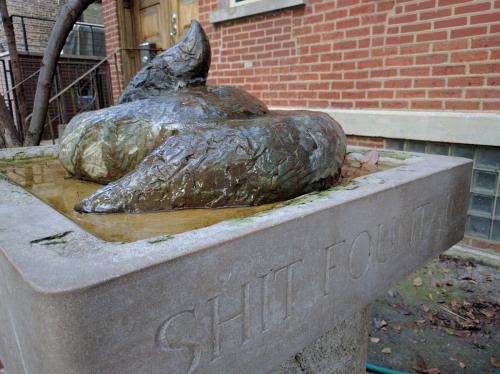
But, at the risk of being offensive, here’s an actual s**t statue, located in the City of Chicago. Created by an artist tired of dog owners allowing their Fidos to do their business on the artist’s front steps, he protested in the only way he knew how: by reproducing the offending items in bronze, larger than life, with water flowing out of the top.

Crass but apparently effective: evidence of actual dog doo was nowhere to be found during our recent visit.  
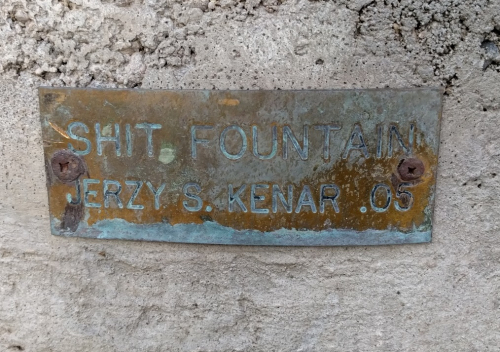
IMG_20160924_173444
The artist.

IMG_20160924_173527
Another angle on his work. 

Continue Reading NSFW (Maybe): A Chicago Statue

Photo

Tomorrow, Thursday, October 6, 2016, at 10:00 a.m. at Aliiolani Hale, the Hawaii Supreme Court will hear oral arguments in a case we’ve been following (we filed an amicus brief in the case, supporting the property owner on the first Question Presented), County of Kauai v. Hanalei River Holdings, Ltd., No. SCWC-14-0000828. 

The case is a taking by the County of several parcels on the north short of Kauai, but the main issue in the case — do parcels need to physically touch in order for the jury to consider them part of a larger economic parcel — goes well beyond this one case. The Honolulu rail project, probably the biggest eminent domain project in Hawaii’s history, is underway, and the larger parcel issue could arise is more than a few cases there. What we thought was settled doctrine in Hawaii law was thrown into question by the

Continue Reading Oct 6, 2016: HAWSCT Oral Argument In Eminent Domain Case: Do Parcels Need To Touch To Be Part Of A “Larger Parcel”

20160529_124542

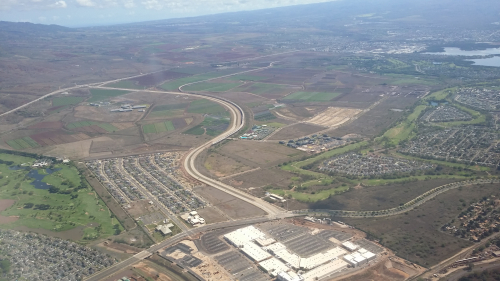
As we noted last week, the expanding costs of the Honolulu Rail project has forced Honolulu’s mayor to ask whether construction should be delayed or stopped entirely, short of its planned terminus at Ala Moana shopping center. “Middle Street” became the new rail watchword, even though stopping it there would omit — temporarily or permanently — the most densely populated, and therefore the most useful, portion of the route. 

Middle Street is somewhat of a nondescript, dare we say it, “blah” street; more of a demarcation between the airport area and the more industrialized Dillingham corridor. A place you generally go by on your way elsewhere, not consider a destination. Frankly, it doesn’t have much of a reputation for anything exciting. In our minds, it is most notable as the border between “town” and “country,” at least psychically. 

  • Civil Beat‘s Chad Blair, however, sees it differently. In a tongue-in-cheek


Continue Reading Rail: Building To The Nowhere Of Middle?

20160529_124542

In a surprise move, Honolulu Mayor Kirk Caldwell today announced that he supports suspending the Honolulu rail project at Middle Street, at least until there’s more money in the coffers. See “Mayor, Council chairman say rail should end at Middle Street for now” from Marcel Honore at the Star-Advertiser.

We think the key words in that headline are “for now,” and this is not the end of the project, necessarily. Notwithstanding that, as the story notes, this could be a “seismic shift” for the project, which has been plagued by massive cost overruns and other embarrassments since its inception, such as having its financially-savvy Board chairman resign and be replaced by a career politician, only to see her set her cap for Congress and abandon ship when one of Hawaii’s two House seats unexpectedly became available. What started off as a project projected to cost a bit more than $3

Continue Reading Honolulu To Truncate Rail … For Now?

Doneraki

We did a post a while back about a Houston barbecue restaurant which had some troubles with the Harris County, Texas, Metropolitan Transit Authority. The court of appeals held that the restaurant’s lost profits could not be recovered in an inverse condemnation action.

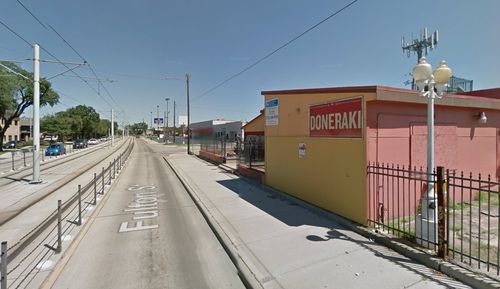
Well, that same court has rendered an opinion in a case involving a different restaurant impacted by the same transit authority. Doneraki serves Mexican fare (although our first impression was that a restaurant with “doner” in the name was probably a Turkish joint; we stand corrected). Or should we say “served Mexican fare,” because alas, the place — as the photo above shows — is now boarded up and out of business.

The owners alleged it was the Transit Authority’s construction of the rail, and the resulting rail line (also shown) that caused it to fail. The rail did not condemn any of Doneraki’s property. The

Continue Reading Tex App: Rail Construction Cutting Off Access Can Be Inverse Condemnation – Even When There’s Been No Taking

20151205_145903

Earlier today, we asked the Federal Circuit for its permission to file this amici brief urging the court to rehear its recent panel decision in Romanoff Equities, Inc. v. United States, No. 15-5034 (Fed. Cir. Mar. 10, 2016).

This is a rails-to-trails takings case in which the panel concluded that the words in the original easement grant “for railroad purposes and for such other purposes as the Railroad Company … may … desire to make” mean that the easement was a “general” easement which allowed the grantee to not only make railroad use of the easement, but literally any use it desired. Thus, when the railroad abandoned the line and the City of New York turned it into the Highline public park, the reversionary property owners were not entitled to compensation.    

Our brief argues that there’s no such animal as a “general” easement that allows the

Continue Reading Amicus Brief: NYC’s Highline Park Is A Taking: A “General” Easement Allowing All Uses Isn’t Really An Easement At All

Charlotte

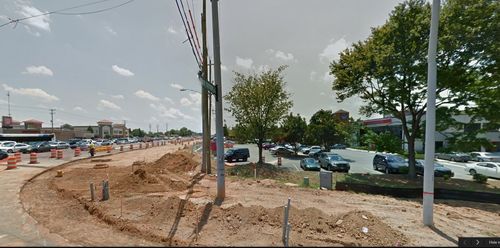
Urban property at the intersection of two main thoroughfares can be pretty valuable. It’s about location, for sure, but it’s also about visibility and the ability to be seen from four directions.

Charlotte, NC needed a part of such property for a rail line extension. The rail will be in the middle of the road, so the road needed widening, necessitating the partial taking. The rail “Bridge” will be part of that middle-of-the-road construction in an existing public right of way, but will partially block views of the owner’s remaining property (a bank branch).

But the Bridge won’t be on the condemned property, and the city asserted that means it isn’t liable for damages resulting from the loss of visibility. The trial court concluded that the jury could consider evidence of loss of visibility, and the city’s interlocutory appeal followed.

In City of Charlotte v. University Financial Properties, LLC

Continue Reading No Compensation For Bridge That Blocks View Of Taken Property, But Isn’t On Taken Property

20160128_091958

20160128_092004

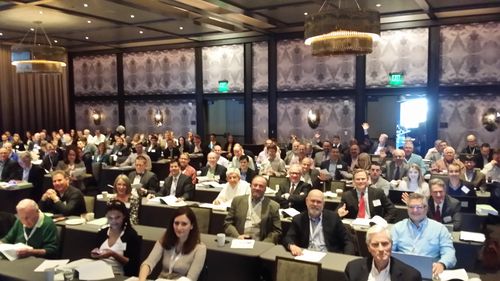
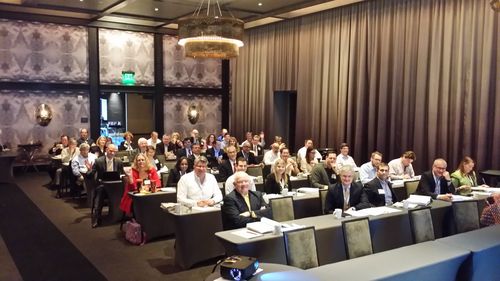
Here’s what’s going on today, the first day of the 33d annual ALI-CLE Eminent Domain and Land Valuation conference in Austin, Texas. We’re at standing room only, with a record number of attendees and our usual nationally renown faculty.

We started off the day with our usual “Eminent Domain Update” session with Amy Brigham Boulris, and as mentioned, the links to the opinions which we discussed are going to be posted in a separate post today. 

We are being followed by a panel on pipeline takings, one of the hot issues nationwide, with Joe Waldo, Matthew Ray, MAI, Thomas Peebles, and Dave Domina.

That session was followed by Professor Ilya Somin, talking about his book, “The Grasping Hand: Kelo v. City of New London and the Limits of Eminent Domain.”  

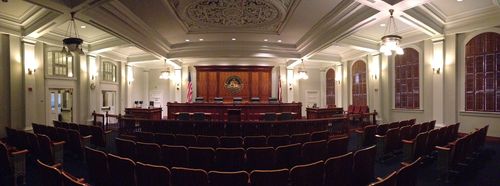
Above are our annual “proof of life” photos taken from the lectern, to show

Continue Reading ALI-CLE 2016 Eminent Domain Conference, First Day: Standing Room Only, National Expertise

ALI-CLE-2016-masthead

Here’s the full agenda for the 2016 Eminent Domain and Land Valuation Litigation / Condemnation 101 Conference, January 28-30, 2016, in Austin, Texas. 

Together with our friend and colleague Joe Waldo, we think we’re put together a pretty good program that covers a lot of ground. This is the first time the conference has been to Austin, and we’re starting off with a talk by Austin Mayor Steve Adler, who in his former life was an eminent domain lawyer. Other highlights:

  • Professor Ilya Somin will speak about his recently-published book in a segment entitled “The Impact of Kelo and the Limits of Eminent Domain.”
  • Pipelines and Energy Corridors: Valuation Perspectives of Condemnors and Condemnees” with the lawyers on the front lines of one of the hottest topics in eminent domain law nationwide.
  • Retired Minnesota Supreme Court Justice Paul H. Anderson will give us his tips


Continue Reading It’s Here – 2016 ALI-CLE Eminent Domain Conference: Complete Agenda, Faculty, Registration Information

Our friend and colleague Alan Ackerman posted a note on his blog about a recent District Court ruling from the Western District of Virginia which upheld the power of a potential condemnor to enter property for the purposes of survey, without formally taking the property. See “Virginia Federal Judge Follows What May Be the Majority Rule for Surveys.” But Alan didn’t post the court’s written ruling. So here you go, all 35 pages of it.

The issue was whether a Virginia statute, which “authorizes a natural gas company to enter private property without the landowner’s written permission and perform a survey for a proposed natural gas pipeline,” is a facial violation of the U.S. and Virginia Constitutions, and “is thus void and unenforceable.” Slip op. at 1. The court granted the gas company’s motion to dismiss. It concluded that the facial challenge failed because the property

Continue Reading Federal Court: Virginia’s Entry Statute Not Facially Unconstitutional