


For you rails-to-trails fans, here’s the latest from the Federal Circuit. In Biery v . United States, No. 13-5082 (June 2, 2014), the court held that interests which certain Kansas property owners conveyed to railroads back in the day were grants in fee simple, and some were grants of an easement.  

The issue was dispositive because if the grants were in fee simple, then when the railroad abandoned railroad operations, the land could be converted to public recreational trail use without triggering a taking, but if the grants were easements, then upon abandonment, the owners should have got the land back, and are owed compensation. 

As noted, in 2004, the stretch of rail corridor at issue was converted to a public trail pursuant to the Trails Act. If, prior to the conversion, the BNSF held fee-simple title to the land underlying the corridor, then, for their part, plaintiffs-appellants possess no compensable property interests.

Continue Reading The Latest Takings Decision From The Federal Circuit On Railway “Rights Of Way”
For those of you who are members of the ABA, here’s a tangible member benefit.

On Wednesday, April 9, 2014, tune in for a free webinar, “Rails-to-Trails and the Impact of Brandt Revocable Trust v. United States.” The program is sponsored by the Real Property, Trusts & Estates Legal Education and Uniform Laws Group. 

Here are the details:

ABA-RPTE Professors’ Corner – A FREE monthly webinar featuring a panel of law professors, addressing topics of interest to practitioners of real estate and trusts/estates

This is a One Hour WEBINAR

Wednesday, April 9, 2014
12:30 pm Eastern / 11:30 am Central / 10:30 am Mountain / 9:30 am Pacific

Register online here.  

March’s Program: “Rails-to-Trails and the Impact of Brandt Revocable Trust v. United States

Professors’ Corner is a monthly webinar (on the second Wednesday of each month) featuring a panel of law professors, discussing recent cases or issues of interest to real estate or trust and estate practitioners and scholars.

Speakers:

  • Professor Danaya C. Wright, University of Florida Levin College of Law
  • Professor Michael Allan Wolf, University of Florida Levin College of Law

On March 10, 2014, the U.S. Supreme Court decided Brandt Revocable Trust v. U.S., involving the interpretation of the General Railroad Right-of-Way Act of 1875. The case involved a railroad right of way obtained in 1908, crossing land conveyed by the U.S. to the Brandt family in a 1976 land patent that did not specify what would happen if the railroad later relinquished its right of way (which occurred some years later). In the case, the U.S. sought to quiet title to the abandoned right of way, including the portion that crossed the land conveyed by the Brandt patent. Reversing the Tenth Circuit, which had affirmed a grant of summary judgment for the U.S., the Supreme Court held that the right of way was only an easement and was extinguished when the railroad abandoned it. The decision has already created some substantial consternation regarding its potential impact on the Rails-to-Trails movement and recreational trail development along abandoned rail corridors.

We’re registered, and you should too.
Continue Reading Mark Your Calendars: “Rails-to-Trails and the Impact of Brandt Revocable Trust v. United States” (4/9/2014) – Free To ABA Members

It’s Friday, so we’re slacking a bit on the blogging. But our colleagues at the Nossaman firm have given us a couple of good pieces for our reading enjoyment.

  • First is “9th Circ. Simplifies Enviro Process For Transit Projects,” by Robert D. Thornton. If his name sounds familiar, it’s because he’s the lawyer who represented the City and County of Honolulu in its succcessful defense of a federal lawsuit. The Ninth Circuit and the District Court recently sided with the City on the project (see our summary of the Ninth Circuit and the District Court rulings), and the plaintiffs have stated that they are not going to seek further review. In other words, this is probably the final substantive chapter in the major legal challenges to the Honolulu rail project. Mr. Thornton notes that the decision is one “of national importance for transit and highway projects” because


Continue Reading Worth Reading – The Last Word On Honolulu Rail, And 2013 Eminent Domain Year In Review

Professor Richard Epstein shares his insight about the U.S. Supreme Court’s recent 8-1 decision in Marvin M. Brandt Revocable Trust v. United States, No. 12-1173 (Mar. 10, 2014).

The issue in the case was whether the federal government retained an “implied reversionary interest” when it issued railroad patents to private landowners, or whether these grants were subject only to a railroad easement. The Court concluded they were easements, which means that they were extinguished when the railroad ceased using them as railroads. 

Professor Epstein joined an amicus brief filed in support of the property owners in the case, which argued that a contrary ruling would violate “the special need for certainty and predictability where land titles are concerned.” 

Listen to the podcast here. Or go to this page and follow the link from there. 


Continue Reading Professor Epstein On SCOTUS Rails-To-Trails Decision

In addition to the initial media coverage of and commentary about the Supreme Court’s 8-1 decision in Marvin M. Brandt Revocable Trust v. United States, No. 12-1173 (Mar. 10, 2014) rendered earlier this week, there has been more, mostly focused on the final lines of Justice Sotomayor’s solo dissent:

By changing course today, the Court undermines the legality of thousands of miles of former rights of way that the public now enjoys as means of transportation and recreation. And lawsuits challenging the conversion of former rails to recreational trails alone may well cost American taxpayers hundreds of millions of dollars.

Dissent at 8 (emphasis added).

What she was getting at, of course, was the fact — not stated anywhere in the majority opinion but made clear by the amicus briefs — that by holding that the interest granted was only an easement and did not revert to the United States

Continue Reading Brandt: No Free Ride For Rails-To-Trails

Here are some reports and commentary on the Supreme Court’s opinion in Marvin M. Brandt Revocable Trust v. United States, No. 12-1173 (Mar. 10, 2014).

Continue Reading Brandt Round-Up

As we predicted it would after oral argument, today the U.S. Supreme Court ruled in the property owner’s favor in Marvin M. Brandt Revocable Trust v. United States, No.12-1173 (Mar. 10, 2014). Chief Justice Roberts wrote for the entire Court less Justice Sotomayor, who filed a solo dissent. SCOUTSblog posts a summary of the opinon here (“Victory – and money – for landowners“). 

As you might recall, the issue in the case was whether the federal government retained an “implied reversionary interest” when it issued these patents, or whether these grants were subject only to a railroad easement. The difference is that easements may be extinguished, while reversionary interests cannot. In this case, the railway abandoned its use, after which the federal government instituted a quiet title action in federal court asserting it owned the right of way, and that it did not revert to the property

Continue Reading SCOTUS Benchslap: Railroad Right Of Way Is An Easement, Just Like We Said A Long Time Ago

DSCF1604

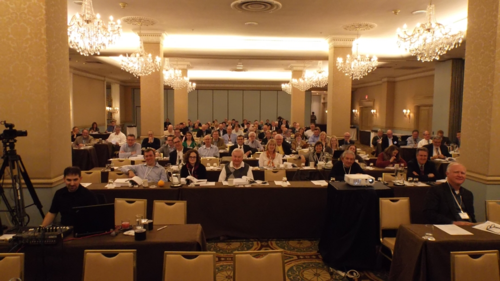
This morning, I joined my Owners’ Counsel colleagues Leslie Fields and Joe Waldo (the programming co-chairs), and more than 100 fellow eminent domain experts in New Orleans under the auspices of ALI-CLE at our annual gathering for the start of 2 1/2 days of legal education. 

Joe and Leslie asked me to join Professor James Ely to speak about “The Full and Perfect Equivalent for Just Compensation: The Historical Context and Practice.” Professor Ely led us off with a crash history of just compensation, starting with the Magna Carta and where we’ve been, and then handing it off to me for the “where we are and where we may be going” segment.

Just to prove to you all that while in New Orleans, I really did show up and not get distracted by the many (many) distractions that this city can offer, the above is a

Continue Reading A Dispatch From The ALI-CLE Eminent Domain Conference (With Links)

Update: More thoughts here, after having heard the argument recording, available here:

12-1173

Here’s the transcript from today’s oral arguments in Marvin M. Brandt Revocable Trust v. United States, No. 12-1173. That’s the case in which the Court is considering the meaning of the term railroad “right of way” as used in an 1875 federal statute. 

We were going to review the transcript and then post some thoughts, but the speedsters at SCOTUSblog beat us to it with “Argument recap: Oh give me land, lots of land…,” wherein they report that the arguments were a “seminar-like hour,” where Justice Breyer repeatedly disclaimed knowledge of his law school Property class basics. One thing we noted right off the bat in our quick skim of the transcript was that Justice Scalia must’ve been chapped about something, because no sooner did petitioner’s counsel begin, than the Justice interrupted

Continue Reading Transcript In Brandt: Pay Attention In Property I

Tomorrow, Tuesday, January 14, 2014, the U.S. Supreme Court will hear arguments in Marvin M. Brandt Revocable Trust v. United States, No. No. 12-1173. That’s the case in which the Court is considering the meaning of the term railroad “right of way” as used in an 1875 federal statute. 

As our amici brief argues, if the Court accepts the government’s theory in the case, it could wipe out an entire class of rails-to-trails takings cases, and indeed could undermine title to a wider range of property in which a federal patent is involved. 

SCOTUSblog has a good preview of the issues here. Greenwire also has a good report on the case hereContinue Reading SCOTUS Rails-to-Trails Argument – SCOTUSblog’s Preview