


Berman International – Philippines Supreme Court: Takings Must Undergo “Painstaking” Judicial Scrutiny
Reading through the opinion of the Supreme Court of the Philippines in City of Manila v. Roces Prieto, No. 221366 (Aug. 29, 2019), there is a lot there that will look familiar to U.S. lawyers, specifically U.S. eminent domain lawyers.
Viz.: It is up before the Court on a petition for certiorari, there was an effort to voluntarily acquire the properties, an “expropriation” lawsuit gets filed when that didn’t work, and the City deposited estimated compensation and sought a writ of immediate possession from the trial court. That court balked because the deposit amount didn’t comply with the requirements of the statute, but once the City fixed that problem, the court allowed immediate possession. Sounds very familiar.
The takings were in furtherance of something called the Land-for-the-Landless program, which this article describes as a process by which “[t]hrough expropriation, the city government buys private properties that are then
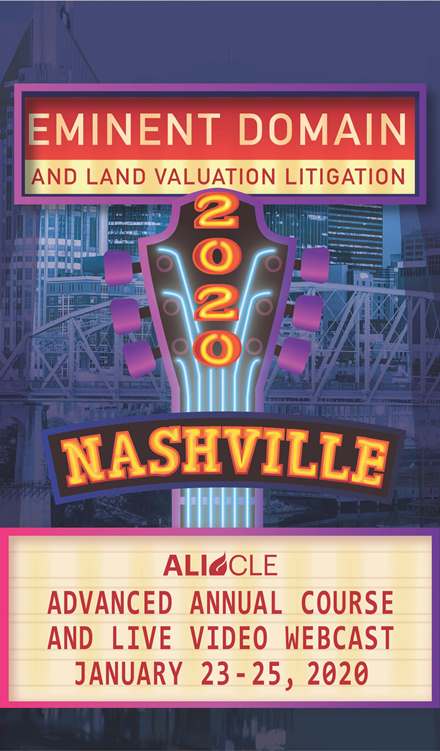
Here’s The Agenda And Faculty For The 2020 ALI-CLE Eminent Domain And Land Valuation Litigation Conference, Nashville, Jan 23-25, 2020
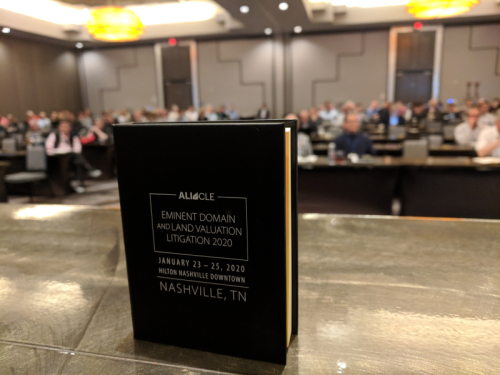
You overwhelmingly asked for Nashville, and we’re bringing it to you!
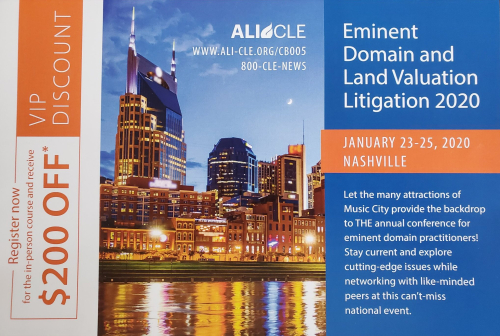
Get ready, and hold your place now: here’s the list of programs and speakers for the 36th Annual ALI-CLE Eminent Domain and Land Valuation Litigation Conference, to be held at the Downtown Nashville Hilton, January 23,- 25, 2020. Two-and-a-half days with top-notch national faculty (lawyers from both sides, judges, legal scholars, appraisers, relocation experts, and others).
Early registration and group rates are available now.
Here are just some of the programs:
- Featured Presentation: Property Rights as Civil Rights: Seeking Justice Though the Fourth and Fifth Amendments. Hon. Jonathan Apgar, Jamila Johnson, Alan Ackerman. Moderator: Leslie Fields.
- Making Sense of the New Rules After Knick v. Township of Scott: Where Do I Go, What Do I Do? David Breemer, Smitha Chintamaneni, Professor Bethany Berger. Moderator: Professor Steven Eagle.
- When A River Runs Thought It: Water Rights and
Get Ready: The 2020 ALI-CLE Eminent Domain And Land Valuation Litigation Conference Agenda Coming Soon
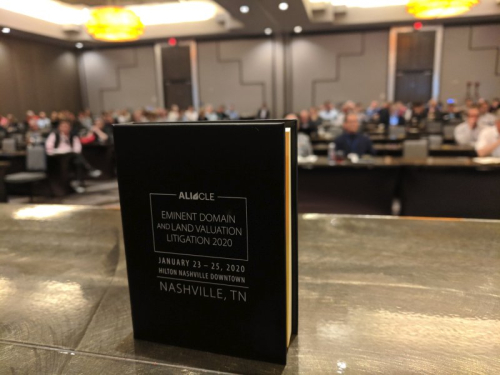
The final agenda and faculty list will soon be officially published, but we wanted to give you a preview of what is in store at the ALI-CLE Eminent Domain and Land Valuation Litigation Conference, January 23-25, 2020, at the Nashville Hilton (downtown, just a few steps away from everything that Nashville has to offer).
Don’t miss out: in recent years, we’ve been at-or-near capacity, and the conference hotel has even sold out a couple of times. Visit the ALI-CLE website to register and hold your space.
Here are some of the things we’ll be discussing:
- Making Sense of the New Rules After Knick v. Township of Scott: Where Do I Go, What Do I Do?
- The Missing Link in Valuing Fixtures
- When a River Runs Through it: Water Rights and Takings
- Responding to Project Changes: Valuation When Government Action is Ongoing
- Property Rights as Civil Rights: Seeking Justice Through
Tuesday Takings Round-Up: Alien Takings; Zombies; Kelo, Philippines-Style; Kafka
Here’s what we are reading this Tuesday:
- Could Eminent Domain Be The Zombie Mall Slayer? (Barista’s note: any time we see use of the eminent domain power bandied about as the solution to problems other than the lack of roads and post offices, we get nervous.)
- RTC: Eminent domain can be delegated to private entities – Kelo isn’t just a U.S. thing. A story from the Republic of the Philippines.
- How the Storm Area 51 phenomenon could be an alien benefit to family that once owned the land – we’re not saying it was aliens…but it was aliens. A story of the “Area 51” taking, where the owners are represented by our colleague Autumn Waters.
- Georgia colleagues Christian Torgrimson and Daniel Peterson write about Knick: The Eminent Domain Consequences of a U.S. Supreme Court Ruling.
- From the “be careful what you sue for” department: Maui County’s appeal
Continue Reading Tuesday Takings Round-Up: Alien Takings; Zombies; Kelo, Philippines-Style; Kafka
New Land Use Law Blog To Follow: Merriam’s Corner (“Life, Liberty, and the Pursuit of Land Use”)
Land users and dirt lawyers know Dwight Merriam. (And if you don’t, you are not really a land user, are you?)
He’s won landmark cases (has even beaten Yours Truly in one of those cases way back in the day). Written tons of articles and books. Edits Rathkopf. Contributes to Nichols. Mentored multiple generations of land use lawyers (me included). All while serving his country in the U.S. Navy.
Here’s your chance to tap directly into the source. Dwight has (finally) started a blog, Merriam’s Corner, about the topics we all love.
So sign up and follow. Listen in as Dwight thinks out loud for our benefit.
Welcome to the blog world, Mr. Merriam. Continue Reading New Land Use Law Blog To Follow: Merriam’s Corner (“Life, Liberty, and the Pursuit of Land Use”)
Capt Henry Orders You To Boldly Go To The 2020 ALI-CLE Eminent Domain And Land Valuation Litigation Conference, Nashville, Jan. 23-25, 2020
Recently, we requested crowdsourcing of this year’s “come to the ALI-CLE Eminent Domain Conference video.” Instead of doing the video ourselves, we asked folks to “please send a short clip of you and/or your colleagues telling us why you think the Eminent Domain and Land Valuation Litigation Conference is the place to be in January. Humor welcome, but not required.”
Our friend and colleague, St. Louis’ Paul Henry, has answered the call, admirably. Paul, as you may remember, is famous for his presentation a couple of years ago at the Conference about “Everything About Eminent Domain I Need To Know I Learned From Star Trek.” Which he gave in a Starfleet captain’s uniform. Brave man. Readers know that we dig Star Trek. But we are not that brave, so bravo, Paul.
See if you don’t agree that Paul has now raised the video bar.
Get Ready – ALI-CLE Eminent Domain And Land Valuation Litigation Conference, Nashville Jan. 23-25, 2020
Cases And Links From Today’s Eminent Domain And Pipelines Conference (Houston)
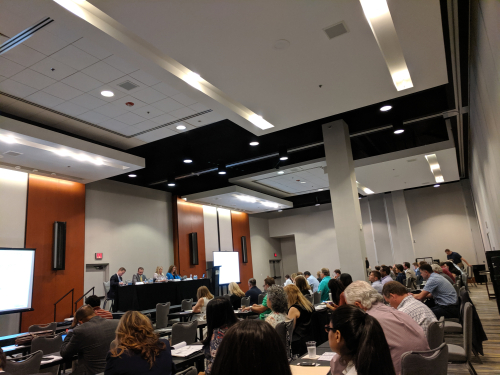
I am grateful that planning chairs Justin Hodge and Jeremy Baker invited me to their conference. A room full of experts. Here are the links to the cases and other items I spoke about:
- Knick v. Township of Scott: initial thoughts on what might be a dawning “golden age” of property cases
- Knick, Entirely in Memes
- Givens v. Mountain Valley Pipeline, LLC (SCOTUS considering whether private pipeline condemnor can use a Rule 65 preliminary injunction to get quick-take by another name)
- Cert Denied In Immediate-Possession-By-Injunction Case (But There’s One More In The Pipeline)
- Bump Stocks and Takings
- Is Seizing Prescription Drugs for Use as Evidence a Taking?
- Barboan: Eminent Domain and the Taking of Indian Property
- Colorado (Carousel Farms): A Lot Of Private Benefit Today Does Not Overcome Smattering Of Possible Public Future Benefit
- Protip for Megaproject – How to Not Name Your Project
- All Your Race
Continue Reading Cases And Links From Today’s Eminent Domain And Pipelines Conference (Houston)
Colorado: A Lot Of Private Benefit Today Does Not Overcome Smattering Of Possible Public Future Benefit
The Colorado Supreme Court issued an opinion in a case we’ve been following on public use in eminent domain. in which it reframed the Questions Presented.
In Carousel Farms v. Woodcrest Homes, No. 2018SC30 (June 10, 2019), the court reversed the court of appeals’ conclusion that a taking lacked a public purpose because even though the public might use the roads and sewers which the utility district (formed for the specific purpose of taking the property which the private-benefitted developer could not acquire by negotiation) said it would install in the future did not outweigh the overwhelming private benefit in the present. In the Court of Appeals’ words, “[w]hen the primary purpose of a condemnation is to advance private interests, even if there will be an eventual public benefit, the condemnation is not for a public purpose.”
The Supreme Court turned that analysis upside down, concluding that a