Early next month, the California Supreme Court will hear oral arguments in two cases which we’ve been closely following:

  • Tuesday, May 3, 2016, 9:00 amProperty Reserve, Inc. v. Superior Court, No. S217738. The court is considering whether California’s “entry statute” which allows a condemning agency to enter property for testing and inspection exempted the Department of Water Resources from adhering to the protections in the eminent domain code when the government physically invades property. We filed an amicus brief in that case arguing that “any non-trivial physical invasion of private property is a per se taking requiring just compensation and adherence to eminent domain procedures. The intrusions sought by DWR and ordered by the Superior Court cannot be dismissed as mere “entries.” This is not only a long-standing tenet of California constitutional law (see Jacobsen, supra, 192 Cal. at 329), it is a baseline Fifth Amendment principle, and


Continue Reading Big Eminent Domain Days Coming Up At The California Supreme Court
Who must may be counted for reapportionment purposes?

Everyone!

A slight detour from our usual fare, to post some thoughts about today’s big  U.S. Supreme Court opinion on election law in Evenwel v. Abbott, No. 14-940. Evenwel is the sleeper case of the Term, and opened the possibility that the we might finally get an answer to a question the Supreme Court has dodged for over fifty years, involving the seemingly mundane issue of who can states count when they reapportion their legislatures: All Census-counted residents? U.S. citizens? Those eligible to vote? And who must they count? 

In today’s ruling the Court didn’t cast the net wide, but instead (as we urged it to do in our amicus brief) drew a narrow rule: states may count everyone, but they are not required to. Thus, Texas’s plan, and the plans of those states which count total population

Continue Reading Mantras Without Meanings (We Takings Lawyers Predicted This One) – 8-0 SCOTUS Rules States May Count Everyone In Reapportionment

Earlier this week, we posted our visit to the site of the U.S. Supreme Court’s decision in Hadacheck v. Sebastian, 239 U.S. 394 (1915). It’s been over 100 years since that case was decided by the Court, but to Hinga Mbogo, the Dallas auto mechanic profiled in the above video from the Institute for Justice, 2016 sure must seem like 1915.

The more things change…

Continue Reading Hadacheck Revisited: The More Things Stay The Same Dep’t…

In most cases — as you can probably tell — we’re rooting for the property owner. But there are some cases where we’re okay with suspending our usual predilections. The case which resulted in the Oklahoma Supreme Court’s opinion in Dani v. Miller, No. 114482 (Mar. 29, 2016) is one of those. 

It’s a long opinion (39 pages), way longer than the issues deserved. But for some reason, the court addressed each of the plaintiff’s challenges to Oklahoma’s unclaimed property statute. All over a grand total of $169.56. Actually, it wasn’t even over this amount, because the plaintiff was able to claim it from the state:

Plaintiff/Appellant Robert N. Dani (Appellant) is an Oklahoma resident and taxpayer. Certain property belonging to Appellant was handed over to the State Treasurer pursuant to the Uniform Unclaimed Property Act (UUPA), 60 O.S. §§ 651-688, because it was presumed abandoned. The property consisted of $19.56, received

Continue Reading State’s Failure To Pay Interest On $169.56 Of Abandoned Property Isn’t A Taking

20160325_125208

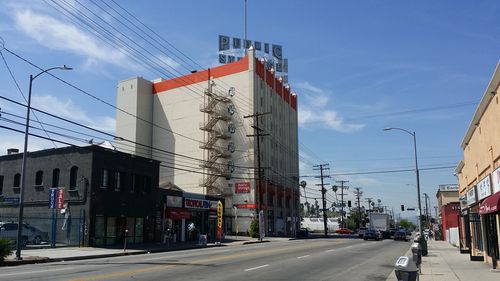
A nondescript corner of what could be just about any urban city street in America. Nothing of overwhelming interest, just the usual commercial buildings, traffic signals, and small businesses. A self-storage facility. Pretty typical in a Commercial district. Here, the “C-4 District.”

Nothing at all, in fact, to indicate that just over a century ago, this was the site of what was to become one of the most important land use cases in U.S. history — the place that gave us the first Supreme Court decision that dealt with how the expanding power to regulate the uses of property meshes with private property rights.

DSCF2746

For this area — the block southeast of the corner of Pico and Crenshaw Boulevards — was once a Los Angeles brickyard owned by Joseph C. Hadacheck.  

What is now the Arlington Heights neighborhood was once outside of the city limits. Indeed, Hadacheck’s title went back

Continue Reading Takings Pilgrimage, LA Edition: Police Power, The Zoning Game, And Nuisances

Today’s post is by colleague William Wade, an economist in Nashville, Tennessee, who has thought a lot — and written extensively — about the just compensation and damages available in inverse condemnation and regulatory takings cases.

He provides his thoughts on a recent trial court decision in a closely-watched Texas water case, in which the appellate court earlier applied the Penn Central test to find liability, resulting in a remand to determine just compensation. As the title reveals, Bill takes issue with the way the issues were framed, and the conclusions the court reached. You may or may not agree with his conclusions, but Bill always considers these issues deeply, and his writings are always thought-provoking.  

Find him online at energyandwatereconomics.com

Bragg:  Wrong Question, Wrong Result in Texas to the Detriment of Sustainable Water Supply

by William W. Wade, Ph. D.[1]

Earlier in March, the Medina County Texas

Continue Reading Guest Post: Bragg – Wrong Question, Wrong Result In Texas, To The Detriment Of Sustainable Water Supply

No real surprise here: in Southeast Arkansas Hospice, Inc. v. Burwell, No. 15-1946 (Mar. 10, 2016), the U.S. Court of Appeals held that the statutory cap on Medicare reimbursements for hospice care isn’t a taking of the excess over a facility’s actual costs, because the facility voluntarily opted-in to the program:

SEARK has not met its burden to prove the demands for repayment based on the statutory cap are a taking. First, the reimbursement cap allocates the government’s capacity to subsidize healthcare. See H.R. Rep. 98-333, at 1 (1983), reprinted in 1983 U.S.C.C.A.N. 1043, 1043-44 (“The intent of the cap was to ensure that payments for hospice care would not exceed what would have been expended by Medicare if the patient had been treated in a conventional setting.”). Second, SEARK presented no evidence to suggest the cap makes it impossible “to profitably engage in their business.” Keystone Bituminous Coal

Continue Reading 8th Circuit: Medicare Reimbursement Cap Isn’t A Taking

IMG_0459

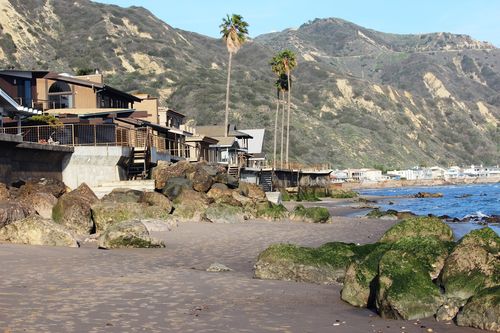
The Nollans own a beachfront lot in Ventura County, California. A quarter-mile north of their property is Faria County Park, an oceanside public park with a public beach and recreation area. Another public beach area, known locally as “the Cove,” lies 1,800 feet south of their lot. A concrete seawall approximately eight feet high separates the beach portion of the Nollans’ property from the rest of the lot. The historic mean high tide line determines the lot’s oceanside boundary.

Nollan v. California Coastal Comm’n, 483 U.S. 825 (1987)

From time-to-time, and when we’re in the neighborhood, we like to drop by the sites of familiar (and famous) takings and land use cases. Like Kaiser Aetna (in our own backyard), Dolan, and PruneYard. We’ve been there, done that. 

So there we were in Central California (Ventura County to be exact), and we’re driving up the coastal highway when

Continue Reading Another Takings Pilgrimage (Unconstitutional Conditions Technically, But Close Enough)

Read this: “The Accidental Abstention Doctrine: After Thirty Years, the Case for Diverting Federal Takings Claims to State Court Under Williamson County Has Yet to Be Made,” by R.S. Radford and Jennifer Fry Thompson, published in the most recent edition of the Baylor Law Review.  

If the title weren’t enough to tell you what this article is about, here’s a summary:

The Supreme Court has never directly reviewed the question of whether, as a general matter, abstention is required or even appropriate in Fifth Amendment takings cases. Yet in a seemingly unrelated decision handed down more than a decade after Williamson County, the Court held that dismissing such cases would be improper under its express abstention doctrines. The Court has thus created a doctrinal paradox: couched in terms of “ripeness,” Williamson County in fact created a de facto abstention doctrine that applies under circumstances in

Continue Reading Today’s Must Read: “The Accidental Abstention Doctrine: After Thirty Years, the Case for Diverting Federal Takings Claims to State Court Under Williamson County Has Yet to Be Made”

The roof collapsed and damaged the building. In the view of the City, that created an immediate danger so it demolished it. But the building owners had plans to fix it up, and claimed the demolition was a taking. Trial court said no, the Connecticut Appellate Court affirmed:

On the basis of our review of the record, we conclude that the court properly determined, in light of the circumstances shown by the evidence presented at trial, that demolition of the plaintiff’s building pursuant to the defendant’s police power did not amount to a taking. Lawson, Sr., testified that he purchased the subject property for $65,000 in August, 2009, with a goal of renting out eighteen apartment units. At the time of trial, the plaintiff still owned the subject property. There was no testimony or other evidence indicating that ‘‘no reasonable use may be made of the [subject] property’’; (internal quotation marks

Continue Reading Emergency Demolition Of Damaged Building Not A Taking