Head’s up on an interesting case from the Court of Federal Claims, Resource Investments, Inc. v. United States, No. 98-419L (Court of Federal Claims, Jan. 23, 2009), a massive opinion (84 single-spaced pages) with what at first glance seems to delve into just about every regulatory takings theory known: temporary takings, categorical takings, partial takings, parcel-as-a-whole, Mahon, Penn Central, First English, Lucas, Tahoe-Sierra, Seiber, delay, and ripeness. And those are just the subjects listed on the caption.

We’re not going to digest the entire opinion here, just hit some of the highlights. The short story is that the U.S. Army Corps of Engineers wrongfully asserted jurisdiction over property in Washington state proposed to be used for a landfill, and asserted that until the owner procured a section 404 Clean Water Act permit, it could not construct the landfill. The Ninth Circuit ultimately agreed

Continue Reading CFC: Trial Needed On Whether Wrongful Assertion Of Clean Water Act Jurisdiction Is “Extraordinary Delay”

Duck Thanks to Kona Blogger Aaron Stene for sending this next item my way, a follow up to the previous two days’ reports from West Hawaii Today (posted here and here) about Hawaii County’s so-called “fair share” exaction system. In “Council reaffirms belief in fair share legality,” WHT reports:

The county’s Corporation Counsel spent two-and-a-half hours of a four-hour-long executive session Wednesday apparently trying to convince the County Council the County’s fair share cost system is legal.

The effort apparently worked.

Council Chairman J Yoshimoto, Hilo, said after the meeting the “Corporation Counsel explained to us the fair share system is legal.”

He said he does not expect the council to hold another executive session on the subject any time soon, as information presented by Corporation Counsel during the meeting clearly showed the fair share cost system is legal.

The county has for years used the system, which

Continue Reading Even More On Hawaii County’s Impact Fee … Whoops, I Mean “Fair Share”

Following up on yesterday’s post about the West Hawaii Today series on the legality of Hawaii County’s “fair share” impact fee system, the paper posts three stories about the issue:

  • How much, for what and when? (“The county may have illegally collected $7.4 million in fair share assessments from housing developers since the early 1990s. Fairshare assessments have been under fire since 2007, when 3rd CircuitCourt Judge Ronald Ibarra — as part of his ruling on a condemnation lawsuit — ruled the county’s system is illegal because it doesn’t meetstate regulations. Accordingto the Hawaii Revised Statutes, “impact fees may be assessed, imposed,levied and collected by (any county) provided that the county enactsappropriate impact fee ordinances.”)
  • Council members divided on fair share (noting that several council members question the legality of the “fair share” system, while others adhere to the not-disclosed-in-the-story advice of the Corporation Counsel’s office that the “fair


Continue Reading More On Hawaii County’s “Fair Share” Impact Fees

Worthwhile article today from West Hawaii Today (the daily newspaper of the Kona side of the Big Island), “Is county practice legal?” The story details the County’s practice of demanding “fair share” payments from property owners and developers who wish to make use of their properties and seek County approvals:

The fair share cost system assesses developers afee whenever their projects require a rezoning as compensation for theimpacts the projects will have on county infrastructure. Moneycollected through fair share assessments could be used toward road andwater system improvements, new parks and expansion of police and fireservices.

However, a ruling made by 3rd Circuit Court Judge Ronald Ibarra in 2007 in a condemnation proceeding apparently deemed the fair share system illegal.

Thecounty filed two condemnation suits against the Charles and Joan CoupeTrust, one in 2000 and the other in 2005, to obtain a 3-acre propertyneeded to build a planned

Continue Reading West Hawaii Today Series: Is County [“Fair Share” And Impact Fee] Practice Legal?

Florida’s appellate courts have been active lately in the regulatory takings arena.  Here are links to summaries and analysis of the decisions.

First, from the Florida Land Use Law blog:

Next, from Grand Theft: Property

Continue Reading PING: Well HatchedURL: http://livepress.in/kickstart-your-career/IP: 219.234.82.86BLOG NAME: Well HatchedDATE: 02/09/2013 03:34:47 PMinversecondemnation.com: Florida Regulatory Takings Links

In Zaid v. United States, No. 08-020C (Jan 22, 2009), the Court of Federal Claims held that an attorney who had a one-third contingent fee arrangement with his client did not have a claim for a taking when Congress placed a 10% fee limitation in two private bills.

Attorney Zaid represented two FBI informants who infiltrated the American Communist Party and assisted the FBI for 22 years. The were promised payment but received none. After unsuccessfully representing themselves, they retained Zaid and agreed that he would take 1/3 of any recovery as his fee.

The attorney was ultimately successful, procuring from Congress two private bills to pay the informants $1 million each. A private bill is special legislation providing some benefit to a specific individual. More about private bills here. Unfortunately for the attorney, in the private bills, Congress included a provision that capped his fee at 10%

Continue Reading CFC: No Taking Of Attorney’s Contingency Fee Agreement By Congressional Limitation Of Fees

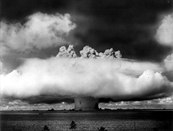
Boom How’s this for a raw deal: not only does the federal government seize both your land and your home, but it also takes your entire country with the intention of detonating multiple thermonuclear weapons where you once lived. Meaning you won’t be able to return to the homeland you loved for oh, let’s just say a very long time

Thirty years pass, and after you sue the government for a taking, it settles the dispute by entering into an agreement which creates a tribunal to settle all claims, payable from a trust fund. The trust fund, however, is woefully underfunded and could not possibly satisfy your claims and those of your compatriots (of the money in the trust fund, only 1/3 is designated to actually pay the victims; the other 2/3 is set aside to support the tribunal’s operations). Nonetheless, the tribunal awards you and your neighbors nearly $1

Continue Reading Federal Circuit To Bikini Islanders: Get In Line Behind The Auto Companies, The Banks, And Executive Bonuses

The Honolulu Advertiser reports “Lingle wants Ka Iwi coast free of development,” about the Governor’s efforts “paving the way for the final step in preserving the most accessiblewild coastline on O’ahu for generations to come.”

And just how is the Governor proposing to “preserve” this privately-owned and urban-zoned land from the “threat of development,” you ask? “[B]y asking the stateLand Use Commission to reclassify the Ka Iwi shoreline from urban toconservation,” that’s how.  In other words, downzone it.

As the article notes, this area has long been a battleground between the right to make reasonable use of private property and at least one segment of the public’s desire to prohibit development. Several cases have arisen from the area, the most well-known of which was the “Sandy Beach” case involving the “5” and “6” parcels down the road from the : 

The land, while zoned preservation by the county

Continue Reading Here’s A Novel Proposition: How About Paying For It?

The property owner has filed its Reply in Support of Petition for a Writ of Certiorari in Charles A. Pratt Const. Co. v. California Coastal Comm’n, No. 08-668 (cert. petition filed Nov. 18, 2008) (SCOTUS docket report here). The petition seeks review of the California Court of Appeal’s opinion reported at 76 Cal. Rptr. 2d 466 (Cal. Ct. App. 2008), available here.

The issues presented in the case involve the Penn Central ad-hoc test for regulatory takings, and the “final determination” prong of the Williamson County ripeness rule. The Reply brief argues:

The Brief in Opposition is liberally salted with Respondent California Coastal Commission’s assertions of what it refers to as the “facts” (e.g., pp. 5, 11) as well as disparagement of the presentation in the Petition as having “no evidence” (e.g., pp. 7, 11) behind it.

The Brief in opposition thus highlights the problem that call for

Continue Reading Reply In Support Of Petition In Pratt v. Cal. Coastal Comm’n – Penn Central And Williamson County

Smokey [Update: wildlandfire readers, see the bottom of the post.]

In a case we first analyzed here when the lawsuit was dismissed by the Court of Federal Claims, the U.S. Court of Appeals for the Federal Circuit in Cary v. United States, No. 2008-5022 (Jan. 16, 2009) held that the federal government was not liable in inverse condemnation for taking property damaged by Southern California wildfires in 2003.

The Federal Circuit affirmed the CFC’s judgment on the pleadings, holding that the owners of the damaged property did not allege — and could not show — that the government intended to invade a property interest when it failed to control the “Cedar Fire,” which began when “a deer hunter lost in the forest lit a signal fire to aid his rescue.” Slip op. at 2. It was a tragedy of immense proportions as fifteen people were killed, more than

Continue Reading Federal Circuit: No Taking For Forest Fire