


IMG_20170810_183940
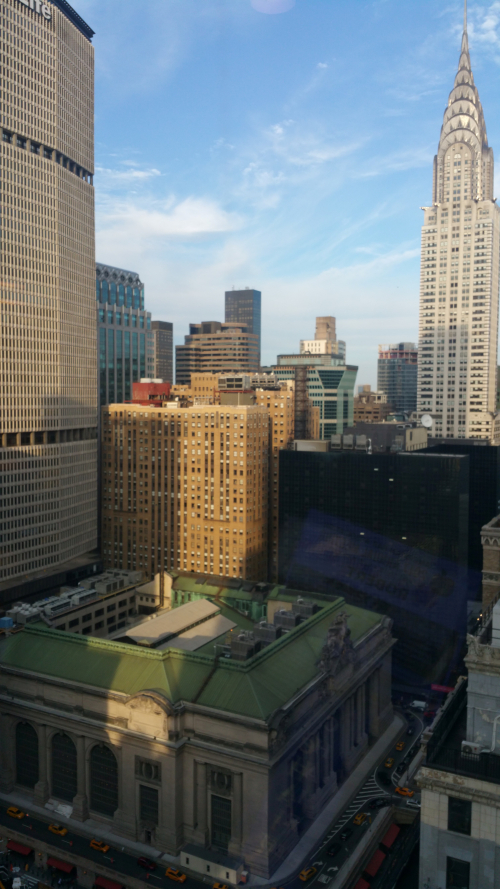
You know where this is. 

Here’s the cert petition filed recently in a case we’ve been tracking. (See also this guest post by economist Bill Wade about that case.)

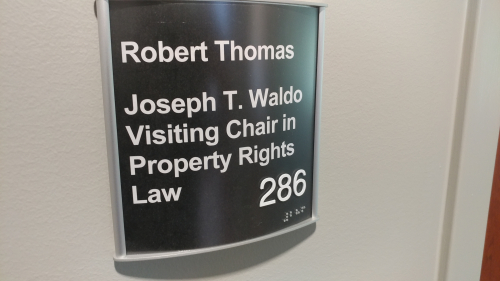
As the above photo tells you, this one is going into what may the last truly unexplored frontier of regulatory takings law, the details of the ad hoc Penn Central test, the “default” test in most situations where the regulation does not wipe out all economically beneficial use (Lucas), doesn’t physically invade the property (Loretto, Kaiser Aetna), or doesn’t render useless a fundamental attribute of property (Webb’s Fabulous Pharmacies). 

In all but those situations, the Court has told us to apply the multifactor three-part (or as Professor Steve Eagle argues, the four-part) test from Penn Central. But only in a few cases have property owners successfully navigated that minefield to

Continue Reading Hic Sunt Dracones – New Cert Petition Argues Penn Central Results In “Inconsistent,” “Unprincipled,” “Amorphous,” “Illegitimate” Decisions

Here’s what we are reading this Tuesday:


Continue Reading Tuesday Takings Round-Up: Alien Takings; Zombies; Kelo, Philippines-Style; Kafka

20180823_102346_HDR

We’re about to get underway with the fall semester at William and Mary Law School, where we’re again teaching an upper-division course, Eminent Domain and Property Rights

We’ve more than doubled the size of last year’s enrollment, so it looks like the word is getting out. We cover not only eminent domain and just compensation, but takings (yes, we have a lot of new materials to cover there), civil forfeiture, a small bit of crossover with land use, local government, and related, property rights as civil rights, how property law is discussed in the public sphere, due process, and how to lawyer up these cases. And in early October, the opportunity to have some of the nation’s best property law scholars “guest lecture” during the Brigham-Kanner Property Rights Conference. Here’s the official description:

Property rights and the sovereign’s power of eminent domain have been essential components of

Continue Reading Law 608: Eminent Domain And Property Rights – Season 2

Check this out. What at first appears to be something along the lines of the grainy Zapruder film (this particular piece was recorded on video, not film, and certainly well before the days of high-res camera phones that we now take for granted) is an important piece of takings history.

It is (the late) Anthony Palazzolo driving his famous “wetlands” property, recorded after the U.S. Supreme Court issued its opinion in his favor in Palazzolo v. Rhode Island, 533 U.S. 606 (2001).

Dwight Merriam, who graciously provided the raw footage, became Tony Palazzolo’s friend after interviewing him for an article Dwight was writing on the Supreme Court decision, and they frequently met, dined together, and conversed as Palazzolo’s matter continued on remand. Dwight recorded this video from the back seat of Palazzolo’s car. In the front is John Boehnert of Providence, another longtime friend of Dwight’s and a

Continue Reading Anthony Palazzolo Drives His Property

People like to go to lakes. Lakes are nice. Especially in the summer. Especially Oswego Lake, Oregon (former name “Sucker Lake” — not an auspicious start). Problem is, most of the land surrounding the lake is private property. Some is owned by the municipality, but it limits access to residents of the municipality. 

So like in a similar New York case, a recreational kayaker who does not reside in the City sued, asserting that because the Lake is navigable, the public is allowed to access it. The lower courts agreed with the City and the owners that the general public does not have a right under either the public trust or public use doctrines to access. 

In Kramer v. City of Lake Oswego, No. CV12100913 (Aug. 1, 2019), the Oregon Supreme Court mostly agreed. But not entirely. It concluded that “neither the public trust nor the public

Continue Reading Oregon Hardens “Background Principles” Public Trust Firewall In Lake Access Case

Here is the motion asking the Hawaii Supreme Court for leave to file an amicus curiae brief (and the proposed brief) we filed earlier today in a case we’ve been following

The question is the applicable statute of limitations for regulatory takings claims under the Hawaii Constitution’s “takings or damagings” clause. The case started out in a Hawaii state court, was removed to the U.S. District Court by the State Land Use Commission. The district court dismissed the state takings claim under the statute of limitations. 

Hawaii has not adopted a statute of limitations expressly for takings or inverse condemnation claims. Thus, the question is what is the closest analogue claim. If there isn’t one, Hawaii has a “catch all” statute (six years) for civil claims. When the case reached the Ninth Circuit, that court certified the state law question limitations to the Hawaii Supreme Court. 

Our brief argues the

Continue Reading Amicus Brief: State Takings Claims Are Constitutional (Not Torts); Adverse Possession Statute Of Limitations Is Nearest Analogue

Merriamscorner

Land users and dirt lawyers know Dwight Merriam. (And if you don’t, you are not really a land user, are you?)

He’s won landmark cases (has even beaten Yours Truly in one of those cases way back in the day). Written tons of articles and books. Edits Rathkopf. Contributes to Nichols. Mentored multiple generations of land use lawyers (me included). All while serving his country in the U.S. Navy. 

Here’s your chance to tap directly into the source. Dwight has (finally) started a blog, Merriam’s Corner, about the topics we all love. 

So sign up and follow. Listen in as Dwight thinks out loud for our benefit.

Welcome to the blog world, Mr. Merriam.  Continue Reading New Land Use Law Blog To Follow: Merriam’s Corner (“Life, Liberty, and the Pursuit of Land Use”)

Synchronicity (Jung, not The Police). Serendipity. Lattice of coincidence. Whatever you call it, sometimes things seem to come in waves. 

So it seems with the statue of limitations for inverse and regulatory takings claims this week. We had not dealt with the issue for a while. Radio silence. Then boom! The issue crops up repeatedly and we can’t seem to avoid it. First, in a brief we’re drafting in a pending case in the Hawaii Supreme Court. Then in a Federal Circuit opinion yesterday. And also yesterday in an opinion from the Maryland Court of Special Appeals, Harford County v. Maryland Reclamation Associates, Inc., No. 12-C-13-000509 (Aug. 1, 2019). 

MRA bought land way back in 1990 (statute of limitations cases often have a long history, no?) to operate a rubble landfill. But after the purchase, the County changed its regs to prohibit

Continue Reading Lattice Of Coincidence: Regulatory Takings Claim Accrues When Regulator Makes Final Decision (Williamson County Lives!), Not When Appeals Are Exhausted

Recently, we requested crowdsourcing of this year’s “come to the ALI-CLE Eminent Domain Conference video.” Instead of doing the video ourselves, we asked folks to “please send a short clip of you and/or your colleagues telling us why you think the Eminent Domain and Land Valuation Litigation Conference is the place to be in January. Humor welcome, but not required.”

Our friend and colleague, St. Louis’ Paul Henry, has answered the call, admirably. Paul, as you may remember, is famous for his presentation a couple of years ago at the Conference about “Everything About Eminent Domain I Need To Know I Learned From Star Trek.” Which he gave in a Starfleet captain’s uniform. Brave man. Readers know that we dig Star Trek. But we are not that brave, so bravo, Paul.  

See if you don’t agree that Paul has now raised the video bar. 

Continue Reading Capt Henry Orders You To Boldly Go To The 2020 ALI-CLE Eminent Domain And Land Valuation Litigation Conference, Nashville, Jan. 23-25, 2020