


What to make the Justice Kennedy-authored 5 justice majority opinion in Murr v. Wisconsin, No. 15-214 (June 23, 2017)? 

There, the majority adopted — maybe “created from whole cloth” would be a more accurate description — a multifactor test for determining the “larger parcel’ or “denominator” in regulatory takings cases where the owner possesses more than a single parcel of land.  We quoted the opinion’s list in this post, and won’t repeat it entirely here, but below is a short list of things that now must be considered by lower court judges (not juries) when they are deciding how much of the property the plaintiff owns can be used to measure the impact of the regulation on the parcel which she claims was taken:

  • The “treatment of land.” Yes, the actual metes-and-bounds of the legal parcel, but also, get this, the “expectations … an acquirer of land must
Continue Reading Justice Kennedy’s Social Justice Warrior Test For Takings Clause “Property” In Murr v. Wisconsin

Update: Here are my first thoughts on Murr – “Justice Kennedy’s Social Justice Warrior Test for Takings Clause Property in Murr v. Wisconsin

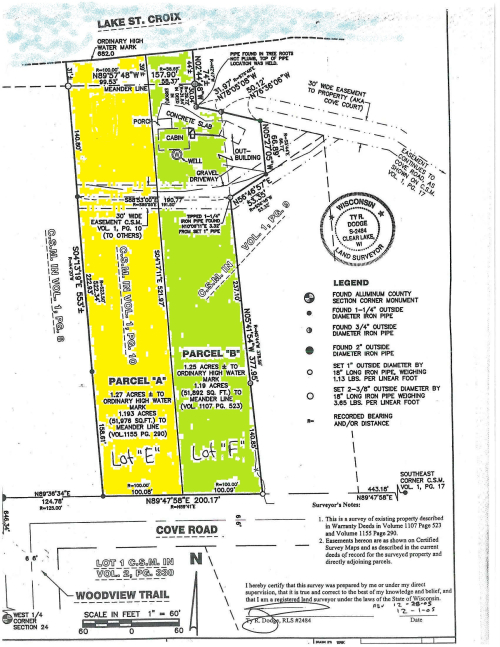
Lot-lines-color-2

The title alone should tell you this was authored by Justice Kennedy, which means that, as we thought it might do, today the U.S. Supreme Court held in Murr v. Wisconsin, No. 15-214 (June 23, 2017) that in determining the “denominator” in regulatory takings cases — in other words, what “property” owned by the plaintiff is the claimed diminution in value of the taken property compared — that “a number of factors” make up the inquiry, including: (1) “the treatment of the land, in particular how it is bounded or divided, under state and local law” (i.e., title); (2) the “physical characteristics” of the property (your guess is as good as ours); and (3) the “value of the property under the challenged regulation”

Continue Reading SCOTUS, 5-3 Affirms Murr By Penn Centralizing Parcel As A Whole Analysis, Which Must Consider “A Number of Factors”

SCOTUSblog takes note of our cert petition in Bay Point Properties, Inc. v. Mississippi Transportation Commission, No. 16-1077 (cert. petition filed Mar. 3, 2017), a case which seeks U.S. Supreme Court review of a decision by the Mississippi Supreme Court. We represent the Petitioner.

In the “Petitions to Watch” segment, Aurora Barnes writes:

In its conference of June 22, 2017, the court will consider petitions involving issues such as whether the just-compensation clause prohibits a legislature from limiting how just compensation for a taking is calculated and whether the just-compensation clause allows the jury to value the fee interest taken as if it were still encumbered by a discontinued highway easement; and whether the anti-retaliation provision for “whistleblowers” in the Dodd-Frank Wall Street Reform and Consumer Protection Act of 2010 extends to individuals who have not reported alleged misconduct to the Securities and Exchange Commission and

Continue Reading SCOTUSblog Notes Bay Point Just Comp Case As “Petition To Watch”

Here’s the latest case in an issue we’ve been tracking, whether takings plaintiffs who bring major claims for just compensation against the federal government must do so in the Article I Court of Federal Claims, or can bring the claim in an Article III district court. The Sixth Circuit recently held that the feds have sovereign immunity, and have only consented to be sued in the CFC. That court also held that there’s no right to jury trial on a takings claim against the feds. [See 7/24/2017 update, below]

In Sammons v. United States, No. 17-50201 (June 19, 2017), the U.S. Court of Appeals for the Fifth Circuit effectively adopted that same reasoning. In a short opinion, it held that takings claims involve “public rights,” and therefore, Congress may validly assign adjudication of those rights to non-Article III courts. Like the Sixth Circuit, the Fifth Circuit panel rejected the

Continue Reading Fifth Circuit: “the United States’s sovereign immunity can bar cases against it based on the Takings Clause”

Here’s the audio recording of the talk we gave to the ABA Section of State and Local Government Law’s Land Use Committee earlier today. (Some of you may note that in the intro we say the talk was on “June 17,” but since that’s tomorrow, we assume you understand that is just an error.)

The links to the cases and materials we mentioned in the talk are posted hereContinue Reading Recording – “Takings: Emerging Issues” ABA State & Local Government Law Section Talk

Update: the audio recording is posted here.

* * * *

Here are the links to the cases we mentioned in today’s ABA State and Local Government Law Section presentation, “Takings: Emerging Issues.”

The “Larger Parcel” In Regulatory Takings (and Eminent Domain)

Emerging Issues


Continue Reading Links From Today’s ABA Presentation – “Takings: Emerging Issues”

A quick one from the Virginia Supreme Court, on pleading inverse condemnation in flooding cases. Or in any inverse case, actually.

In AGCS Marine Insurance Co. v. Arlington County, No. 1160221 (June 15, 2017), the court held that the insurance company (which paid off the property owner after a county sewer line flooded its store, and exercised its subrogation rights by bringing an inverse claim against the county) initially didn’t plead the claim adequately. But its proposed amended complaint fixed the pleading defects and made out a valid claim.

The case started when a county sewer line backed up, which caused raw sewage to flow into a neighboring grocery store. The insurance company paid the policy limits, and brought suit against the county. Here’s how the plaintiff initially pleaded the inverse claim:

The original complaint stated that the sewer line and the sewage treatment plant for the sewer line “were

Continue Reading Virginia SCT Clarifies How To Plead A Flooding Inverse Condemnation Claim

A quick one from the Oregon Court of Appeals. In Courter v. City of Portland, No. A158840 (June 7, 2017), the court concluded that the property owners’ inverse condemnation claim — which alleged that the City had not buried its pipes deep enough — was ripe for judicial review.

The case started after the City condemned a utility easement on the property and then didn’t bury the pipes deep enough. Doing so exceeded the scope of the condemned easement and interfered with the owners’ right to develop their property in the future because they’d have to either rezone the property or have the pipes buried deeper in order to develop. The City argued that the case wasn’t ripe because the damages which the owners complained of had not yet occurred. “[B]ecause a court could not adjudicate whether they were harmed by the placement of the pipes until plaintiffs successfully

Continue Reading Oregon App: Physical Inverse Condemnation Claim Is Ripe From The Moment Of Occupation

ABA State and Local 2017-2017 conferences image

Mark your calendars for this Friday, June 16, 2017, at 2:00 p.m. Eastern Time for a free talk we’ll be giving, “Regulatory Takings: Emerging Issues.” 

Yes, it’s free, but there’s a catch: this talk is sponsored by the ABA Section of State and Local Government Law’s Land Use Committee, and you have to be a Section member (or be willing to join us). One of the benefits of being a member is that you can sign on to these bi-monthly calls and learn about the latest developments in the broad range of topics the Committee covers. Ping me if you want to sign up.  

And what’s the deal with the graphic above? Well, starting in August 2017, I’ll be taking over as Chair of the Section (assuming my ABA colleagues do not come to their senses before then), and the big focus of the Chair is to

Continue Reading Upcoming Free Takings Talk (Friday, June 16, 2017). But There’s A Catch…

You heard that right. After the Michigan Court of Appeals’ recent ruling in Lanzi v. Township of St. Clair, No. 329795 (May 23, 2017), you should consider skipping the usual Williamson County step of filing your federal takings claims in state court.

In that case, property owners sued the township after the township’s sewage system broke down and backed up grey water into the plaintiffs’ basement. They brought a complaint in Michigan state court alleging both negligence and a physical invasion taking. The township alleged it was immune by statute from such suits. The trial court rejected the argument and the township appealed. 

The court of appeals reversed on the negligence claim, agreeing with the township that it was immune because it had taken reasonable steps to repair any defects in the sewer system. We’ll let you read that part of the opinion if you’re interested.

What got us

Continue Reading Michiganders: Go Ahead, File Your Federal Regulatory Taking And Inverse Condemnation Claims In Federal Court