


Wednesday’s One Line Punditry
Here’s our one-sentence take on a variety of stories that we’ve been reading lately:
- Borecca:
- Does Hawaii need an “environmental court?” No, we already have one.
- text
- text
Minn S Ct Defines The Same “Community” In Business Relocation Statute Doesn’t Necessarily Mean A Place Where Business Can Survive
Cal App: Due Process
Texas: “A Lot Of Legal Research” Isn’t Good Enough To Support Eminent Domain Fees
text
In this eminent-domain case, a jury determined that the City of Laredo’s condemnation was
not for an authorized public use and awarded attorney’s fees and expenses to the property owner
under Texas Property Code § 21.019(c). This fee-shifting statute authorizes the trial court to “make
an allowance to the property owner for reasonable and necessary fees” and expenses to the judgment
date, when condemnation is denied. The City appealed the award, complaining about deficiencies
in the property owner’s attorney’s fees proof under the fee-shifting statute. The court of appeals
reformed the award in part and, as reformed, affirmed. ___ S.W.3d ___, ___ (Tex. App.—San
Antonio 2012). Because we conclude that deficiencies remain in the property owner’s proof of
City of Laredo v. Montano, No. 12-274 (Tex., Oct. 25, 2013)
Continue Reading Texas: “A Lot Of Legal Research” Isn’t Good Enough To Support Eminent Domain Fees
Fed Cir: On Further Review, No, You Can’t Depose The Fed Chair, Even If You Are An Uberlawyer
Remember that “audacious” case filed in the Court of Federal Claims by überlawyer David Boies on behalf of Starr International seeking $35 billion in just compensation for the federal takeover of AIG?
Well, it’s moving along, and apparently is in discovery (every lawyer’s favorite part of the case). Boies sought the deposition testimony of Fed Chair Ben Bernanke about his “personal involvement in the Government’s decision to bail out American International Group, Inc. (‘AIG’) in September 2008, and his knowledge of the specific governmental actions taken to implement the bailout.” Mr. Bernanke didn’t want to testify, claiming that as a “high-level government official,” the plaintiffs had to show that the information sought was not merely relevant under the usual discovery rules, but essential to the case, not not obtainable elsewhere. I’ve got better things to do, so stop bothering me and get this information from someone else, argued
Land Use License Plates Revisited
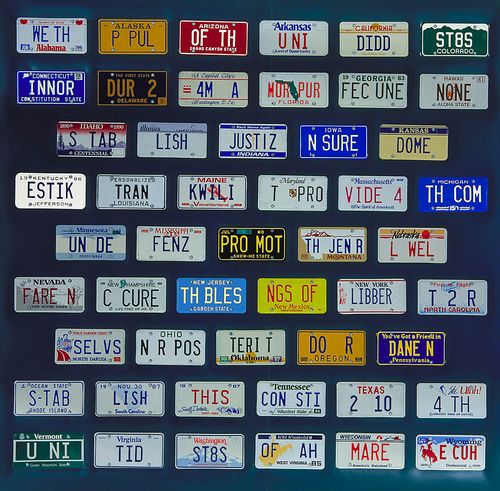
Last week, we posted the personalized license plates of two land use lawyer colleagues, and invited our readers to send in their own, real or imagined, promising to post the best submissions.
Before we get to those, we note the above, perhaps our favorite work of modern art, a piece titled “Preamble,” which hangs in the Smithsonian American Art Museum in Washington, D.C. Yes, those are real license plates, and when read together spell out the preamble to the Constitution. We like the piece so much, we’ve got a print hanging in our office.
And now, the best of the submissions from you, our readers.
 From a condemnation lawyer, naturally.
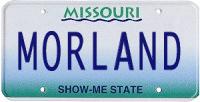 A condemnor’s attorney?
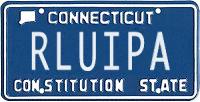
A lawyer who really appreciates the Religious Land Use
and Institutionalized Persons Act. As do we all.
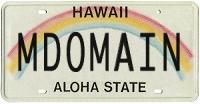
Straight up the middle. We like.
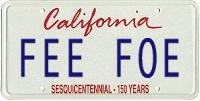 Fi Fum? A lawyer who doesn’t like
Land Use: License Plate Edition

There we were, attending the recent conference on “The Takings Issue,” at Touro Law School. In the parking lot, we spy this:
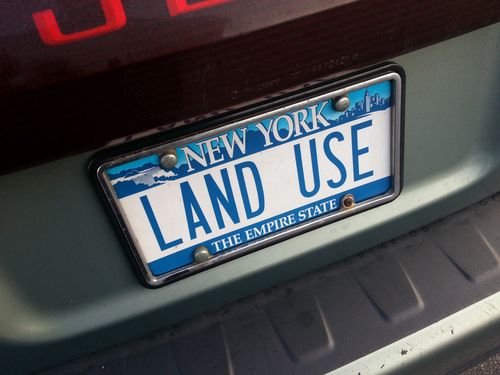
Which got us to thinking: what would we put on our vanity license plate, were we inclined to do so? (Our answer at the top of this post).
And, it got us to thinking of others with land-usey plates, including this one, famously from Dwight Merriam:

How about you, what would you put on your plate?
Use this vanity plate generator to make it, and send it our way. If we get enough, we may post ’em. Continue Reading Land Use: License Plate Edition
What The Heck Does “12 Angry Men” Have To Do With Inverse Condemnation?
Okay, we promise this is the last of our reviews of movies that are part of our firm’s upcoming law film festival, “Let’s Film All the Lawyers,” which starts tomorrow and runs through Friday, September 20, 2013, at the Honolulu Museum of Arts’ Doris Duke Theatre.
And as for what 12 Angry Men has to do with this blog? Not a whole lot, since the Men are deliberating a murder case, not how much compensation a property owner may be entitled to. While we’re not sure we’d want or get twelve angry men adjudging us (many juries these days are less-than-twelve, we’d prefer them to be dispassionate not angry, and a jury comprised entirely of men will get you a reversal for gender discrimination), as Ken Kupchak‘s review of this classic legal film discusses, the jury remains an integral part of the justice system.
Update: here’s
Continue Reading What The Heck Does “12 Angry Men” Have To Do With Inverse Condemnation?
What The Heck Does “My Cousin Vinny” Have To Do With Inverse Condemnation?
Nothing! But as we noted yesterday, that doesn’t mean you might not be interested in our Damon Key colleague’s review of the film, part of our firm’s upcoming law film festival, “Let’s Film All the Lawyers” (September 14-20, 2013, Honolulu Museum of Arts’ Doris Duke Theatre).
Here’s Mark Murakami‘s review of this new classic.
———————————–
“My Cousin Vinny” – Knowing the Judge, and the Making of a Great Lawyer Movie
by Mark M. Murakami
Sometimesit is about the process. In law school, students may learn “the law,” but inorder to actually represent clients, they need to know the process, and figureout the rules—written and unwritten—that make courtrooms work. As the old jokegoes, “a good lawyer knows the law, a great lawyer knows the judge.”
Despite its slapstick cover, legalprocedure is what My Cousin Vinny isall about. This 1992 film is a comic fish-out-of-water take on
Continue Reading What The Heck Does “My Cousin Vinny” Have To Do With Inverse Condemnation?