In case you are working today (we are), here’s some light reading to distract you:

Continue Reading Saturday Round Up

A recently-published Note from the Stanford Law Review: Josh Patashnik, Bringing a Judicial Takings Claim, 64 Stan. L. Rev. 255 (Jan. 2012). Here’s the abstract:

This Note seeks to answer a set of questions prompted by the Supreme Court’s 2010 decision in Stop the Beach Renourishment, Inc. v. Florida Department of Environmental Protection. In that case, six Justices recognized that the Constitution provides some protection against so-called judicial takings—court decisions that, like executive and legislative action, might be deemed to take property rights. But the Court’s fractured holding provided little guidance on a handful of practical issues that will be of immense interest to potential judicial takings plaintiffs, like whether such claims can be brought in federal court and what remedies might be available. I argue that a judicial takings plaintiff should be able to bring her case in federal district court, notwithstanding the barriers the Supreme

Continue Reading New Article: Bringing a Judicial Takings Claim (Stanford Law Review)

We’ve been watching Bowers v. Whitman, No. 10-24966 (Jan. 12, 2012), the case which challenged Oregon’s Measure 49, the statute adopted by initiative that replaced and modified the earlier Measure 37. Measure 37, for those not aware, was the initiative measure by which Oregon voters required the state to compensate owners whose private property was devalued by land use regulations. It essentially required the state to either allow development or pay, even if the regulation did not run afoul of the high thresholds of regulatory takings doctrine.  

Back to Measure 49. That statute, as the Oregon Supreme Court held, “conveys a clear intent to extinguish and replace the benefits and procedures that Measure 37 granted to landowners.” Corey v. Dep’t of Land Conservation & Dev., 184 P.3d 1109, 1113 (Or. 2008). But what of those landowners in process under Measure 37 when the voters adopted the new

Continue Reading 9th Cir: No Vested Rights Taken By Oregon’s Measure 49

Once again, our old friend and colleague Paul Schwind is following an interesting ongoing case. We’ve been tracking the “Bridge Aina Le`a” litigation, but have not had the time to digest the latest developments in a comprehensive fashion and Paul attended the recent federal court hearing in the federal phase, and has kindly provided us with the details. 

The litigation is a series of two lawsuits that originated in state court in the Third Circuit (Big Island), one an original jurisdiction civil rights lawsuit, the other an administrative appeal (that’s a writ of administrative mandate for you Californians). The State removed the civil rights lawsuit to U.S. District Court in Honolulu and promptly moved to dismiss, and this portion of the case nearly caused us to flash back to our Federal Courts class in law school, since it raised a host of procedural questions such as the

Continue Reading Guest Post: Federal Courts Flashback – Takings And Vested Rights Challenge To Land Use Commission

The old adage is that a waterway is “navigable” for purposes of federal law if it is deep enough to float a Supreme Court opinion. Seriously, though, the less cheeky test of navigability is whether a waterway is capable of being used in its natural state as an avenue of commerce, meaning whether it was actually navigable at the time of a state’s admission into the Union. Really, that’s the test.

But as the Supreme Court reminded more than 30 years ago, when applying this general test for navigability, you must keep in mind the purpose  

T

Wednesday’s oral arguments in PPL Montana v. Montana, No. 10-218 (cert. granted June 20, 2011) started off on familiar territory with Justice Kennedy breaking the ice quickly, asking Petitioner’s counsel Paul D. Clement whether his point is “that there should be a Federal rule of — laches or estoppel, or are

Continue Reading What Does It Mean To Be “Navigable?” – Supreme Court

Here’s the latest in the Casitas case from the U.S. Court of Federal Claims. Casitas Municipal Water Dist. v. United States, No 05-168L (Dec. 5, 2011). This case highlights the importance of identifying the “property” right alleged to have been taken in these type of cases:

This case is before the court following a trial held to determine the compensation, if any, owed to plaintiff under the Fifth Amendment to the United States Constitution for the taking of its property. In an earlier round of litigation in this case, the Court of Appeals for the Federal Circuit ruled that operating restrictions on plaintiff’s water project imposed by the National Marine Fisheries Service “NMFS”) pursuant to the Endangered Species Act (“ESA”), 16 U.S.C. §§ 1531–44 (2006), should be analyzed as a physical taking where plaintiff was required to reroute a portion of the water it had diverted for its own

Continue Reading Court Of Federal Claims: Water Rights Takings Claim Not Ripe (Flashbacks To The Hawaii Water Rights Case)

Tomorrow, the U.S. Supreme Court will hear oral arguments in PPL Montana v. Montana, No. 10-218 (cert. granted June 20, 2011), a case in which the Montana Supreme Court disregarded 100 years of private or federal ownership of the riverbeds under more than 500 miles of river, and held that the state owned them. The net result of the Montana court’s ruling was that the state was owed millions in back and future rent from the owners of hydropower facilities located on those riverbeds. Sound familiar?

We’ve been following the case, and have posted the merits and amicus briefs, and were all set to do a lengthy and detailed preview of the oral arguments. Really, we were just about to do that. But a worthier source than we, Professor Thomas Merrill, beat us to the punch, and posted his detailed preview of the case on SCOTUSblog here.

Continue Reading Montana Navigability Case Preview

We’ve been kind of busy in the last few days with a couple of appellate briefs, so haven’t had a lot of time to post up the latest cases and articles of interest. But here’s what we are reading today, in between brief writing:

  • Hawaii Supreme Court Nominees Will Be Public – Courthouse News Services writes about the case in which we represent the Star-Advertiser in its case to compel the governor to publicly disclose the lists of judicial nominees he receives from the Judicial Selection Commission. More on the case here. The Reporters Committee for Freedom of the Press also reported on the story here
  • Beyond “NIMBY” – a post on Legal Planet, a blog produced by enviro lawprofs, advocates that we abandon the term NIMBY. I like “I GOT MINE.”


Continue Reading Friday Round Up

IMG_6999

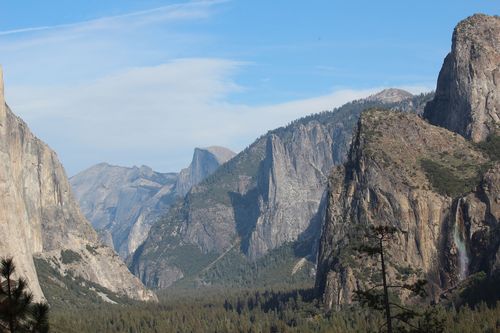
“Yosemite,” according to California Place Names, Erwin Gudde’s seminal work on the origins of (surprise) California place names, means “they are killers.” It was “[e]vidently a name given to the Indians of the valley by those outside it.”

I raise this historical tidbit because I must admit to feeling a little like “those outside it” when I was invited to speak about regulatory takings at the California State Bar’s Environmental Law Conference at Yosemite. I figured as a conference devoted to environmental law, it was a going to be a decidedly skeptical audience, given my advocacy for property owners and property rights. I accepted the invitation nonetheless, heartened that this conference wasn’t going to be an echo chamber and that they were at least open to hearing competing ideas.

It turns out that my prediction about “they are killers” was not accurate — the audience, while not exactly

Continue Reading Yosemite Seminar Summary – Regulatory Takings: Looking Back And Looking Forward

Yosemite_conference Here are the links to the cases and other items discussed today at the session Regulatory Takings – Looking Back and Looking Forward at the Cal State Bar’s Environmental Law Section’s Environmental Law Conference at Yosemite.

These cases are also in your written materials.


Continue Reading Links From “Regulatory Takings: Looking Back And Looking Forward” (Cal. State Bar Yosemite Conference)