Remember the Lost Tree case? That’s the one where the Federal Circuit concluded that a single parcel owned by the plaintiff was the relevant parcel against which the impact of the Corps of Engineers’ denial of a § 404 wetlands dredge and fill permit is to be measured. The court overturned a Court of Federal Claims decision which concluded the relevant parcel was that single plot plus an additional nearby lot, plus “scattered wetlands in the vicinity” also owned by the same owner. 

The case got remanded to the CFC, which now has issued its opinion determining the loss of economic value caused by the denial of the 404 permit. The CFC concluded that the “after” value was $27,500, and the “before” value was $4,245,388, a diminiution in value of a whopping 99.4%. Lost Tree Corp. v. United States, No. 08-117L (Fed. Cl. Mar. 14, 2014).

The court held that
Continue Reading CFC: Denial Of Wetlands Dredge And Fill § 404 Permit = Taking = $4.2M Just Compensation

This is a longer post, but we think it’s worthy of your time. That’s because even though there’s a lot going on in the opinion by the California Court of Appeal in Property Reserve, Inc. v. Superior Court, No. C067758 (Mar. 13, 2014), it cuts through much of the unnecessary doctrinal fog surrounding takings law, especially the U.S. Supreme Court’s bizarre ripeness requirement first enunciated in Williamson County Regional Planning Comm’n v. Hamilton Bank, 473 U.S. 172 (1985).

The Bottom Line

Although the entire thing is worth reading (44 pages of majority opinion, followed by 46 pages of dissent), if we had to pick out one passage as the takeaway, here it is: 

Eminent domain authority must be exercised in strict conformity to the constitutional protections and procedures that limit its operation. If a condemnor intends to take private property or intends to perform actions that will result

Continue Reading Cal App States The Inconvenient Truth: There’s No Substitute For Eminent Domain – Gov’t Must Condemn First If It Wants To Enter Land

As noted on the LegalPlanet blog, law professor Joseph L. Sax has died (“In Memoriam: Joseph L. Sax, Gentleman, Scholar, Giant of Environmental Law“). Although we came at the issues from utterly different positions, there’s no question that he will be missed.

I recently had the opportunity to give a presentation on the takings issue with Professor Sax, and he was never less than engaging, staying on after our panel concluded to discuss our differences (and where we agreed). More on Professor Sax here. See also this post from Pace Law School with more, and this post from the Volokh Conspiracy. Continue Reading Lawprof Joseph Sax Passes

The Hawaii Supreme Court has issued an opinion in Kauai Springs, Inc. v. Kauai Planning Comm’n, No. SCWC 29440 (Feb. 28, 2014). In its preview of the case, the court framed the issue thusly:

In its application, Kauai Springs argues that the ICA gravely erred by: 1) concluding that Kauai Springs impliedly assented to extend the time frame within which the Planning Commission was required to act on two of the permits; and 2) by remanding the case to the Planning Commission when the Commission already had the opportunity to make the relevant inquiries and denied the permits based on standards that the circuit court and ICA concluded were unreasonable, arbitrary and capricious. The Planning Commission responds that: 1) Kauai Springs’ conduct during the Commission’s proceedings was reasonably interpreted as manifesting assent to delaying action on the two permits; and 2) the ICA properly remanded the case because

Continue Reading HAWSCT On Water, Public Trust Duties, And Autoapproval Requirements

No, not that Madison County, but rather Madison County, Montana

In Public Lands Access Ass’n v. Bd of County Commissioners of Madison County, No. DA 12-0312 (Jan. 16, 2014), the Montana Supreme Court held that a riparian owner’s efforts to fence his land to keep the public from crossing it and accessing the Ruby River were not effective. Montana has a statute that allows public access to and use of streams up to the high water mark, and the property owner asserted that the lower court’s ruling allowing access across his land and use of the River under the statute was an unconstitutional taking. The Supreme Court rejected this argument. As the court’s synopsis stated:

The Court also explained that Kennedy’s takings argument is precluded by well-settled law in Montana. Montana’s well-settled law provides that the State owns all waters in trust for the people; that a

Continue Reading The Fences Of Madison County: No Judicial Taking

Our thanks to a new colleague from the U. Maine Law School, who gave us the heads-up about a recent decision from that state’s supreme court about private ownership of beaches, Almeder v. Town of Kennebunkport, No. Yor-12-599 (Feb. 4, 2014).

Littoral property owners sued the Town to determine who owns certain portions of the beach. You know the usual drill in beach cases: the wet sand beach, the dry sand beach, uplands, and the water are the usual dividing lines. Some states like Hawaii mandate that all beaches are public, and up to the highest reaches of the wash of the waves. Others say the public beach extends only to the mean high water mark. In others, some beaches may be privately owned down to the low water line.

Maine appears to be one of the latter, and the owners sought declaratory judgments that they owned or had

Continue Reading Maine: Beach Property Not Subject To Special Rules

Looks like they’re at it again, a solution in search of a problem: a bill has been proposed in the Hawaii Legislature to create an “Environmental Court,” whose mission would be to handle “environmental disputes” arising under a wide range of state statutes:

…administrative proceedings and proceedings for declaratory judgment on the validity of agency rules authorized under chapter 91, arising under chapters 6D, 6E, 6K, 54, 58, 128D, 128E, 201N, 205, 205A, 220, 269, 339, 339D, 340A, 340B, 340E, 340F, 342B, 342C, 342D, 342E, 342F, 342G, 342H, 342I, 342J, 342L, 342P, 343, 508C, and 664, and Titles 11 and 12.

(And the regulations promulgated by state agencies, and ordinances and regulations promulgated by the counties, no doubt.) The bill (SB 632) would task this new court with “maintenance and improvement” of the environment and with exercising “constant vigilence” to “promote and protect Hawaii’s natural environment through consistent

Continue Reading Does Hawaii Need An “Environmental Court?” (Part II)

Property

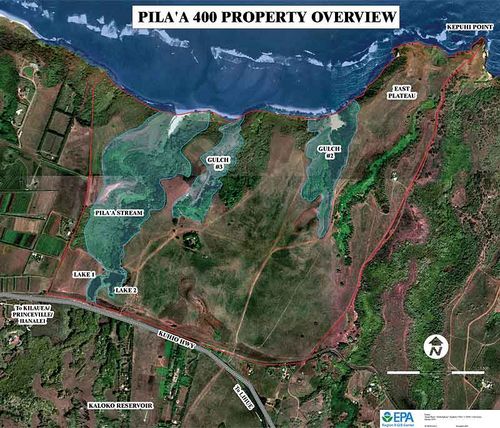
There’s not much doubt that the now-notorious large-scale unpermitted upland grading and grubbing by a Kauai property owner on its private land caused the runoff that catastrophically damaged the adjacent beach and the reef offshore. The damage was pretty bad, and resulted in the “largest storm water settlement [with the federal EPA] in the United States for violations at a single site by a single landowner.” See also the photo above (much larger version here).

The state also pursued the owner, and after a contested case, the Board of Land and Natural Resources assessed approximately $4 million in damages, and $70k for administrative costs. To reach this assessment, It did not apply a preexisting damage formula, but used a method it crafted for the case:

The value of Pilaa beach, bay and reef includes use value, option value, commodity value, existence value, bequest value, cultural values, including

Continue Reading HAWSCT: Damage To Unique Property Subject To Unique Rules

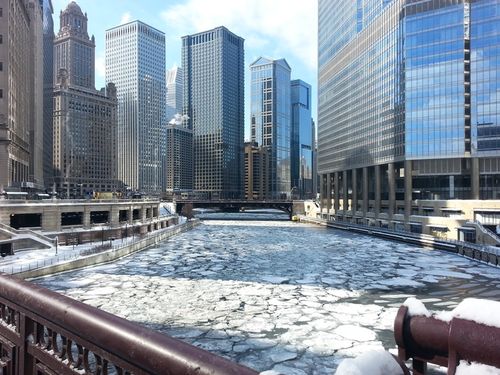
Mich Ave 2-6-2014

We’re at the ABA Midyear meeting in sunny Chicago, so we have our to-read links posted today instead of a new case digest. Our fingers are too frozen to post anything more:

  • No well. No way (from The Garden Island, Kauai’s daily newspaper, a story that just sums up how some decisions get made in one little corner of paradise).


Continue Reading Things To Read In Chicago When You’re Freezing

14.AGRHIOne of the hottest issues in Hawaii at the moment is agriculture. From the spreading county restrictions on GMO crops and pesticides, to water issues, to estate planning, the issues impacting farmers, ranchers, and owners of Ag land are growing. 

On January 8 and 9, 2014, the Seminar Group is putting on what we hope will become a regular event – the Hawaii Agriculture Conference. This two-day conference is for both farmers and lawyers, and covers these issues and others:

  • Contracts and marketing methods for Hawaii agriculture products
  • The Hawaii coffee industry
  • GMO vs organic
  • Zoning and land use issues
  • Exporting issues
  • Water rights
  • Labor law for farmers and ranchers
  • Best husbandry practices
  • Crop loss insurance

I’m the Planning Co-chair, along with David Bateman, a retired lawyer who also happens to be the owner of Heavenly Hawaiian Farms, an award-winning coffee farm on the Big Island. We’ve

Continue Reading Mark Your Calendars: Hawaii Agriculture Conference, January 8-9, 2014