Check out this decision, entered by a Rhode Island Superior Court (a general jurisdiction trial court) denying the State’s motion for summary judgment. The court concluded that a recently-adopted statute shifting the boundary between public and private property on RI’s beaches is a taking.

We won’t be commenting in too much detail because this is one of ours (PLF colleague Dave Breemer represents the plaintiffs). But here’s what you need to know:

  • Until recently, RI law used the high water mark (mean high-tide line) as the boundary between the public beach and private property.
  • In 2023, the RI Assembly adopted a statute that redefined that boundary, and moved it shorewards to where “the land held in trust by the state for the enjoyment of all of its people ends and private property belonging to littoral owners begins.”
  • As a consequence, the public may enter and use “where


Continue Reading Statute Moving The Public/Private Beach Boundary Shoreward Is A Taking
A short one (for us takings types) from the Hawaii Supreme Court.

In In re Surface Water Use Permit Applications, No. SCOT-21-0000581 (June 20, 2024), the court considered a challenge to the State of Hawaii Commission on Water Resource Management’s authority to impose conditions on a water permit. The applicant asserted that the nexus and proportionality requirements of Nollan and Dolan must have been complied with.

No, the court concluded, those standards only apply where there’s a takings claim present. And there’s no takings claims here:

WWC relies on Nollan v. California Coastal Commission, 483 U.S. 825 (1987), and Dolan v. City of Tigard, 512 U.S. 374 (1994), to argue that any conditions the Commission attaches to its SWUP for system losses must relate to those losses. WWC attempts to frame Nollan and Dolan as providing a “clear statement of the unconstitutional conditions doctrine,” but fails to

Continue Reading Hawaii: Permit Conditions Not Subject To Nollan/Dolan When There’s No Taking Claim

This one takes a bit of sifting through, but if you do so, you will eventually savor the arguments. Try and follow this thread.

In 2014, pistachio growers with what seemed to be established rights to pump groundwater for irrigation of their trees and who never had to pay fees or were subject to other governmental regulation, were subject to the newly-adopted Sustainable Groundwater Management Act. This statute, designed to manage groundwater, empowers local groundwater agencies to create management plans and the typical things that such regulatory agencies do.

In the course of determining the “sustainable yield” of the groundwater basin that supplies the pistachio growers’ water, the local agency purported to determine the rights of various users relative to each other. The agency concluded that “public pumpers” have entitlement to 100% of the native groundwater, the pistachio growers’ preexisting water rights notwithstanding. If the pistachio farmers wanted to pump

Continue Reading Pay To Play? Cal SCT Asked If Challenger Must First Pay A Fee To Object To Zero Water Allocation As A Taking

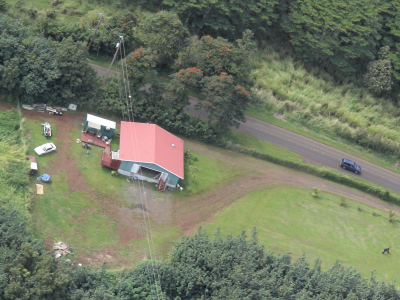
KS_aerial
According to the County, this is an “industrial” use,
incompatible with “agricultural” zoning

Note: sorry, this is one of those longer posts, but the topic is a serious one, so we felt it needed more than our usual cursory treatment.

How Can That Be?

We’ve been somewhat reluctant to post too much on the legal aspects of the Maui wildfires (other than to comment on the first lawsuit), just because it still seems “too soon.” The focus should be on aiding the victims and helping those who want to rebuild to do so, and not on premature blamestorming (see also this), legal theories, and  the “opportunities” this disaster presents (see also this, this.and this).

But we did want to clear one thing up. There are a lot of stories (see here, here, and here, for example), about the State of

Continue Reading Can One Government Official Really Hold Up Necessary Water Uses? The Hawaii Public Water Trust In Action

Check out this press release, reprinted on the Wine Industry Advisor (“Renowned International Winemaker Files Lawsuit Against Napa County over Denial of Water Rights“), noting that “winemaker of some of the world’s most sought-after wines” has sued the County in federal court for a regulatory taking, because it denied well permits after Woodbridge refused to agree to a “strict limit on the water that could be drawn annually from each well, a restriction that does not apply to existing wells[.]”

Want to follow along? Here’s the complaint, and here’s the docket report. Here’s a report on the case from Courthouse News (“Heralded winemaker sues Napa County over water wells“).

We may have to do a “site visit” soon, just to be sure these reports are accurate. Just think if this involved our favorite label, Eminent Domaine!Continue Reading Wine And Takings > Wine And Cheese

Why is it, you ask, that the ALI-CLE Eminent Domain & Land Valuation Litigation Conference (scheduled next February 1-3, 2024, in New Orleans) is an event that seems to be growing in popularity and attendance. In recent years, we have standing room only in the Conference halls, and have sold out the hotel block. After all, this is a pretty niche area of law. So what gives?

When we were in Austin earlier this year, we thought it might be nice to try and answer that question. We asked Conference participants why they come, year-after-year (and in Austin, despite massive travel disruptions). Yes, it is the various venues (Nashville, Austin, Scottsdale, Palm Springs, to name a few recent locations), and yes, it is the excellent and useful programming.

But as we suspected it is more than that. As the above video notes

Continue Reading ALI-CLE’s Eminent Domain & Land Valuation Litigation Conference (Feb 1-3, 2024, New Orleans): Why Attend? Here’s Why.

Screenshot 2023-06-16 at 07-52-47 How Did Property Rights Fare at the Supreme Court What Happened in the 2022 Term and What's Next ALI CLE

On Wednesday, August 9, 2023 at 1:00 – 2:00 p.m. (Eastern Time), please join us for ALI-CLE’s web program, “How Did Property Rights Fare at the Supreme Court? What Happened in the 2022 Term and What’s Next.”

Here’s the course description:

This has been a blockbuster U.S. Supreme Court term for property law, with the Court deciding three major property cases: Tyler v. Hennepin County (government’s keeping the excess value when seizing and selling a home to satisfy a property tax debt is a taking), Wilkins v. United States (is the federal Quiet Title Act’s statute of limitations a jurisdictional bar?), and Sackett v. EPA (the scope of Clean Water Act wetlands jurisdiction). To gain a better understanding these opinions, the current state of takings and property law, and what these cases mean for your practice, join a distinguished panel of experts for this one-hour webcast. The faculty will

Continue Reading Join Us August 9, 2023: ALI-CLE’s “How Did Property Rights Fare at the Supreme Court? What Happened in the 2022 Term and What’s Next”

Hill went down to the fishing hole on a Colorado river, the one he claimed was his favorite. Until those darned landowners “chased him off the property, sometimes with force.” He claimed they didn’t take too kindly to his efforts to go fishing on their land: “Specifically, Hill alleges that they threatened to have him arrested for trespass, thew baseball-sized rocks at him, and shot a gun at his fishing buddy.”

Hill sued, asserting that the landowners don’t actually own the riverbed, and thus he had a legal right to be there. His complaint asserted two claims: (1) he sought a declaratory judgment that the riverbed is public land, owned by the State of Colorado (Equal Footing Doctrine and public trust alert!), and (2) he sought to quiet title, apparently in the State. 

In State v. Hill, No. 22SC119 (June 5, 2023), the Colorado Supreme Court sent the case

Continue Reading Colorado: Only The State Can Assert The Public Owns A Riverbed

D Callies Retirement Celebration Invite 4-27-2023.f

Come join us on Thursday, April 27, 2023, from 5-7pm, downtown Honolulu, to celebrate the retirement of Professor David L. Callies from the University of Hawaii Law School.

Join U.H. Law School Dean Camille Nelson, Professor Callies’ colleagues, his students (present and former), the Hawaii legal community, and family and friends as we honor 43 years of scholarship, teaching, service, and practice.

Professor Callies is a prolific scholar and author, and has mentored generations of lawyers. Known especially for his work in property, land use, takings, administrative law, and state and local government law, he has also been presented with numerous awards including William and Mary’s Brigham-Kanner Property Rights Prize, and the Owner’s Counsel of America’s Crystal Eagle

Invitation and how to RSVP (or click below). Space is limited, so please let us know you are attending as soon as you can.

Details:

Thursday,

Continue Reading April 27, 2023, 5-7pm, Honolulu: Join Us To Celebrate The Work And Career Of Professor David Callies

There’s not a lot new to report in the U.S. Court of Appeals for the Seventh Circuit’s opinion in Kreuziger v Milwaukee County, No. 22-2489 (Feb. 13, 2023). But there’s a bit of old that make it worth posting.

The issue the court considered was whether riparian property owners have any protectable interest in the level of the water which their property abuts. After the County demolished a long-standing dam on the Milwaukee River resulting in a four-foot lowering of the water next to Kreuziger’s upriver property, he sued for a taking. Slip op. at 3 (“The lower surface level of the river exposed a ten-foot strip of marshy land between Kreuziger’s seawall and the water’s edge that had previously been submerged.”).

You probably already understand the general rule in these situations: riparian owners have no compensable property interest in any particular water level, as long as the waterway

Continue Reading CA7: Riparian Owner Has No Property Right In Water Level On Navigable River