When one lawyer writes that another is “my friend and colleague,” watch out: what follows may not be exactly friendly or collegial. For legal academics, the rule is even more pronounced when the friend-and-colleague’s name shows up in the title of an article.

In that vein, we bring you the latest chapter in the ongoing debate about “background principles” in regulatory takings analysis. In Background Principles, Takings, and Libertarian Property: A Response to Professor Huffman (posted on SSRN here), lawprofs Michael C. Blumm and J.B. Ruhl respond to Professor James Huffman’s critique of their work.

A short refresher. The “background principles” issue was spawned by Lucas v. South Carolina Coastal Commission, 505 U.S. 1003 (1995), the case in which the Court held that a regulation takes property when it deprives a property owner of “economically beneficial or productive use of land,” even if the government’s reasons for enacting
Continue Reading Be Careful Of Lawprofs Bearing Praise: Another Chapter In The “Background Principles” Debate

Courtesy of the New York Times is the backstory of Stop the Beach Renourishment, Inc. v. Florida Dep’t of Environmental Protection, No. 08-11 (cert. granted. June 15, 2009). This, of course, is the “judicial takings” case that was argued in the Supreme Court last December, and is now awaiting disposition (our summary page contains links to the briefs — including the amicus brief we filed — and other case materials).

And when the Times goes back, it really goes back:

The sands found Destin first. They started off eons ago, from the Appalachian Mountains, washing their way down the rivers that flow into the Gulf of Mexico. Winnowed to pure, hardy quartz, the sediment moved with the gulf’s currents and gathered into the necklace of narrow barrier islands that buffer Florida’s Panhandle. Time and tides refined the sand into a soft, sun-bleached powder. By the 1830s, when a Yankee

Continue Reading Behind The Music: Stop The Beach Renourishment And Judicial Takings

In January, we posted the cert petition in Sharp v. United States, No. 09-820 (cert. petition filed Jan. 7, 2010) (Supreme Court docket entry here). In that case, the property owners are asking the U.S. Supreme Court to review the Ninth Circuit’s decision in United States v.  Milner, 583 F.3d 1174 (9th Cir. 2009), which held that a littoral owner was liable for trespass in waters held by the federal government for the benefit of the Lummi Nation, and for violation of the Rivers and Harbors Act formaintaining a “shore defense structure.” The structure was built onprivate fast (dry) land, but the shoreline eventually eroded up to it.

In the opinion detailed in this post, the Ninth Circuit held that “both the tideland owner and the upland owner have a right to anambulatory boundary, and each has a vested right in the potential gainsthat accrue from

Continue Reading BIO And Amicus Briefs In Erosion Case: Is A Littoral Owner Trespassing When The Shoreline Erodes?

Barista’s note: we posted a version of this story before, on the 30th anniversary of the date the Court issued the opinion (December 4, 2009), but thought we would reprint a more detailed view, recently published in our firm’s newsletter, complete with photos.

Damon Key Celebrates Thirtieth Anniversary of Landmark U.S. Supreme Court Victory

What do you call a court opinion that has been cited by 627 othercourts, expressly followed in 42 cases, distinguished in 24 others, andhas been cited 1,041 times in law reviews and 147 times in legaltreatises?

We call it a landmark.

In 1979, the U.S. Supreme Courtissued its decision in Kaiser Aetna v. United States, a truly landmarkcase, argued and won by Damon Key attorneys Charlie Bocken and DianeHastert.

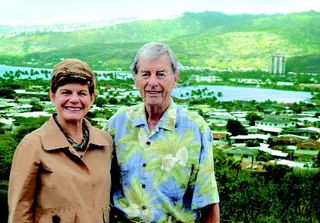
DDH_RCB_hawaii_kai Onbehalf of the developer of Hawaii Kai, Charlie and Diane took on thefederal government and overturned over a century of seemingly adverseprecedent. Kaiser Aetna was the

Continue Reading More On The Thirtieth Anniversary Of Kaiser Aetna

The Federalist Societyhas posted a podcast of my Pacific Legal Foundation colleague Jim Burling discussing Stop the Beach Renourishment, Inc. v. Florida Dep’t of Environmental Protection, No. 08-11 (cert. granted. June 15, 2009):

If that doesn’t work for you, go here to download the mp3.

The Stop the Beach Renourishment case, which has been argued and is currently awaiting dispositionby the Supreme Court, asks whether a state court is constrained by theTakings and Due Process clauses from rewriting the common law rules ofproperty. [Disclosure: we filed an amicus brief in the case supporting the property owners.]

Our summary of the oral arguments as well as links to the briefs are available on our resource page. A recent article summarizing the key amici arguments is posted here.

Also, a distant heads-up: the State and Local Government Law and the Real Property Sections will be presenting a major CLE

Continue Reading Post-Argument Podcast On Florida Judicial Takings Case

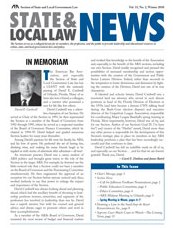
Statelocalcover_1_2010_small The most recent edition of State & Local Law News has an article summarizing the arguments in Stop the Beach Renourishment, Inc. v. Florida Dep’t of Environmental Protection, No. 08-11 (cert. granted. June 15, 2009). 

That case, which has been argued and is currently awaiting disposition by the Supreme Court, asks whether a state court is constrained by the Takings and Due Process clauses from rewriting the common law rules of property. [Disclosure: we filed an amicus brief in the case supporting the property owners.]

In Drawing a Line in the Sand: Stop the Beach Renourishment, Inc. v. Florida Dep’t of Envtl. Protection, six authors of amici briefs in the case — including me — summarized their arguments. I focused on the “background principles” issue, and the notion that certain common law aspects of property are beyond the reach of state court redefinition:

The “judicial takings” question in

Continue Reading New Article On Florida Beach Judicial Takings Case

Both parties have asked the Hawaii Intermediate Court of Appeals to take another look at its opinion in Maunalua Bay Beach Ohana 28 v. State of Hawaii, No. 28175 (Dec. 30, 2009).

In that case, the court held (1) the Hawaii Legislature took existing littoral accretion when it assigned ownership of the accretion from beachfront owners to the State; and (2) the Legislature did not take “future accretion.” We summarized the opinion here. [Disclosure: we filed an amicus briefsupporting the property owners, available here.]

The State of Hawaii asserts the opinion should not have addressed the claim that land which had accreted prior to 1985 was taken. The State’s Motion for Clarification is here.

The property owners assert the ICA’s conclusion that “future accretion” is not a property interest should be reexamined. The ICA relied on three federal cases from the Ninth Circuit, Western Pac. Ry.

Continue Reading Motions For Reconsideration In ICA Accretion Taking Appeal

Noparking Many years ago I got a parking ticket, my first. Here’s the story: when I left the car, it was a legal space, no meter. In the few hours I was away, the city public works department erected a “no parking” sign and painted the curb red. The police were equally efficient, and by the time I returned, I had a ticket for parking in a red zone.

I objected and the judge recognized injustice when he saw it.

Years later, the court was not so magnanimous. We represented a property owner held liable for “creating” an obstruction to navigation in San Francisco Bay in violation of the Rivers and Harbors Act of 1899. How did the owner “create” the obstruction, you ask? It refused to destroy those portions of its piers which extended beyond the harbor line.

Why would the owner put a pier beyond the harbor line? It

Continue Reading New Cert Petition: Is Littoral Owner Trespassing When The Shoreline Erodes, Placing Lawful Structure In The Water?

No doubt about it, the biggest Hawaii-centric land use related story this year was the continuing saga of the Hawaii Superferry. The case resulted in above-the-fold headlines, blogs devoted to the issue, and at least two trips to the Hawaii Supreme Court. We even live blogged the oral arguments. A summary of the case is posted here.

It generated a huge amount of public interest and had all the elements to make a compelling case: environmentalists vs business, local vs mainlander, the governor and the legislature vs the judiciary, and Oahu vs at least two neighbor islands. A certain segment of Hawaii’s population had from the get-goconsidered the interisland vehicle ferry as nothing less than the DeathStar: a whale-killer, a transporter of invasive alien species, andharbinger of a militarized imperialist government. Others didn’t viewit so malignantly, just as a much needed and long overdue alternativeto interisland transportation, or as

Continue Reading 2009 Land Use In Review: The Three Lessons From Hawaii Superferry

PICT0319 This post deals with the practical impacts of the Hawaii Intermediate Court of Appeals’ recent decision in Maunalua Bay Beach Ohana 28 v. State of Hawaii,No. 28175 (Dec. 30, 2009). [Disclosure: we filed an amicus brief supporting the property owners,available here.]

First, some background for those who have not been following our recent posts on the November 2009 oral arguments, and the decision.

In 2003, the Hawaii Legislature adopted Act 73 (codifed here and here),which declared that title to shoreline land naturally accretedcannot be registered by anyone except the State, and that only theState could quiet title to accreted lands. Most critically, the Actdeclared that all accretion not registered was State property.

A three judge ICA panel held that Act 73 took accreted land in existence when the Act was adopted. The ICA agreed with the trial court that the Act rewrote the common law

Continue Reading Balkanizing The Beach: The Practical Consequences Of Maunaula Bay Beach Ohana 28