The New Hampshire Supreme Court, in our view, got it wrong in Ashton v. City of Concord, No. 2015-0400 (Apr. 29, 2016). Really, really wrong.

Indeed, the New Hampshire court seems to have resurrected the California Supreme Court’s now-defunct rule from Agins v. City of Tiburon, 598 P.2d 25 (Cal. 1979), which held that there is no compensation remedy when the application of an ordinance denies an owner all beneficial use of property, only declaratory and equitable relief. See id. at 26 (“the need for preserving a degree of freedom in the land-use planning function, and the inhibiting financial force which inheres in the inverse condemnation remedy, persuade us that on balance mandamus or declaratory relief rather than inverse condemnation is the appropriate relief under the circumstances”). The Agins rule was held unconstitutional in First English Lutheran Church of Glendale v. County of Los Angeles, 482

Continue Reading Does New Hampshire Think It’s California? Wrongful Denial Of Demolition Permit Cannot Be A Taking Because City Was Merely Applying The Statute

Dominionstorage

Is the forced acquisition of property by the government’s power of eminent domain a “purchase?” To the Virginia Supreme Court, the answer to that question is yes. Why, we’re not really sure, because the court doesn’t tell us why.

In City of Chesapeake v. Dominion SecurityPlus Self Storage, LLC, No. 150328 (Apr. 29, 2016), the court held that the use of the word in a subdivision plat in which the owner agreed that it “reserve for future purchase by the City” a part of its property with no compensation for any improvements on that land, meant that the owner also agreed to let the city condemn the land without paying for the improvements.  

This case involved a highway widening and elevation project in southern Virginia. The current owner of the property, which operates a self-storage facility on the parcel, purchased it from the prior owners who had subdivided it

Continue Reading Virginia: Taking By Eminent Domain Is “Purchasing” Property. Why? Because We Said So.

DSCF2762

When you think “LA” or Southern California, what comes to mind? Things like “the hills of Beverly Hills, the Hollywood Hills, and the Los Angeles basin, including the Hollywood sign, the Griffith Observatory, downtown Los Angeles, and … Mount Baldy,” perhaps?

Or maybe, like us, you think of prehistoric elephants stuck in tar.

But no matter, because our point is that each of us recognizes what we call “cliche litigation.” You know, the cases that involve just the thing you think about when you imagine a certain place. We have our beach cases in Hawaii; the south has alligator cases, for example. 

Well, here’s the LA version, Boxer v. City of Beverly Hills, No. B258459 (Apr. 26, 2016).

The City of Beverly Hills planted redwood trees in a public park. These trees apparently blocked the views from the plaintiffs’ backyards of some very So Cal-ish things like

Continue Reading Cal App: Beverly Hills Blocking Views Of The Hollywood Sign Isn’t Inverse Condemnation

Here’s the amici brief we’re filing today on behalf of the National Federation of Independent Business Small Business Legal Center and the Hillsborough County Chapter of the NAACP in support of a cert petition now pending at the Supreme Court.

The case centers around a “class of one” Equal Protection claim in which the plaintiff/petitioner alleges that his land use requests were treated by the County differently than other “similarly situated” landowners. The District Court granted summary judgment to the County because the other owners whom the plaintiff proffered in comparison were not subject to the Keystone Community Plan as were his properties. The Eleventh Circuit affirmed.

The court held that the comparators must be “identical in all relevant respects,” and since the other owners were not subject to the Keystone CP, end of story. It didn’t matter that the applicable provisions in the Keystone CP were the same as in

Continue Reading Amici Brief: In Class Of One Equal Protection Claims, Is “Substantially Similar” A Search For Evidence, Or Unicorns?

In a ruling that no one who was paying attention could claim to be surprised by, the Hawaii Supreme Court yesterday issued a 4-1 memorandum opinion holding that the “agricultural lands” section of the Hawaii Constitution isn’t self-executing, and which approved the State Land Use Commission’s reclassification of land on Oahu from agricultural to urban uses for the “Koa Ridge” master-planned community:  

its constitutional history as well as the legislative history of Act 183 do not reveal an intent to require the LUC to delay reclassifying agricultural land pending formal designation of [Important Agricultural Lands].

Slip op. at 3. Justice Pollack, as he did in a prior case on the same issue, dissented.

No Surprises

We say no surprise, because only a few months ago, the same majority (Chief Justice Recktenwald, and Justices Nakayama and McKenna, joined by a circuit judge sitting for the recused — and now

Continue Reading HAWSCT Says It Again: Court Won’t Create A Moratorium While “Important Ag Lands” Process Completes

Earlier this week, we posted our visit to the site of the U.S. Supreme Court’s decision in Hadacheck v. Sebastian, 239 U.S. 394 (1915). It’s been over 100 years since that case was decided by the Court, but to Hinga Mbogo, the Dallas auto mechanic profiled in the above video from the Institute for Justice, 2016 sure must seem like 1915.

The more things change…

Continue Reading Hadacheck Revisited: The More Things Stay The Same Dep’t…

Here’s a new cert petition, seeking SCOTUS review of an unpublished opinion from the Eleventh Circuit. That court concluded that Dibbs’ equal protection challenge to the Hillsborough County’s Community Plan failed because he could not identify others who were similarly situated but treated differently.

Dibbs asserted. among other claims, that the County treated him differently from others when it rejected his development proposals as inconsistent with the Community Plan for three parcels he owned. Motivated by malice, he asserted, the County singled him out for ill treatment because of “vindictiveness, maliciousness, animosity, spite or other reasons unrelated to a legitimate government interest.”

Dibbs isn’t part of a protected class, so this is an Olech class-of-one claim in which he must show that he was treated differently from others similarly situated, and that the County “applied a facially neutral ordinance for the purpose of discriminating.” The district court and the

Continue Reading New Cert Petition: Circuit Split On “Class Of One” Equal Protection Claims – “Similar” Or “Identical?”

20160325_125208

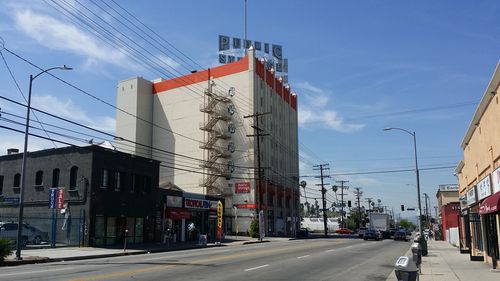
A nondescript corner of what could be just about any urban city street in America. Nothing of overwhelming interest, just the usual commercial buildings, traffic signals, and small businesses. A self-storage facility. Pretty typical in a Commercial district. Here, the “C-4 District.”

Nothing at all, in fact, to indicate that just over a century ago, this was the site of what was to become one of the most important land use cases in U.S. history — the place that gave us the first Supreme Court decision that dealt with how the expanding power to regulate the uses of property meshes with private property rights.

DSCF2746

For this area — the block southeast of the corner of Pico and Crenshaw Boulevards — was once a Los Angeles brickyard owned by Joseph C. Hadacheck.  

What is now the Arlington Heights neighborhood was once outside of the city limits. Indeed, Hadacheck’s title went back

Continue Reading Takings Pilgrimage, LA Edition: Police Power, The Zoning Game, And Nuisances

IMG_0459

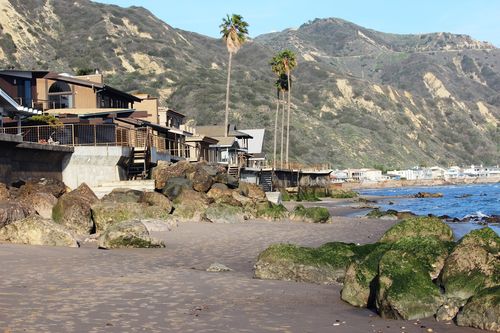
The Nollans own a beachfront lot in Ventura County, California. A quarter-mile north of their property is Faria County Park, an oceanside public park with a public beach and recreation area. Another public beach area, known locally as “the Cove,” lies 1,800 feet south of their lot. A concrete seawall approximately eight feet high separates the beach portion of the Nollans’ property from the rest of the lot. The historic mean high tide line determines the lot’s oceanside boundary.

Nollan v. California Coastal Comm’n, 483 U.S. 825 (1987)

From time-to-time, and when we’re in the neighborhood, we like to drop by the sites of familiar (and famous) takings and land use cases. Like Kaiser Aetna (in our own backyard), Dolan, and PruneYard. We’ve been there, done that. 

So there we were in Central California (Ventura County to be exact), and we’re driving up the coastal highway when

Continue Reading Another Takings Pilgrimage (Unconstitutional Conditions Technically, But Close Enough)

Read this: “The Accidental Abstention Doctrine: After Thirty Years, the Case for Diverting Federal Takings Claims to State Court Under Williamson County Has Yet to Be Made,” by R.S. Radford and Jennifer Fry Thompson, published in the most recent edition of the Baylor Law Review.  

If the title weren’t enough to tell you what this article is about, here’s a summary:

The Supreme Court has never directly reviewed the question of whether, as a general matter, abstention is required or even appropriate in Fifth Amendment takings cases. Yet in a seemingly unrelated decision handed down more than a decade after Williamson County, the Court held that dismissing such cases would be improper under its express abstention doctrines. The Court has thus created a doctrinal paradox: couched in terms of “ripeness,” Williamson County in fact created a de facto abstention doctrine that applies under circumstances in

Continue Reading Today’s Must Read: “The Accidental Abstention Doctrine: After Thirty Years, the Case for Diverting Federal Takings Claims to State Court Under Williamson County Has Yet to Be Made”