


20160128_091958

20160128_092004

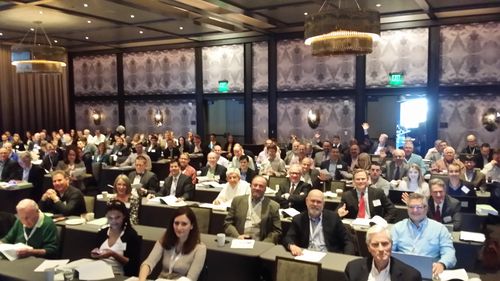
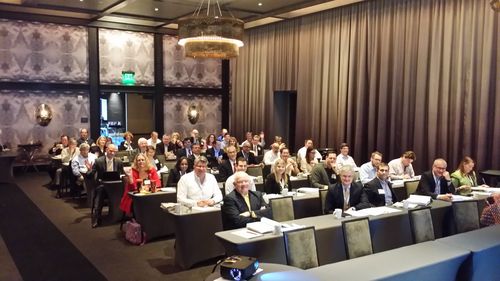
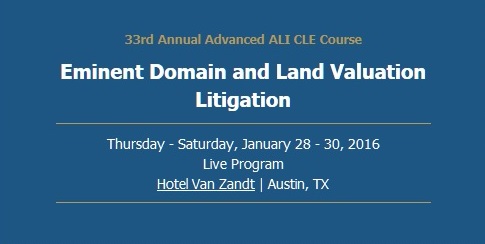
Here’s what’s going on today, the first day of the 33d annual ALI-CLE Eminent Domain and Land Valuation conference in Austin, Texas. We’re at standing room only, with a record number of attendees and our usual nationally renown faculty.

We started off the day with our usual “Eminent Domain Update” session with Amy Brigham Boulris, and as mentioned, the links to the opinions which we discussed are going to be posted in a separate post today. 

We are being followed by a panel on pipeline takings, one of the hot issues nationwide, with Joe Waldo, Matthew Ray, MAI, Thomas Peebles, and Dave Domina.

That session was followed by Professor Ilya Somin, talking about his book, “The Grasping Hand: Kelo v. City of New London and the Limits of Eminent Domain.”  

Above are our annual “proof of life” photos taken from the lectern, to show
Continue Reading ALI-CLE 2016 Eminent Domain Conference, First Day: Standing Room Only, National Expertise

We know inverse condemnation liability can be triggered by intentional government action. But what about when government doesn’t act?

That was the issue before the Court of Appeals of Maryland in Litz v. Maryland Dep’t of the Environment, No. 23 (Jan. 22, 2016). And when the opinion starts this way, you just know where this is going to end up:

“The nine most terrifying words in the English language are, ‘I’m from the government and I’m here to help.’”

-Ronald Reagan, 40th President of the United States, News Conference (12 August 1986).

Petitioner, Gail B. Litz, might have welcomed hearing those nine words spoken to her, but, according to her Third Amended Complaint, they were not forthcoming.

Slip op. at 1.

The case involved “human sewage” flooding onto Ms. Litz’s once-popular campground from nearby septic fields, which, quite naturally resulted in a dearth of people who wanted to camp

Continue Reading “We’re Here From The Government, And We’re Here To … Do Nothing” – Gov’t Inaction Gives Rise To Inverse Condemnation

This morning, the U.S. Supreme Court declined to hear what might have been a major property rights case, California Building Industry Ass’n v. City of San Jose, No. 15-330 (cert. petition filed Oct. 16, 2015). 

In that case, the California Supreme Court upheld the city’s “affordable housing” requirement against a challenge which asserted that it was an exaction and thus should have been subject to the heightened scrutiny of the unconstitutional conditions doctrine of Nollan, Dolan, and Koontz. The California court disagreed, holding that because the ordinance did not require a developer to give up land, or money in lieu of land, it was a mere zoning restriction and subject to the “rational basis” test. 

We filed an amici brief in the case in support of the petitioners.

While we believed there was a good change that SCOTUS was going to hear this case (it

Continue Reading SCOTUS Won’t Review Affordable Housing Exactions And “Inclusionary Zoning” Case

This morning, the Supreme Court agreed to hear another important property rights case, California Building Industry Ass’n v. City of San Jose, No. 15-330 (cert. petition filed Oct. 16, 2015). 

In that case, the California Supreme Court upheld the city’s “affordable housing” requirement against a challenge which asserted that it was an exaction and thus should have been subject to the heightened scrutiny of the unconstitutional conditions doctrine of Nollan, Dolan, and Koontz. The California court disagreed, holding that because the ordinance did not require a developer to give up land, or money in lieu of land, it was a mere zoning restriction and subject to the “rational basis” test. 

We filed an amici brief in the case in support of the petitioners.

SCOTUS on a tear lately, as it recently also agreed to review a case on the “relevant parcel” in regulatory takings.

Continue Reading SCOTUS Takes Another “Takings” Case – Inclusionary Housing And Affordable Housing Exactions On The Menu

We’ve been tied up with other things the past few days, so haven’t had a chance to do much posting, but here’s something to tide you over, a piece from Florida colleague Jacob Cremer, “Why Exactions Law Should Bring Property Rights Advocates Cheer in the New Year.” 

Land use and takings mavens, rejoice. 

Continue Reading Exactions, Again

Here’s a good one from the Ohio Court of Appeals to start off your 2016.

In State ex rel Greenacres Foundation v. City of Cincinnati, No. C-150038 (Dec. 30, 2015), the court agreed that the City’s failure to issue a demolition permit for the “Gamble House,” which the City claimed was a property worthy of historic preservation but had not yet so designated, was a taking. 

The Gamble House was built by the “Gamble” in Proctor & Gamble, the guy who invented Ivory Soap. But over the years, the house “had been uninhabited since 1961, had suffered extensive water and termite damage, and was infested by mice, birds, raccoons, squirrels, and bats.” So the current owners asked the city for a demolition permit so they could redevelop the property. 

The city said no, and ran the owners through a maze, with several appeals through the usual administrative procedures.

Continue Reading City’s Prohibiting Demolition Of Uninhabitable House So City Could Designate It As Historic, Is A Taking

ALI-CLE-2016-masthead

Here’s our second day of highlights from the upcoming American Law Institute-CLE Eminent Domain and Land Valuation Litigation / Condemnation 101 Conference, which will be held in Austin, Texas, from January 28-30, 2016.  

This is the first time the conference has been to Austin, and we’re hoping for a good turnout. Here’s the full agenda for the program. 

  • We especially focused on the ethics component this year, and are looking forward to the session on “Ethics: Tips and Traps for the Eminent Domain Practitioner” at the first plenary session on the second day, taught by Jamila A. Johnson (Schwabe, Williamson & Wyatt, Seattle), Robert B. Neblett, (Jackson Walker L.L.P., Austin). and Joseph V. Sherman (Waldo & Lyle, P.C., Norfolk, Virginia). 
  • Pipeline takings are a huge issue, and we’ve got the lawyers on the very tip of the spear on these cases. “Pipelines and Energy


Continue Reading More On The Upcoming ALI-CLE Eminent Domain Conference (Austin, Jan 28-30, 2016)

Barista’s note: last week, the Hawaii Supreme Court issued a 4-1 ruling in Friends of Makakilo v. D.R. Horton-Schuler Homes, LLC, No. SCAP-13-0002266, holding that the State Land Use Commission was not prohibited from adopting a boundary amendment (akin to a rezoning under Hawaii’s state-heavy land classification scheme) while the process for designating Important Agricultural Lands plays out. 

Earlier this year, on June 25, 2015, court heard oral arguments, and our colleague Paul Schwind, who has guest posted before on this and other important cases, kindly attended the arguments, and had the the following report, which we’re posting while we digest the majority and dissenting opinions.

According to the Judiciary web site summary of the case, here are the issues:

In this case, Appellants Sierra Club and Clayton Hee appeal from the Decision and Order of the Circuit Court of the First Circuit, which dismissed their appeal

Continue Reading Guest Post: HAWSCT Oral Arguments In Hoopili – Is The State Prohibited From Rezoning “Potential” Important Ag Land?

Here’s one in a land use case we’ve been following, both because it is a huge issue and because our partners Greg Kugle and Matt Evans represent the prevailing land owner.  

All Hawaii land users need to read this, a 4-1 decision (Justice McKenna writing for the majority, with Justice Pollack in in dissent) that involves the LUC, the “Important Agricultural Lands” process, and reclassification. We haven’t yet read it in detail, but here’s the holding:

This appeal involves a long-standing issue in this state: balancing agricultural and urban land uses.

Pursuant to Save Sunset Beach Coalition v. City & County of Honolulu, 102 Hawaii 465, 476, 78 P.3d 1, 12 (2003), Article XI, Section 3, standing alone, is not self-executing; rather, its mandate is carried out through the provisions of Part III. Therefore, the plain language of Article XI, Section 3 does not require the LUC

Continue Reading HAWSCT: Land Use Comm’n Need Not Impose Moratorium Until After “Important Ag Lands” Process Is Complete

Here’s the recently-published brochure with more details about the ALI-CLE Eminent Domain and Land Valuation LItigation conference, set for Austin in January 2016. 

In the coming days and weeks, we’ll be posting more details about the conference. Our co-planning chairs Joe Waldo, Jack Sperber, and Andrew Brigham have assembled a great agenda, taught by the usual stellar faculty. If eminent domain, appraisal, or land use is your thing, you really should attend. 

33d Annual ALI-CLE Eminent Domain and Land Valuation Litigation Conference, Jan. 28-30, 2016, Austin, TX

Continue Reading ALI-CLE Eminent Domain And Land Valuation Conference: Full Brochure