(We’re not sure who captured and posted the above video — wasn’t us — but to whomever did so, thank you.)

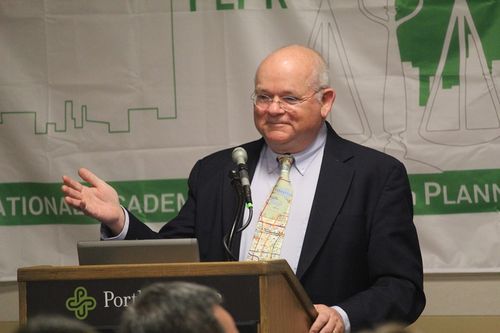
Earlier this week, our colleague Mark M. Murakami spoke at the University of Hawaii Law School on a panel about “The PLDC and Property Rights in Hawaii.” PLDC refers to the Public Land Development Corporation, a state agency created in 2011 to develop state-owned lands, primarily in concert with private entities. Since its formation, the PLDC has become highly controversial, and the Hawaii Senate recently voted to repeal it.

Joining Mark on the panel were Professor Shelley Saxer (Pepperdine); Marti Townsend, Executive Director of the Outdoor Circle; and Chris Lee, State House of Representatives member.

In the event you don’t want to view the entire session, we’ve put Mark’s remarks and his responses to audience questions in a separate (high-quality) audio file, which you can steam or

Continue Reading Podcast And Video: The PLDC And Property Rights In Hawaii – A Panel Discussion
A quick one. An op-ed from yesterday’s Honolulu Star-Advertiser by the newly-appointed Director of Honolulu’s Department of Planning and Permitting. In “City followed law in issuing Hao Street development permit,” he makes some good points in this piece about building permits for two single-family homes in east Honolulu, points we don’t usually see being made by government officials. Unfortunately, its mostly behind a firewall (come on, you should subscribe to Hawaii’s paper of record), but here are the most interesting bits:

Building and grading permits are ministerial, meaning the city cannot lawfully deny them if the plans meet applicable codes. Residents may object to new homes being built in their neighborhood, but the owner is allowed by right to do so under the law.

For example, assume your lifetime dream is to build a family home. You then purchase a property zoned for residential use; however, your neighbors

Continue Reading HNL Planning Director: “Public, Along With Private Property Rights, Are Our Top Priority” In Building Permit Review

Did we say free? (If you are an ABA member, that is.)

Join us for a teleconference jointly sponsored by the ABA’s Section on Litigation’s Environmental Litigation Commitee and the Condemnation, Zoning, and Land Use Committee to discuss the latest and greatest in takings law, specifically the three cases the U.S. Supreme Court is ruling on this Term.

Moderated by Dwight Merriam (Robinson & Cole, Hartford), panelists include me, Amy Bourlris (Gunster, Yoakley & Stewart, Miami, Professor Steven Eagle (George Mason School of Law, Arlington), and Robert Meltz (Attorney-Adviser, American Law Division, Congressional Research Service, Adjunct Professor of Law, Georgetown Law, Washington)

Date: Tuesday, February 26, 2013

Time: Noon – 1:00 p.m. Eastern Time

Register here.

More information here. See you there. Come with your questions or comments.
Continue Reading Still Time To Join Us Tomorrow For ABA Takings Roundable (Free!)

Having recently attended the 7th International Conference of the Academic Association on Planning, Law, and Property Rights in Portland, Oregon, we offer this irreverent view of that city’s culture, “Insufferable Portland,” by Mark Hemingway at the Weekly Standard. The landscape he portrays should be familiar to anyone who knows Portland, Berkeley, the Upper West Side, Santa Monica, Boulder, Chapel Hill, or Ann Arbor. Some highlights:

Case in point: One of the most commented-on sketches from the show [Portlandia] is a scene from the first episode in which Armisen and Brownstein are sitting in a restaurant. After asking their waitress a series of absurd questions about whether the chicken they are about to eat is local​—​”the chicken is a heritage breed, woodland raised chicken that’s been fed a diet of sheep’s milk, soy, and hazelnuts. .  .  . His name was Colin, here are his papers”​—​the couple ends

Continue Reading Portland: Planning Utopia Or Hipster Paradise?

On Tuesday, February 26, 2013 from 7:15 – 8:309 p.m. in Classroom #2, the University of Hawaii Law School is sponsoring a talk about “The PLDC and Property Rights in Hawaii,” which will feature our Damon Key colleague Mark M. Murakami.

PLDC refers to the Public Land Development Corporation, a state agency created in 2011 to develop state-owned lands, primarily in concert with private entities. As Honolulu Civil Beat‘s information page on PLDC notes:

The corporation has broad powers for entering into private partnerships and establishing its own governing objectives and policies. It also is tasked with identifying state lands under DLNR that are suitable for development. The Board of Land and Natural Resources must approve all land transfers.

The corporation, with the approval of the governor, can also issue revenue bonds for constructing, acquiring and renovating public facilities, as well as for the acquisition

Continue Reading Upcoming Event: The PLDC and Property Rights in Hawaii

Mark your calendars: on Thursday, February 21, 2013, James Burling, director of the Pacific LegalFoundation and principal attorney at PLF’s Property Rights practice group and U. Hawaii lawprof Maxine Burkett willdiscuss “Do Property Rights Matter When The Environment IsGoing To Hell In A Handbasket?

The forum — presented by the EnvironmentalLaw Program and the Federalist Society — will beginat 12:15 p.m. in CR1. Light refreshments will be served. Please RSVP to elp@hawaii.edu.

More below.

Do Property Rights Matter When the Environment is Going to Hell in a Handbasket?


Continue Reading PLF’s Jim Burling To Discuss Property Rights And The Environment At U.H. Law School

Dmerriamportland

Yesterday, our ABA and Owners’ Counsel of America colleague Dwight Merriam gave the keynote address at the 7th International Conference of the Academic Association on Planning, Law, and Property Rights, in Portland, Oregon.  Dwight’s presentation, “Getting Past “Yes or No” – Linking Police Power Decision-making with Just Compensation,” centered on the idea that many of the frustrations in land use and environmental law might be avoided by the establishment of a compensation fund which would be drawn upon to offset the negative externalities of development proposals that otherwise might draw fire. So instead of objecting, landowners who suffer losses because of a project that will benefit the public — a nearby wind farm, for example — could obtain compensation.

Here’s a summary of his presentation:

Land-use and environmental decision-making under the police power is usually a zero-sum game. When neighbors complain about the negative externalities of a

Continue Reading Getting Past No In Land Use Disputes

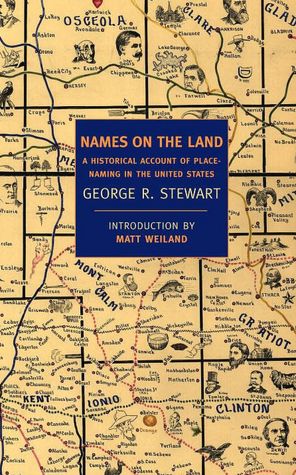
NamesonthelandIt’s easy to forget that place names are not “real” in the sense that they exist other than in our collective minds, but are impermanent markers bestowed on places by man. There’s nothing that commands New York is “New York,” the Mississippi River to be so named, or the island of Molokai to be called that.

I’m reminded of this each time I fly. From 35,000 feet you can see many natural barriers and landmarks, but there are no labels on the land as on a map. This gives a fleeting sense of perspective which reduces political distictions — which are bolstered by names and labels — to a somewhat random convention, and makes the age-old fights over land and territory seem a bit trivial.

If you didn’t already possess that sense, then Names on the Land by George R. Stewart (originally published in 1945, republished in 2008), should give

Continue Reading Book Review – Names on the Land

If you are a member of the ABA, mark your calendars for Tuesday, February 26, 2013, noon to 1:00 p.m. Eastern Time, for a free teleconference jointly sponsored by the ABA’s Section on Litigation’s Environmental Litigation Commitee and the Condemnation, Zoning, and Land Use Committee to discuss the latest and greatest in takings law, specifically the three cases the U.S. Supreme Court is ruling on this Term.

Here’s the description:

For the first time since 2005, the U.S. Supreme Court hasthree property rights cases on its docket. One of them, Arkansas Game &Fish, regarding compensation for flooding, was decided in December.  Another,Koontz, concerning the applicability of the Nollan and Dolan nexustests, has been argued. The final case, Horne, a most unusual case about whatmight be described as raisin sequestration, is still on the sidelines.

An expert panel — two practitioners, a federal researcher,and a law professor

Continue Reading ABA Takings Roundtable – The U.S. Supreme Court Property Rights Cases – Feb. 26, 2013

I did want to make a mention of a sad milestone I wish we didn’t have to come to, the passing of Maui’s irreplaceable land use lawyer B. Martin Luna. Here’s the report from the Maui News.

Having dealt with Martin over the years, he was a true gentleman, and everything that you conjure up when you think about “old school” lawyer: smart, cordial, well-armed with facts, generous, courtly. And something that is a rarity today — a lawyer whom I never heard utter a bad word about anyone, even his opponents.

Maui and the rest of our state are not going to be the same without Martin. I’m going to miss him. Continue Reading Aloha, Martin Luna