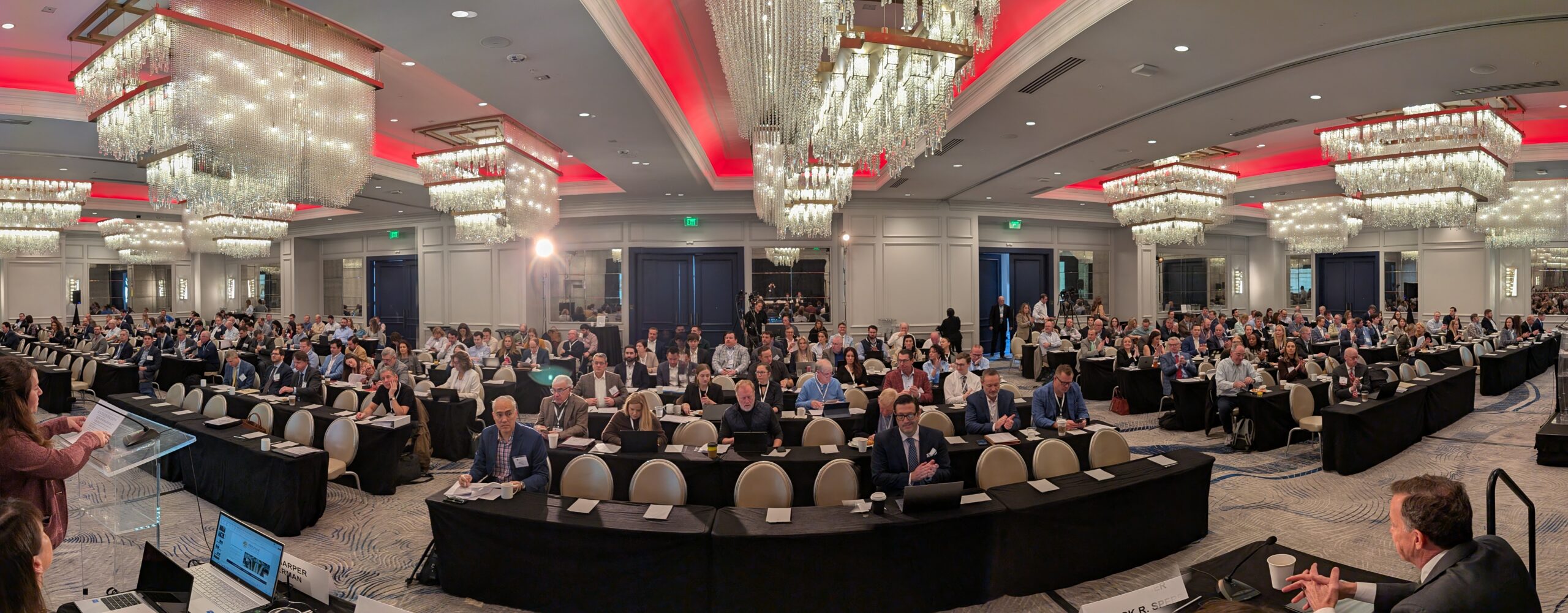
The view from the podium

That’s right. More than 300 of the nation’s best eminent domain lawyers, judges, appraisers, right-of-way agents, scholars, and other industry professionals are in Savannah for the next two and a half days for what is now known as the American Law Institute (“ALI” alone, no longer with the “-CLE” addition) Eminent Domain & Land Valuation Litigation Conference.

We’re now in our 43d edition and have a record attendance as the above photo, taken from the podium as we got underway, shows.
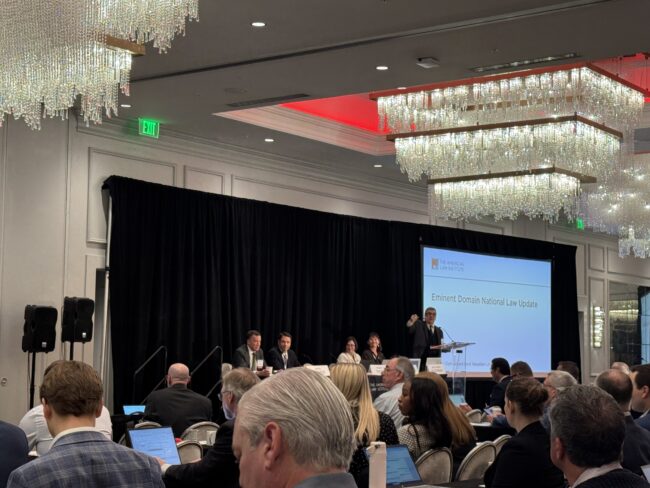
The view from the audience

If you are not here, you really should consider joining us. We’ll announce the location for the 2027 Conference tomorrow (hint: it will be in the west).

We’ll have more as the Conference progresses.

Continue Reading We’re Underway At The 43d American Law Institute Eminent Domain & Land Valuation Conference, Savannah
No better way to start 2026 than to check out the Yale Journal of Regulation‘s (the self-labeled “Nation’s Top-Ranked Administrative and Corporate Law Journal”), for its symposium on the twentieth anniversary of the Kelo case.

Featuring authors who readers of this blog will recognize (all the big names), the symposium features articles you will want to dive into, including:

Arguing Kelo Then and Now” (Bullock and Berliner)

Debates Over ‘Public Use’ in the State Constitutional Conventions” (Brady)

Taking Homes” (Dickinson)

Kelo at the Crossroads of Constitutional and Administrative Law” (Epstein)

Eminent Domain, Corruption, and the Constitution” (Mahoney)

… and much more.

And while we’re on the subject, a reminder: back in October as part of the Brigham-Kanner Property Rights Conference, the William and Mary Law School Real Estate Law Society staged a “re-moot” of Kelo to see

Continue Reading Yale J. Reg. Symposium On Kelo’s Twentieth

We start off 2026 with some good news: after a short hiatus (explained in the episode), Bobby Debelak’s Eminent Domain Podcast is back with Episode 150: “Year in Review and ALI-CLE Preview.”

And we get to join him!

Here’s how Bobby describes the episode:

Bobby returns to the podcast after a brief hiatus due to the birth of a child. Robert Thomas returns to the show to talk about 2025 in review. The two cover twenty years of Kelo, an update on COVID takings, the year with a new presidential administration and legislative change, and a few key cases around the country. Robert looks ahead to the 2026 [ALI-CLE] conference in Savannah, GA. The cross exam is a musical themed head-to-head from the 80s.

Check it out. We have a bit of fun (esp. the “cross exam” portion).

Listen above, or download it here.

Continue Reading Welcome Back, Bobby: We Return To The Eminent Domain Podcast To Talk The Year That Was, ALI Savannah, And 80’s Music

It is time to bid farewell to the Year 2025, and our mind wanders back over the last 364 days in an attempt to ascribe meaning, a theme — a vibe — to the year that was.

Scientists tell us that this is just another trip around the Sun, but we humans like to assign meaning to a measure of time, so here’s our thoughts on what will stick with us about 2025.

Barista’s note: in the interest of objectivity, we shall exclude our shop’s cases such as this one: “Fla Ct App (en banc) In Takings Case: ”failing to vindicate a right expressly stated in the Constitution is not judicial restraint but judicial abnegation. That we must not do.'”

That said, here we go with what we think were the highlights of 2025 (lowlights are posted here in Part II).

Regulatory Takings Case of the Year:

Continue Reading Adieu To The Highs And Lows Of 2025 (Part I: The Highs)

This one is worth your time to review.

In HRT Enterprises v. City of Detroit, No. 23-1847 (Dec. 22, 2025), the U.S. Court of Appeals for the Sixth Circuit affirmed the district court’s entry of summary judgment in favor of the plaintiff/owner and a jury verdict on just compensation.

The case is notable not only for the fact it’s a property owner win, but that the usual procedural hurdles an owner is forced to jump through were successfully navigated. For example, the city’s assertion that the takings claim was both not ripe, and res judicata. Yes, in the city’s view, the claim was simultaneously too early and too late.

The first sentence of the opinion tells you that the focus of the analysis is going to be the res judicata question:

After losing in state court, HRT Enterprises sued the City of Detroit in federal court under a

Continue Reading CA6 Affirms Detroit Land Bank Taking: New Facts Defeat Res Judicata

Here’s the latest in a case we’ve been following (because it is a product of our shop: we represent the property owners/plaintiffs).

In this Order, the Florida Supreme Court declined to exercise jurisdiction to review the Third District Court of Appeals en banc opinion in Shands v. City of Marathon. So that decision stands.

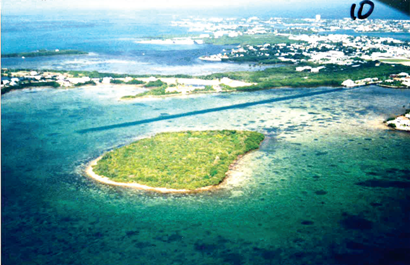
This is the case in which the Shands Family, the owners of Shands Key — a small island in the City of Marathon (about 1/2 way down the Overseas Highway in the Florida Keys) — asserted that the City’s downzoning their property from a density that allowed residential development to a density that doesn’t (Shands Key is below the minimum lot size under the downzoning), is a Lucas taking.

The court of appeal rejected the City’s claim that beekeeping and overnight camping were possible uses of the property under the downzoning, thus exempting it

Continue Reading Fla SCT Declines Review: En Banc Court Of Appeal Decision That Downzoning Was A Lucas Taking (And Sale Of Property For Third-Party TDRs Is Not A “Use”), Stands

Here’s the latest in a case we’ve been following. [Disclosure: this is one of ours, so we won’t be commenting much at all.]

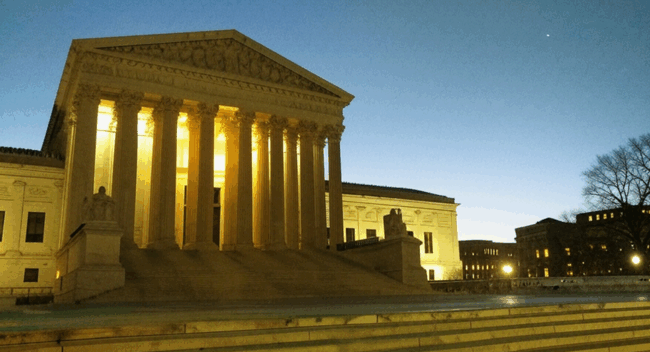
In Pung v. Isabella County, No. 25-95, the U.S. Supreme Court is considering these Questions Presented:

1. Whether taking and selling a home to satisfy a debt to the government, and keeping the surplus value as a windfall, violates the Takings Clause of the Fifth Amendment when the compensation is based on the artificially depressed auction sale price rather than the property’s fair market value?

2. Whether the forfeiture of real property worth far more than needed to satisfy a tax debt but sold for fraction of its real value constitutes an excessive fine under the Eighth Amendment, particularly when the debt was never actually owed?

(Here’s the cert petition.)

Today, the petitioner filed the merits brief, arguing that yes, “[w]hen

Continue Reading SCOTUS Merits Brief (Ours) In Just Comp/Excessive Fines Case

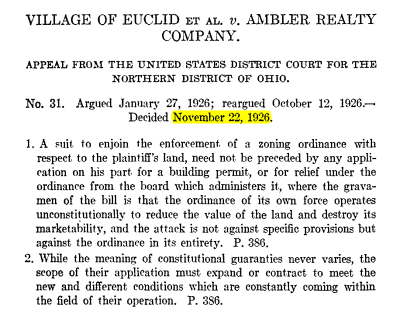
Euclid_front

Tomorrow, November 22, 2025 is the 99th anniversary of the day in 1926 when the United States Supreme Court issued its landmark opinion in Village of Euclid v. Ambler Realty Co., 272 U.S. 365 (Nov. 22, 1926).

You know this one (and can you call yourself a dirt lawyer if you don’t?). It’s the one in which the Supreme Court first upheld — against a facial due process challenge — the validity of this thing we now call “Euclidean zoning.”

In the intervening century, zoning has become a catch-all term for all sorts of regulatory restrictions on the uses of real property, land users know that “zoning” — ackshually — refers only to the regulation and separation of uses, restrictions on density, and height regulation. At least that’s how it began. The Euclid court concluded this was mostly nuisance prevention, so no worries. But we’d

Continue Reading You Don’t Look A Day Over 98, Euclid

Check this out: a significant and important decision from the U.S. Court of Appeals for the Eleventh Circuit in an issue we’ve been following.

In Alford v. Walton County, No. 2021-13999 (Nov. 17, 2025), the unanimous panel concluded that the county’s Co-19 restrictions, which closed all beaches (public and private) in the county, worked a physical taking of Alford’s private property rights.

In response to the outbreak of Co-19, which the opinion notes was “a novel virus from Wuhan, China,” slip op. at 3, Florida declared a state of emergency, and followed up with an executive order that limited beach access statewide to “no more than 10 persons,” imposed a six-foot separation, among other things. Two days later, the county adopted an ordinance closing all public beaches in the county.

The following month, after the governor issued further executive orders, the county temporarily closed “[a]ll beaches” in the

Continue Reading CA11: “[T]here is no COVID exception to the Takings Clause”

In State ex rel. Boggs v. City of Cleveland, No. 2025-Ohio-5094 (Nov. 13, 2025), the Ohio Supreme Court held that the City of Cleveland could be liable for inversely condemning land, even though that land is not in the City of Cleveland.

The city claimed that in order to be liable for inverse condemnation, it must have the authority to take the property by eminent domain. And under Ohio law, the state has only delegated to the city the power to take by eminent domain property that is within the city’s geographic boundaries. Therefore, the city argued, if we can’t affirmatively take the plaintiff’s land, we can’t be liable for inversely condemning it.

The case involves the Cleveland airport. As part of its runway expansion, airplanes would fly over adjacent properties (obviously), including properties outside the city’s jurisdiction. The city was authorized to purchase avigation easements on some

Continue Reading Ohio: City Can Be Liable For Inverse Condemnation Of Land Outside Its Geographic Jurisdiction