2008

Another reminder: tomorrow morning, the “Hawaii Superferry” litigation is back in the Hawaii Supreme Court Round 2, with oral arguments scheduledto commence at 9 a.m.  I’ll be attending the arguments, and technology and typing skills permitting, live blogging it.

Visit this page to sign up for an email reminder, or just visit at 8:45 a.m. on Thursday, November 18, to tune in. You don’t need special software, just a web browser.

For those not familiar with appellate oral arguments, here’s a short primer/FAQ:

Why oral argument? –  Appellate oral argument has been described as the Court’s “conversation with counsel” about the case and the law.  Oral argument can illuminate legal or logical problems not evident from the briefs and which may not otherwise be discovered, distill arguments by testing them, and allow the advocates to respond to the Court’s specific concerns. See, e.g., Blair v. Harris

Continue Reading Live Blogging The HAWSCT Superferry Oral Arguments 12.18.08

When must a landowner challenge a land use regulation she claims illegally impact her property?  Talk to a lawyer, and they’re usually going to say that you should act sooner than later, and often the time limitations are very short. Under California law, for example, facial challenges to a zoning ordinance must be brought within 90 days of enactment:

Except as provided in subdivision (d), no action or proceeding shall be maintained in any of the following cases by any person unless the action or proceeding is commenced and service is made on the legislative body within 90 days after the legislative body’s decision:

. . . .

(B) To attack, review, set aside, void, or annul the decision of a legislative body to adopt or amend a zoning ordinance.

Cal. Gov’t Code § 65009(c)(1)(B). But what about when an ordinance is amended — does the enactment of a “new”

Continue Reading Cal. Court of Appeals: Extension of Ordinance Allows New Inverse Condemnation Challenge

The State of Washington, along with 31 others have filed an amicus brief in support of the State of Hawaii in the ceded lands case (available here) which argues:

The amicus curiae states are deeply concerned with the lower court’s conclusion that the Apology Resolution creates or recognizes claims that cloud the title to Hawaii’s state lands. As part of the “solemn agreement” embodied in the admission act, every state admitted into the Union since 1802 has received grants of land from the United States. See Andrus v. Utah, 446 U.S. 500 (1980). The acreage granted to the states is substantial, and the lands and proceeds from the lands support vital state institutions and programs across the nation. “Between 1803 and 1962, the United States granted a total of some 330,000,000 acres to the States for all purposes. Of these, some 78,000,000 acres were given in support of common

Continue Reading Final Amicus Brief Supporting the State of Hawaii in Ceded Lands Case

The case that would not go away, the “Hawaii Superferry” litigation, is back in the Hawaii Supreme Court this week for Round 2, with oral arguments scheduled for 9 a.m. on Thursday, December 18, 2008.  The Court generally allocates 1/2 hour per side, for a total of one hour of argument (which may be extended at the Court’s discretion, but it rarely is).

I’ll be attending the arguments, and technology and typing skills permitting, live blogging it.  Visit this page to sign up for an email reminder, or just visit at 8:45 a.m. on Thursday to tune in.

The key briefs of the parties are posted below:

  • (Hawaii Superferry filed an Answering Brief, which “incorporatesby reference the arguments set forth in the State’s Answering Brief,filed August 18, 2008.”)

The Court’s web site describes the issues in

Continue Reading Hawaii Superferry Supreme Court Briefs

A “SLAPP suit” is a “strategic lawsuit against publicparticipation,” and many states have anti-SLAPP suit statutes designed to thwartretaliatory lawsuits that may chill the public’s willingness to exerciseFirst Amendment rights.  For example, California’s statute definesSLAPP suits as:

lawsuits brought primarily to chill the valid exercise of the constitutional rights of freedom of speech and petition for the redress of grievances.

Cal. Code. Civ. Proc. § 425.16. The anti-SLAPP statute provides that such lawsuits may be dismissed. In Club Members for an Honest Election v. Sierra Club, No. S143087 (Dec. 15, 2008), the California Supreme Court held:

Code of Civil Procedure section 425.16, commonly referred to as the anti-SLAPP statute, provides that a civil cause of action may be dismissed as a strategic lawsuit against public participation (SLAPP). Section 425.17, subdivision (b) (section 425.17(b)) provides an exception to the anti-SLAPP statute by exempting some actions from dismissal. Here, we

Continue Reading Cal. Supreme Court: Anti-SLAPP Suit Exemption Not Applicable Unless Entirety Of Case For Public Benefit

An interesting op-ed piece in Sunday’s Honolulu Star-Bulletin, “Thank zoning laws for your peaceful home,” extols the virtues of zoning:

It has now been more than 85 years since the residents and city councilof the little village of Euclid, Ohio, found that their quietneighborhoods, where their children played, where they walked theirdogs and spent their quiet hours after a hard day’s work, had no legalgovernment protection from what could be built next door; not from ahorse stable, a cement factory or even a slaughterhouse. So to theircredit, Euclidian zoning was born, and upheld by the courts as areasonable protection for residential areas.

The case the author is referring to, of course, is Village of Euclid v. Ambler Realty Co., 272 U.S. 365 (1926), the case in which the U.S. Supreme Court first upheld the segregation of land uses in an Ohio suburban town into districts against

Continue Reading The Dark Side of Zoning

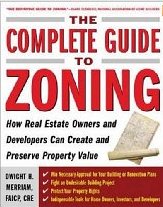
Complete guide Ever wished you’d have the chance to sit down over a cup of coffee and talk one-on-one with an expert in his or her area of law, especially our favorite topic, Land Use Law? Well, here’s your chance to come awfully close to that, for a cost that’s well below the usual hourly rates attorneys charge.

I’ve just completed Dwight H. Merriam’s The Complete Guide to Zoning (available on Amazon here), and for anyone who plays the land use game — property owner, planner, developer, agency official, regulator, judge, or lawyer — the book is a plain-language guide to the process by an insider who is both a planner and an attorney, and who has been on both sides of the table.  

The book contains explanations of the law and the zoning process, and is replete with practical advice and tips. It walks the reader through the regulatory maze

Continue Reading Book Review: The Complete Guide To Zoning