


July 2010

Ninth_circuit Thanks to the Federal Bar Association (Northern District of California Chapter), today I had the pleasure of attending a panel discussion of the significant cases from the Supreme Court’s recently ended Term.

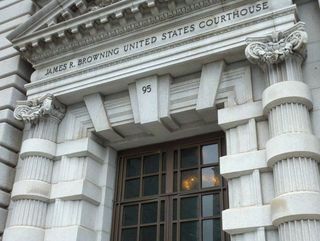
The panelists discussed “Guns, Free Speech, Criminal Justice, Campaign Finance, Separation of Powers … and ‘Inside Baseball’ Views of the Court and Docket” in a packed courtroom at the Ninth Circuit’s San Francisco courthouse. The panel was comprised of experienced appellate and Supreme Court advocates, and shared their insights on the “headlines and highlights” of the Term: 

  • Hon. Marsha Berzon, Judge, U.S. Court of Appeals for the Ninth Circuit, and former clerk to Justice Brennan
  • Professor Rory Little, U.C. Hastings College of the Law, Of Counsel to McDermott Will & Emery, and former law clerk to Justices Brennan, Stevens, and Stewart (ret.)
  • Kristin Linskley Myles, Munger Tolles & Olson LLP, and former law clerk to

Continue Reading Review Of The Supreme Court’s Term 2010 – Northern District Of California Chapter, Federal Bar Association Event

Here’s a case from the North Carolina Court of Appeals that is similar to last week’s decision by the Kansas Supreme Court, in that it involves an inverse condemnation claim resolved by the burdens on the parties in the course of a summary judgment motion.

The public utility decided to install a sewer line in what it thought was the footprint of an existing public sewer easement. Eminent domain is not implicated since the easement map shows that “all sewer easements are public” and thus do not need to be condemned. Not so fast, the map is wrong, said Mr. Costa who claimed to be the owner of the land on which the sewer was installed. Both sides filed summary judgment motions, Costa supporting his with affidavits from an attorney and a surveyor, testifying that the map does not show true state of affairs, and that the sewer was

Continue Reading North Carolina App: When Opposing Summary Judgment, Make Sure Your Declarations State Facts, Not Conclusions (Applies In Inverse Condemnation Cases)

So let’s say you want to hold fundraisers for political bigshots in your home. When the crowd you are hobnobbing with includes Bill Clinton, you might expect the Secret Service to come along, and you might expect that your local constabulary is asked to pitch in to help the T-Men with security, and traffic and crowd control.

You might also expect that despite residing in what is considered an “affluent village” where the median family income is reported to be $200,000, the local taxpayers might not appreciate shouldering the expense of the extra security that your soirees require. Thus, you should not be surprised when the village fathers and mothers adopt an ordinance requiring that people whose closed-to-the-public events spur the need for these extra services to bear the cost instead of the taxpayers. 

But even after the ordinance is adopted you never get sent a bill, despite

Continue Reading 7th Circuit: Political Chutzpah Lawsuit Not Ripe

In Kauai Springs struggling, The Garden Island (the Kauai daily newspaper) writes about

The Kauai Planning Commission (Planning Commission) asks this Court to validate a remarkable theory: that in the course of reviewing whether Kauai Springs, Inc. (Kauai Springs) was entitled to three simple zoning permits for its agriculturally-zoned land, the public trust doctrine required the Planning Commission to determine water rights and water usage – issues acknowledged as beyond the Planning Commission’s competence, and beyond its jurisdiction.

The Planning Commission’s consideration of the zoning permits required it to determine whether Kauai Springs’ use of its land was “compatible with the neighborhood” and whether it was “reasonable use of land situated within the Agricultural or Rural District.” Further, Haw. Rev. Stat. § 91-13.5 (1998) and Kauai’s “deemed approved” ordinances mandate that if the Planning Commission did not process the applications within certain times, they were automatically approved.

The Planning

Continue Reading Justice Delayed Is Justice Denied: Zoning Permits

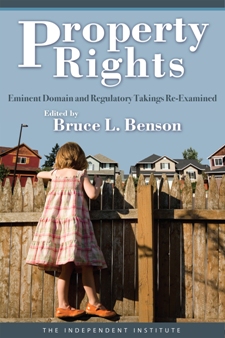
Property_1800 I recently picked up a copy of Property Rights – Eminent Domain and Regulatory Takings Re-Examined (Bruce L. Benson, ed., Independent Institute 2010), available on-line here.

At 299 pages and with 13 entries, I haven’t had a chance to read the whole thing yet. But after an initial skim, a few of the chapters stand out: Steven Eagle on Assembling Land for Urban Development – The Case for Owner Participation, Ilya Somin on The Limits of Backlash – Assessing the Political Response to Kelo, and Scott Bullock on The Inadequacy of the Planning Process for Protecting Property Owners From the Abuse of Eminent Domain for Private Development

We will post more as we get further into the book, but for now, here’s the publisher’s summary: 

The U.S. Supreme Court decision, Kelo v. New London, has become a dramatic focal point for the broad use of eminent

Continue Reading New Book: Property Rights – Eminent Domain and Regulatory Takings Re-Examined (2010)

In Hines v. California Coastal Commission, No. A125254 (decided June 17, 2010, ordered published July 13, 2010), the California Court of Appeal (First District) held that the California Coastal Commission properly refused to hear the appeal of a neighbor who opposed the grant of a use permit because the appeal did not present a “substantial issue” under the Coastal Act.

There is a lot of detail in the lengthy opinion, and we won’t cover it all here, but here’s the short version. The county board of supervisors granted a coastal development permit to build a home and garage, which reduced the 100-foot riparian setback to 50 feet. A neighbor objected, asserting that the county’s coastal policy “absolutely forbids construction of permanent structures within 100 feet from the lowest line of riparian vegetation,” and sought appellate review by the California Coastal Commission. The Commission declined to exercise jurisdiction. The

Continue Reading Cal App: No “Substantial Issue” Meriting Appeal To Coastal Commission

In 1978, the people of Hawaii amended the state constitution to recognize “the right to a clean and healthful environment,” and expressly enabled lawsuits by private parties to enforce “laws relating to environmental quality” —

Each person has the right toa clean and healthful environment, as defined by laws relating to environmentalquality, including control of pollution and conservation, protection andenhancement of natural resources. Any person may enforce this right against anyparty, public or private, through appropriate legal proceedings, subject toreasonable limitations and regulation as provided by law.

Haw. Const. art. XI, § 9. “Laws relating to environmental quality” are not expressly defined, but “include” the obvious

rovidesIn County of Hawaii v. Ala Loop Homeowners, No. 27707 (cert. granted Sep. 2, 2009), the four-Justice majority in an 81-page opinion authored by Justice Recktenwald held “[w]e further conclude that article XI, section 9 of the Hawai’i Constitution creates a private

Continue Reading HAWSCT: Zoning Statutes Are “Environmental” Laws Which Can Be Enforced By Lawsuit

More on the “judicial takings” case, Stop the Beach Renourishment, Inc. v. Florida Dep’t of Environmental Protection, No. 08-11 (June 17, 2010).

Remember that at the ABA Annual Meeting next month in San Francisco, the Section of State and Local Government Law is co-sponsoring a panel discussion of the case. I’ll be moderating, and Jim Burling (Pacific Legal Foundation), John Echeverria (Vermont Law School), Richard Frank, University of California Boalt Hall Law School), and Dan Stengle, (Hopping Green & Sams, Petitioner’s counsel) are on the panel. If you are coming to the meeting, mark your calendar for August 6, 2010 from 2:30 – 4:00 p.m. at the Hilton San Francisco Union Square. More information here.

Anyway, here are the links:


Continue Reading More On The “Judicial Takings” Case (Stop The Beach Renourishment)

We have no idea what these cases might be about, or whether there is any substance behind the property owners’ objections, but these are headlines no condemnor could possibly like:

  • Bedford County Widow Sued (via wjactv.com) – “A Bedford County widow is being sued for trying to keep Columbia Gas Transmission off her property. The Texas-based company is using eminent domain to gain access to 67-year-old Mary Ellen McConnell’s 125-acre farm.”
  • Granny Vows To Fight For House (via wyff4.com) – “On the other side of Stenhouse Rd, 85-year-old Juanita Sullivan worries about eminent domain.”

Might as well say they’re trying to take property from cute, fluffy kittens.


Continue Reading Headlines No Condemnor Likes To See

Here at inversecondemnation.com we also cover eminent domain, regulatory takings, land use, and environmental issues. We even cover election law when it strikes our fancy.

But here’s one that’s in our core competency: in Frick v. City of Salina, No. 101,355 (July 9, 2010) the Kansas Supreme Court held that property owner-plaintiffs did not meet their summary judgment burden of opposing the city’s motion, and affirmed a judgment that the city did not inversely condemn their property by denying them the ability to construct driveways to access their land.

After the city condemned their property, the Fricks moved their businesses to another nearby site. The move, according to the Fricks, “was thwarted by the ‘inappropriate regulatory’ action of the City. Slip op. at 8. The regulatory actions complained of included:

(1) denial of reasonable access to the relocation site during the Project; (2) construction activities

Continue Reading Kansas: Inverse Condemnation Case Resolved By Summary Judgment Burdens