2010

We knew that, but in case you didn’t take our word for it, here’s a judge from the New York Supreme Court’s Appellate Division to tell it like it is. In Uptown Holdings, LLCC v. City of New York, No. 2882 (Oct. 12, 2010), the Appellate Division held that the city’s Department of Housing Preservation and Development validly condemned property, upholding the taking against a due process and a public use challenge:

Relying on Kelo v New London (545 US 469 [2005]), petitioners contend that the public benefits are illusory and speculative because there is no carefully considered, integrated development plan to which a developer is contractually bound. However, Kelo does not say that land may be condemned only if there is such a plan. Moreover, the Court of Appeals’ decision in Matter of Aspen Cr. Estates, Ltd. v Town of Brookhaven (12 NY3d 735 [2009], cert denied
Continue Reading NY Appeals Judge: “[T]here is no longer any judicial oversight of eminent domain proceedings.”

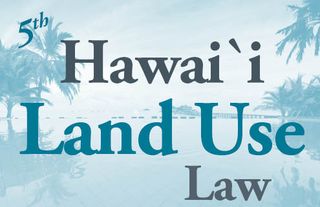
11.LULHI Mark your calendars for January 13 and 14, 2011 for the 5th Hawaii Land Use Law Conference, to be held in Honolulu. Yes, it’s a few months away, but this is the Big One, it only comes around every two years, and you don’t want to miss it. 

The program chairs are Professor David Callies and land use attorney Ben Kudo, and they have assembled an expert and diverse faculty, including keynote speaker Professor Gideon Kanner (no stranger to readers of this blog).

  brochure

, which contains all the details and a registration form.

Here’s the program description:

The Hawai`i system of land use is complex and private land use is highly regulated. Attorneys and legal staff, planners, government officials, land owners and developers need to understand the complex federal, state and local requirements and procedures.

An expert faculty of land use practitioners, planners and regulators will explain the

Continue Reading January 13 & 14, 2011: 5th Hawaii Land Use Law Conference

On Thursday, October 21, 2010, from noon to 1:00 p.m. EDT, please tune in for the free web conference “The Whacky and Wonderful World of Eminent Domain After Kelo.”

I’m not sure I can live up to making eminent domain “whacky and wonderful,” but I will be speaking about what the Court in Kelo really decided, and how courts in the intervening five years have viewed the decision. We will be looking at cases from New York, D.C., Hawaii, and Pennsylvania, among others.

Joining me on the panel will be Andrew W. Schwartz, from San Francisco’s Shute, Mihaly & Weinberger. The session will be moderated by John Clapp, Ph.D. of the UConn Center for Real Estate, and Michele Maresca, a land use attorney at Robinson and Cole in Hartford. Here’s the description of the program:

Kelo v. City of New London has been viewed by property rights

Continue Reading 10/21/2010 Webconference: Eminent Domain After Kelo

Regulatingparadise University of Hawaii lawprof David L. Callies needs no introduction to the readers of this blog. He’s one of the deans of the national and international land use bar and professoriate, but those of us who practice land use law in Hawaii consider him our special mentor (dare I say guru?) when the topic of Hawaii land use law is raised. Virtually every dirt lawyer practicing here has studied under or with him.

Those of us who consider this area of law our calling have for years looked forward to an update of Regulating Paradise, his seminal book on Hawaii’s complex and multi-layered system of land use and regulation.

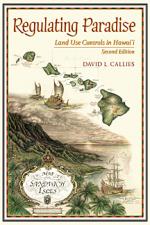
Well wait no further. The University of Hawaii Press has published the second edition of Professor Callies’ essential work. Purchase your copy here (a mere $22). Here’s the Introduction.

We haven’t had an opportunity to pore through the nearly 400 pages of text (illustrated with the irreplaceable Corky Trinidad‘s editorial cartoons), so a more complete review will follow once we’ve had a chance to do so. In the meantime, voices more eminent than our own have weighed in:

“A masterful analysis of [Hawai‘i’s] land use laws.” —Daniel R. Mandelker, Stamper Professor of Law, Washington University, St. Louis

“Essential reading for all who seek to understand how land use is regulated in Hawai‘i or to apply the lessons learned there to other states.” —Dan Tarlock, Distinguished Professor of Law, Chicago-Kent College of Law

“A must-read for both neophyte and veteran legal practitioners. Callies’ in-depth and insightful explanations and commentaries on Hawai‘i’s complex land use and planning laws provide a road map for understanding the state’s multi-layered regulatory scheme.” —Benjamin A. Kudo, Ph.D.

“With this magnificent new work, and its far ranging, comprehensive analysis – from the feudal land holdings of the monarchy to regulating McMansions – Professor Callies teaches and entertains us with tales of success and failure in Hawaiian land use and development law. There are lessons here for every one of us, all across this country.” —Dwight Merriam, Robinson & Cole

If the second edition is anything like the first, Regulating Paradise will occupy an frequently-used spot on our back bookshelf. More to follow.
Continue Reading New Book: Callies, Regulating Paradise – Land Use Controls In Hawaii (2d ed. 2010)

Social.lawyers.net1 I’m going to deviate a bit from the usual blog topics to point you to a recently-published book about the use of social media by lawyers.

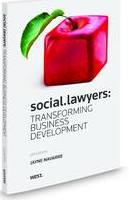
The book is social.lawyers: Transforming Business Development (West 2010), by legal marketing expert Jayne Navarre. It is available for purchase through West here.

First off, this will not be a full-blown book review. In the first chapter, Jayne was kind enough to include my experiences using social media as a legal marketing tool, so I’m not exactly objective about her book. I like it.

With that disclaimer, social.laywers is a worthy addition to the bookshelf of any lawyer who is interested in developing social media tools such as blogging, Twitter, Linkedin, Facebook, and JDSupra. She also covers podcasting and the use of on-line video.

Here’s how Chapter 1 starts:

Robert H. Thomas has been practicing land-use law in

Continue Reading New Book – social.lawyers: Transforming Business Development (2010)

Takings lawyers know Loretto v. Teleprompter Manhattan CATV Corp., 458 U.S. 419 (1982) stands for the proposition that a regulation allowing a physical invasion of private property — no matter how de minimus the invasion might be — is a per se regulatory taking. In those instances, the right to exclude is such a fundamental aspect of what it means to own “property” that even a minor infringement is forbidden. In that case, the U.S. Supreme Court struck down a New York City regulation requiring Loretto allow the installation of a small cable TV box on the roof of her apartment building.

In Corsello v. Verizon N.Y., Inc., No. D25897 (Sep. 14, 2010), the New York Appellate Division revisited those facts for telephone equipment. Over the years, Verizon installed equipment on Corsello’s building in New York, and over the years, he demanded that Verizon remove it. The trial

Continue Reading Shades Of Loretto From The New York Appellate Division

Here’s a case that reveals exactly what is wrong with the Supreme Court’s ripeness doctrine in Williamson County Regional Planning Comm’n v. Hamilton Bank, 473 U.S. 172 (1985). As we noted in this post, it’s “a seemingly endless procedural game where property owners are forced to keep guessing which shell the pea is under, all the while paying their attorneys to litigate matters having nothing to do with the question of whether a local government’s regulations have gone ‘too far.'”

The Oregon Supreme Court’s opinion in West Linn Corporate Park v. City of West Linn, No. S056322 (Sep. 23, 2010) only confirms our belief that the Court never intended Williamson County to be wielded in this fashion, and in effect deny property owners their day in court.

This case has a tortured procedural history. It started off in state court, as required by Williamson County. The property

Continue Reading Williamson County Unbound: Takings Case Starts In State Court, Is Removed To Federal Court, Is Certified To State Court, Which Decides The Case On Federal Law

In a case that could write the next chapter in the Kelo saga, the property owner recently filed this cert petition asking the U.S. Supreme Court to review the decision of the New York Court of Appeals in the Columbia “blight” case, Kaur v. New York State Urban Development Corp., No. 125 (June 24, 2010).

This is the case in which the Court of Appeals held that de novo judicial review of the factual record leading to an exercise of the eminent domain power was improper, and whether property can be taken because it allegedly is “substandard or insanitary” is a question for taking agencies, not courts. As we noted in several posts criticizing the decision (see here and here) and in a post lauding the Appellate Division’s decision (which struck down the taking as pretextual), “in other words, ‘blight’ is whatever the agency says it is. Just

Continue Reading Cert Petition In Columbia “Blight” Case: Are There Any Limits To Eminent Domain In New York?

No, thankfully this post is not about the MTV show, but who owns the new dry sand created when the government “replenishes” beaches. In a case reminiscent of the U.S. Supreme Court’s decision in Stop the Beach Renourishment v. Fla. Dep’t of Envt’l Protection, 130 S. Ct. 2592 (2010), the New Jersey Supreme Court unanimously concluded that a beachfront property owner was not entitled to compensation for the city’s taking of his property — a beach created by the city’s beach replenishment program — because the replenished beach was a common law “avulsion” and therefore belonged to the public.

In City of Long Branch v. Liu, No. A-9-09 (Sep. 21, 2010), as part of a redevelopment project, the city condemned littoral property owned by the Liu family. The parcel was described by metes-and-bounds, with the easternmost boundary being described as the “high water mark of the Atlantic

Continue Reading Jersey Shore Belongs To The Public, Not Private Owners