2012

In a short opinion in Sierra Club v. Castle & Cooke Homes Hawaii, Inc., No. CAAP-11-0000625 (Aug. 24, 2012), the Hawaii Intermediate Court of Appeals held that the Hawaii Senate’s failure to confirm a sitting Land Use Commissioner for a second term did not disqualify him under Haw. Rev. Stat. § 26-34(a):

Kanuha was not disqualified under HRS § 26-34(a) as he had not been a commissioner appointed consecutively to more than two terms as a member of the LUC not had his membership on LUC exceeded eight consecutive years. Not obtaining Senate consent to a second term did not disqualify Kanuha from service as a holdover after the expiration of his first term. This was not a disqualification under the plain language of HRS § 26-34(a). The circuit court erred in holding that Kanuha was not a valid holdover for failure to obtain Senate confirmation for

Continue Reading HAWICA: Holdover Land Use Commissioner Not Disqualified
This just in: as we predicted after oral arguments (see HAWSCT Oral Argument Recap – Who Defines The “Project” For Archaeological Review? and The Real “Descendants” Plays Out In The Hawaii Supreme Court – Honolulu’s $4+ Billion Rail Project In Grave Danger), in a unanimous opinion, Hawaii Supreme Court has slapped down the City of Honolulu’s archaelological inventory survey, holding:

In sum, the SHPD failed to comply with HRS chapter 6E and its implementing rules when it concurred in the rail project prior to the completion of the required archaeological inventory survey for the entire project. The City similarly failed to comply with HRS chapter 6E and its implementing rules by granting a special management area permit for the rail project and by commencing construction prior to the completion of the historic preservation review process.

Slip op. at 6. The court vacated the trial court’s decision, and sent

Continue Reading Hawaii Supreme Court Smacks Rail EIS – City Needed To Evaluate Burials For “Entire Project” Before Starting To Build

According to the Washington Post, a Texas county judge has concluded that TransCanada is a common carrier, and therefore may exercise eminent domain to take property for its Keystone XL pipeline.

In an unusual twist (but one which we fully expect to see more of as smartphones become ubiquitous), the court apparently informed the parties of his decision by an email or text from his iPhone:

Dear Counsel,
 
My rulings as follows:
 
Transcanada’s MSJ is GRANTED
Transcanada’s NEMSJ is GRANTED
Crawford’s Plea to the Jurisdiction is DENIED
 
Mr. Freeman would you please forward orders consistent with my ruling for my signature?
 
Sent from my iPhone

At least he didn’t include an LOL or 🙁 to add further insult to the injury. Continue Reading Judge Not BFF To Landowner, Grants MSJ To Condemnor Via iPhone. SRSLY.

350px-Supreme_Court_US_2010

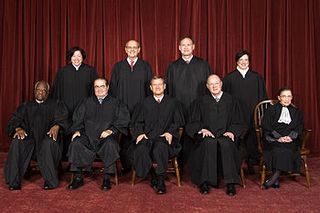
According to a recent poll, 2/3 of Americans could not name a single Supreme Court justice. This news was predictably met with calls for remedial civics lessons … The horror!

But we say: so what if your average citizen can’t identify Justice Kagan, or Justice Kennedy, or the Chief Justice.

Isn’t that why you hire lawyers? It’s our job —  not the average citizen’s — to know who staffs the relevant courts, from the high-and-mighty on the Supreme Court on down to our local municipal judges, and how to pitch our clients’ cases to them.

Besides, there isn’t a lot your average citizen can do about the Supremes and their decisions once they are on the Court — they enjoy life tenure, the Court’s public hearings are not telecast on C-SPAN or the internet, and unlike many of their state counterparts, they don’t campaign (at least in the traditional

Continue Reading No One Knows The Names Of Supreme Court Justices. Who Cares?

Florida land use and environmental law attorney Jake Cremer has posted the Brief in Opposition in Koontz v. St. Johs River Water Management Dist., No. 11-1447 (cert. petition filed May 30, 2012), the case asking whether the Nollan/Dolan nexus and proportionality tests  apply to a land-use exaction that takes the form of a government demand that a permit applicant dedicate money, services, labor, or any other type of personal property. We posted the cert petition here.

Jake writes:

The U.S. Supreme Court has not yet given much more guidance on exactions, and confusion has been the result. The Florida Supreme Court forged its own path, holding that the Nollan-Dolan test only applies to (1) exactions of real property (2) where a permit was actually issued and imposed an exaction. Consequently, in Florida, there are now relatively few restrictions on what a local government can ask

Continue Reading BIO In SCOTUS Florida Exactions Case: Fla Supremes Ruled Only Under Fla Law

Supreme Court Justice Anthony Kennedy is well known to people in Hawaii, or at least should be. After all, he penned the majority opinion in Rice v. Cayetano, 529 U.S. 495 (2009), the decision invalidating Native Hawaiian-only voting for trustees of the Office of Hawaiian Affairs, a state agency whose mission is to “protect Hawai’i’s people and environmental resources and OHA’s assets, toward ensuring the perpetuation of the culture, the enhancement of lifestyle and the protection of entitlements of Native Hawaiians, while enabling the building of a strong and healthy Hawaiian people and nation, recognized nationally and internationally.” More here. In his Rice opinion, Justice Kennedy wrote:

When the culture and way of life of a people are all but engulfed by a history beyond their control, their sense of loss may extend down through generations; and their dismay may be shared by many members of the larger

Continue Reading Justice Kennedy’s Remarks About The “Hawaiian” Ninth Circuit Judicial Conference

When a Hawaii Supreme Court opinion starts off like this one, waxing poetic about “Na Wai Eha, or ‘the four great waters of Maui,'” you don’t need to read the remaining 88 pages to know what the inevitable result will be: the Water Commission got it wrong, again.

That’s the end result of the unanimous opinion in In re Iao Ground Water Management Area, No. SCAP 30603 (Aug. 15, 2012). Here’s the court’s own summary of its latest pronouncement on water law, including “interim instream flow standards,” customary and traditional Native Hawaiian practices, and more:

As explained below, the court holds that it has jurisdiction in the instant case, and takes this opportunity to expand upon the jurisdictional analysis from In re Water Use Permit ApplicationsWaiâhole I”, 94 Hawai’i 97, 9 P.3d 409, (2000). In reviewing Hui/MTF’s and OHA’s points of error, the court concludes that

Continue Reading HAWSCT’s Latest Water Law Decision: Water Commission Gets It Wrong (Yet Again)