


November 2013

Here are the final two amicus briefs supporting the petitioner in Marvin M. Brandt Revocable Trust v. United States, No. 12-1173 (cert. granted Oct. 1, 2013). That’s the case in which the Court is considering the meaning of the term railroad “right of way” as used in an 1875 federal statute. As our amici brief argues, if the Court accepts the government’s theory in the case, it could wipe out an entire class of rails-to-trails takings cases.

Next up, the government’s merits brief.

Brief of Amicus Curiae New England Legal Foundation in Support of Petitioners, Marvin M. Brandt Revocable T…

Brief for the Northwest Legal Foundation as Amicus Curiae in Support of Petitioners, Marvin M. Brandt Revo…

Continue Reading Last Two Amicus Briefs In SCOTUS Rails-To-Trails Case
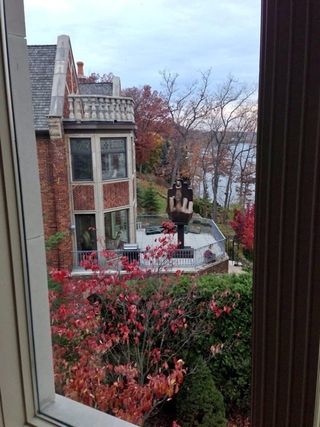
No one contests that when it condemned property in Norfolk, Virginia to expand the Federal courthouse, the federal government made unreasonable pretrial offers to the property owner. The owner’s appraisals valued the property at $36.1 and $30.7 million, but the government valuation resulted in a $6.175 pretrial offer. After the pretrial dance, the final offers were $9.4 million from the government, compared to $15.4 million by the property owner.

Fortunately, the property owner had the good sense to seek advice from our good friends at Waldo & Lyle, and the jury returned a verdict for $13.4 million. As one of the prevailing parties, the property owner sought attorneys fees under the Equal Access to Justice Act. The government objected on the basis that its final offer was substantially justified, even though its pretrial offer may not have been, and thus “the position of the United States” as used

Continue Reading 4th Cir: Govt’s Reasonable Trial Position On Just Compensation Doesn’t Get It Off The Hook For Its Unreasonable Pretrial Position

Here are two more amici briefs supporting the petitioner in Marvin M. Brandt Revocable Trust v. United States, No. 12-1173 (cert. granted Oct. 1, 2013). That’s the case in which the Court is considering the meaning of the term railroad “right of way” as used in an 1875 federal statute. 

The Cato, et al brief argues:

We doubt there is serious dispute that protecting individuals’ right to their property is a foundational purpose for which our national and state governments were established. But we begin from this point because the right landowners have to be secure in their property is undermined

Continue Reading More Amici Briefs In SCOTUS Rails-To-Trails Case

Here’s the amici brief of Pacific Legal Foundation and the Center for Constitutional Jurisprudence in Marvin M. Brandt Revocable Trust v. United States, No. 12-1173 (cert. granted Oct. 1, 2013). That’s the case in which the Court is considering the meaning of the term railroad “right of way” as used in an 1875 federal statute.

As we’ve explained, although this case is a quiet title action out of a Colorado U.S. District Court, it could have huge implications for rails-to-trails takings cases in the Court of Federal Claims and the Federal Circuit. The issue is whether the federal government retained an “implied reversionary interest” when it issued railroad patents, or whether these grants were subject only to a railroad easement. The difference is that easements may be extinguished, while reversionary interests cannot.

The Tenth Circuit, in contrast to other courts, held that the right of way is subject to an implied reversionary interest in favor of the United States, meaning that the property owner doesn’t have “property” that was taken when the railroad was abandoned and was turned into a recreational trail. The merits brief of the petitioners is posted here.

We filed an amicus brief in the case, available here

The PLF/CCJ brief argues:

This case raises important questions regarding the common law system of property ownership and the certainty of titles in property.

In the decision below, however, the Tenth Circuit repudiated the common law rules of property ownership in favor of a per se rule, holding that the United States—the original grantor of the railroad easement and the Brandts’ fee estate—will retain an “implied reversionary interest” in an 1875 Act right-of-way, even after the government patents the underlying land and conveys it to a private party without any express reservation of reversionary rights. … The decision below extended the Tenth Circuit’s rule, holding that all private landowners whose titles are traceable to a federal land patent will be subject to the government’s unexpressed reservation of a reversionary interest in a railroad right-of-way, regardless of the rights and expectations established by their titles.

If not reversed, the Tenth Circuit’s rule will unsettle the rights and expectations of tens of thousands of landowners across the nation. … Amici urge this Court to reverse the Tenth Circuit’s opinion in this case and to reaffirm the fundamental common law principle that ownership of land will be determined by title, not implication.

More background on the case in a piece in Jurist by PLF’s Brian T. Hodges, “Brandt v. US: Should the Common Law of Propert be Scrapped?”  

Amicus Curiae Brief of Pacific Legal Foundation and Center for Constitutional Jurisprudence in Support of P…


Continue Reading Amici Brief In Rails-To-Trails Case: Tenth Circuit Repudiated Common Law Rules Of Property

We’re offline today because we’re arguing a case in the Hawaii Supreme Court about automatic approval statutes and zoning law. Here’s the summary of the issues, via the Judiciary web site:

This appeal arises out of a decision by the Respondent Planning Commission of the County of Kaua`i (Planning Commission) to deny the Petitioner Kauai Springs, Inc.’s (Kauai Springs) application for three permits related to the continued operation of Kauai Springs’ water bottling facility. The Circuit Court of the Fifth Circuit (circuit court) reversed in part and vacated in part the Planning Commission’s decision and ordered that all three permits be issued to Kauai Springs. The Intermediate Court of Appeals (ICA) subsequently vacated the circuit court’s judgment and remanded the case to the Planning Commission for consideration of whether Kauai Springs could satisfy the relevant permit requirements.

In its application, Kauai Springs argues that the ICA gravely erred by: 1)

Continue Reading HAWSCT Oral Arguments: Inferring Assent To Extend Auto-approval Deadlines

Here’s the amici brief we are filing (along with our firm colleagues Mark Murakami and Bethany Ace) in Marvin M. Brandt Revocable Trust v. United States, No. 12-1173 (cert. granted Oct. 1, 2013). That’s the case in which the Court is considering the meaning of the term railroad “right of way” as used in an 1875 federal statute. 

As we explained here, although this case is a quiet title action out of a Colorado U.S. District Court, it could have huge implications for rails-to-trails takings cases in the Court of Federal Claims and the Federal Circuit. The issue is whether the federal government retained an “implied reversionary interest” when it issued railroad patents, or whether these grants were subject only to a railroad easement. The difference is that easements may be extinguished, while reversionary interests cannot.

In this case, the railway abandoned its use, after which

Continue Reading New Amici Brief: Attempting To Derail Rails-To-Trails Takings Cases

A must read from our colleague Professor Steven Eagle (author of the Regulatory Takings treatise) about the Koontz case, Koontz in the Mansion and the Gatehouse, forthcoming in the Urban Lawyer.

Here’s the abstract:

This Article focuses on problems in implementing the U.S. Supreme Court’s expansion of its doctrine of unconstitutional conditions pertaining to land development approvals in Koontz v. St. Johns River Water Management District. As earlier developed in Nollan v. California Coastal Commission and Dolan v. City of Tigard, the doctrine applied only to unrelated or disproportional exactions of interests in real property. The doctrine was expanded in Koontz to include denials of development approval after landowner refusal to accede to unreasonable exaction demands, and also to exactions of money as well as real property interests.

Drawing an analogy to Yale Kamisar’s disparate treatment of criminal defendants in the “mansion” of the judicial system and the “gatehouse”

Continue Reading New Article: “Koontz in the Mansion and the Gatehouse” (Professor Steven Eagle)

Here’s the property owner’s merits brief in the case about the meaning of the term “railroad right of way” in an 1875 federal statute, Marvin M. Brandt Revocable Trust v. United States, No. 12- 1173. The meaning of a term in a somewhat obscure federal statute in a quiet title action isn’t a case of obvious interest here, but as the amicus brief we filed at the cert stage points out, a decision in the government’s favor could jeopardize rails-to-trails takings cases.

The issue in Brandt is whether the federal government retained an “implied reversionary interest” when it issued railroad patents, or whether these grants were subject only to a railroad easement. The difference is that easements may be extinguished, while reversionary interests cannot. In this case, the railway abandoned its use, after which the federal government instituted a quiet title action in federal court asserting it owned the

Continue Reading Petitioner’s Brief In Rails-to-Trails Case

Here’s a ruling we’ve been waiting for in the Hawaii Democratic Party’s federal court challenge to Hawaii’s “open primary” process. U.S. District Judge J. Michael Seabright yesterday denied the Party’s motions for summary judgment and preliminary injunction, and instead granted the State’s cross-motion, effectively ending the case.

The court held that the open primary system is not facially unconstitutional, concluding that there may be circumstances in which an open primary does not interfere with a political party’s First Amendment rights, and that the Party had not supplied any evidence that its associational rights had been “severely” burdened by the open primary requirement. Althought it dismissed the lawsuit — the Party raised only a facial claim — the court left open the possibility of an as-applied challenge:

The State concedes that a ruling in its favor on the facial challenge in this case would not preclude an “as-applied” challenge

Continue Reading Fed Ct: Hawaii’s Open Primary Not Facially Unconstitutional