


2013

NamesonthelandIt’s easy to forget that place names are not “real” in the sense that they exist other than in our collective minds, but are impermanent markers bestowed on places by man. There’s nothing that commands New York is “New York,” the Mississippi River to be so named, or the island of Molokai to be called that.

I’m reminded of this each time I fly. From 35,000 feet you can see many natural barriers and landmarks, but there are no labels on the land as on a map. This gives a fleeting sense of perspective which reduces political distictions — which are bolstered by names and labels — to a somewhat random convention, and makes the age-old fights over land and territory seem a bit trivial.

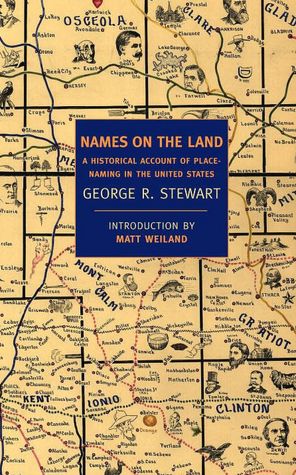
If you didn’t already possess that sense, then Names on the Land by George R. Stewart (originally published in 1945, republished in 2008), should give

Continue Reading Book Review – Names on the Land

In a recently-published law review article, U. Hawaii lawprof David Callies found that “the Moon Court [1993-2010] decided some of thestate’s most important property and related environmental and Native Hawaiianrights cases in favor of the various non-governmental organizations bringingthem (Sierra Club, Earthjustice, Hawaii’s Thousand Friends, and the NativeHawaiian Legal Corporation) approximately eighty-two percent of the time,sixty-five percent of which reversed the Intermediate Court of Appeals,” a result he concluded was “appalling.”

Well here’s the counterpoint, a paean to the Moon Court from another U.H. lawprof, who asserts that the court’s environmental jurisprudence wasn’t so much focused on outcome, but rather on process. Yes, plaintiffs won a whole lot, but don’t be fooled the results, she writes, because the court was only insuring that the doors to the courthouse remain open to all comers under the environmental standing doctrine:

At first blush, the Hawai‘i Supreme Court’s environmental review jurisprudence under

Continue Reading A Partial Rebuttal To Professor Callies: 1993-2010 HAWSCT Environmental Record Most Concerned With Public Participation

Here’s a case where the Hawaii Intermediate Court of Appeals’ opinion, while interesting (and, we think, correct), teases us with the underlying story.

In Perry v. Perez-Wendt, No. 30329 (Feb. 8, 2013), a lawyer was in the running to be appointed as the County Attorney for the County of Kauai. Five of his brothers and sisters, however, opposed his appointment and not only communicated with the Mayor and county council to voice their thoughts, but filed a complaint with the attorney disciplinary board accusing him of some kind of professional misconduct (and told the mayor about it). The lawyer didn’t take kindly to this display of brotherly and sisterly love, and when he failed to get appointed to the position, he filed suit against them alleging defamation, interference with business relations, and other related claims.

Hawaii, like many other jurisdictions, has an “anti-SLAPP” statute. A “SLAPP” suit is a

Continue Reading HAWICA: Communicating To The Mayor Is Not “Testimony” In A “Proceeding,” So Anti-SLAPP Law Inapplicable

If you are a member of the ABA, mark your calendars for Tuesday, February 26, 2013, noon to 1:00 p.m. Eastern Time, for a free teleconference jointly sponsored by the ABA’s Section on Litigation’s Environmental Litigation Commitee and the Condemnation, Zoning, and Land Use Committee to discuss the latest and greatest in takings law, specifically the three cases the U.S. Supreme Court is ruling on this Term.

Here’s the description:

For the first time since 2005, the U.S. Supreme Court hasthree property rights cases on its docket. One of them, Arkansas Game &Fish, regarding compensation for flooding, was decided in December.  Another,Koontz, concerning the applicability of the Nollan and Dolan nexustests, has been argued. The final case, Horne, a most unusual case about whatmight be described as raisin sequestration, is still on the sidelines.

An expert panel — two practitioners, a federal researcher,and a law professor

Continue Reading ABA Takings Roundtable – The U.S. Supreme Court Property Rights Cases – Feb. 26, 2013

nailhouse

According to “Moats dug around Chinese villagers’ houses to drive them out,” they’re now resorting siege tactics to deal with holdout “nail houses” in southern China:

Forced evictions and land disputes are a major cause of social unrest in China, where there are tens of thousands of mass incidents each year.

This week, Chinese internet users weighed in on the unusual tactics being used to force Yangji’s remaining families from their homes.

“The property developer is really smart,” wrote one micro-blogger.

“The idea of natural moats is shockingly unprecedented. Really clever!”

Actually, the idea of a moat is very precedented. It appears that the situation we’re familiar with, where they merely build roads around holdouts, is devolving. What’s next, siege engines and cauldrons of boiling oil?Continue Reading They’re Getting Positively Medieval On Holdout “Nail Houses”

Worth listening: a 17-minute podcast by Professor Richard Epstein, with his thoughts — apparently without a script and seemingly in a single breath — on the oral arguments in Koontz v. St Johns River Water Mgmt Dist., No. 11-1447 (cert. granted Oct. 5, 2012). 

Download the mp3 here. If that doesn’t work, go here.

Continue Reading Epstein’s Podcast On Koontz: “The Vexed Doctrine Of Unconstitutional Conditions”

I did want to make a mention of a sad milestone I wish we didn’t have to come to, the passing of Maui’s irreplaceable land use lawyer B. Martin Luna. Here’s the report from the Maui News.

Having dealt with Martin over the years, he was a true gentleman, and everything that you conjure up when you think about “old school” lawyer: smart, cordial, well-armed with facts, generous, courtly. And something that is a rarity today — a lawyer whom I never heard utter a bad word about anyone, even his opponents.

Maui and the rest of our state are not going to be the same without Martin. I’m going to miss him. Continue Reading Aloha, Martin Luna

What we’re reading today:

  • Grand Central Station and The Takings Clause – from the Constitutional Law Prof Blog, a link to a WNYC/NPR podcast about Grand Central Terminal and the Penn Central takings case. Worth listening, if only to hear the money quote near the end: “you see New Yorkers all the time staking claim in this building, pointing up at cerulean blue sky saying ‘hey, this belongs to us.'” Yes, we guess it does. And you know what? You didn’t pay for it.
  • Another one about the 100th anniversary of Grand Central: Gideon Kanner writes Calling All Grand Central Junkies!, linking to the NY Times‘s republication of its 1913 special celebrating the opening of the terminal.
  • In that vein, a snarky commentary about the wonders of Pennsylvania Station. Who needs a cerulean blue sky?
  • In what reads more like a redeveloper’s press release, the Washington Post


Continue Reading Wednesday Round-Up: Grand Central, Oysters No More, And Originalist Takings

The oral argument calendar of the Hawaii Supreme Court  looks pretty interesting:

  • Thursday, February 7, 2013, 11:00 a.m. – Sierra Club v. Land Use Comm’n, No SCWC-11-0000625, a case about the qualifications of holdover Land Use Commissioners, which we previewed here
  • Thursday, February 21, 2013, 10:00 a.m. – Kanahele v. Maui County Council, No. SCWC-29649, a case involving the “Sunshine Law” and the council’s consideration of a development project on Maui. More here from Record on Appeal.
  • Thursday, February 21, 2013, 11:00 a.m. – County of Hawaii v. UNIDEV, LLC, No. SCWC-10-0000188, a case about contracts between a private developer and the County to build affordable housing. It’s more about arbitration and appellate jurisdiction, but an interesting case nonetheless. More here from Record on Appeal.
  • Thursday, March 14, 2013, 9:30 a.m. – State of Hawaii v. Woodhall, No. SCWC-11-0000097, in which the court


Continue Reading Upcoming Hawaii Appellate Arguments Of Interest

Marinerscoveneworleans

In United States v. 0.073 Acres of Land, No. 11-31167 (Jan. 28, 2013), the U.S. Court of Appeals for the Fifth Circuit held that a townhome association’s right to collect maintenance assessments from its members was property under Louisiana law, but was not compensable property in an eminent domain action.

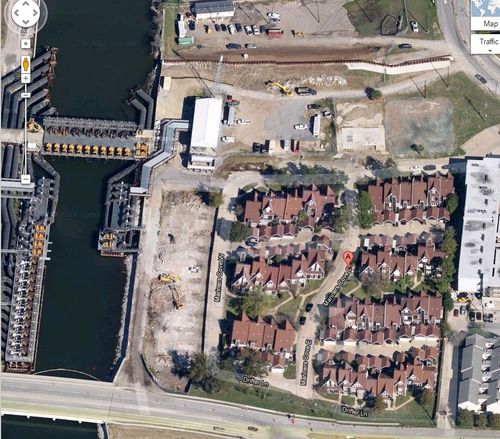
The case involved a 58-townhome community next to Lake Pontchartain in New Orleans. The area was damaged in Hurricane Katrina after the 17th Street Canal was breached, flooding the Lakeview neighborhood. As part of the recovery efforts, the Corps of Engineers began improving the adjacent pumping station, and to facilitate its access to the site, it condemned 14 of the townhomes. (We assume that’s the vacant spot between the remaining townhomes and the pumping station/canal in the above photo.)

The Mariner’s Cove Townhomes Association had the right to collect assessments from its members for maintenance and whatnot. This right

Continue Reading 5th Cir: Right To Collect Assessment Is “Property,” But It Isn’t “Compensable” Property