


2015

Mauitemple

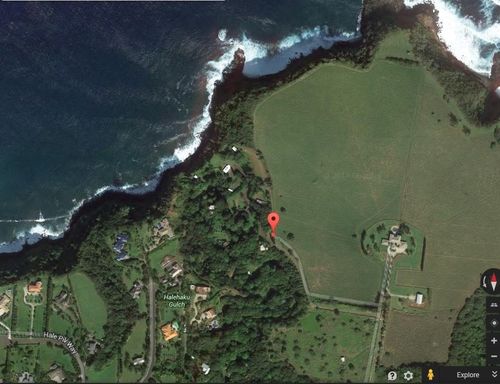
Here’s the latest for you RLUIPA mavens, a complaint recently filed in Hawaii federal court by a Maui “integral yoga” temple and its leader against the County for not permitting it to use their site on Maui’s north shore for things like weddings and religious observations. Parking was the proffered reason, it appears.  

Dwight Merriam and Evan Seeman have all the details here, at RLUIPA-Defense blog

Complaint, Spirit of Aloha Temple v. County of Maui, No. 1:14-cv-00535-RLP (D. Haw. Nov. 26, 2014)
Continue Reading New RLUIPA Complaint vs Maui: “‘Integral Yoga’ Group and Swami Hope to Find Their Inner Balance in Federal Court”

We’re going to start off 2015 slightly off-topic, a movie review. But rest assured, there is a small eminent domain connection.

Anyone who was around in the 1960s and 1970s remembers those paintings and prints of sad children with oversize eyes. They were ubiquitous. But they gave our young eyes dissonance. To us, “art” was whatever the adults said it was, and by any measure these paintings must have been art, because they were everywhere, and popularity equated to artistic quality, right? But at the same time, they were kitschy, and in a creepy way (not low-rent fun like our favorite kitsch, Dogs Playing Poker and Velvet Elvis).

The weird-but-true backstory behind the big-eyed paintings has recently hit the big screen, Tim Burton’s “Big Eyes” with Amy Adams as long-time Hawaii resident, painter Margaret Keane, and Christoph Waltz as her Svengali, husband Walter Keane. 

Hawaii

Continue Reading The “Big Eyes” Have It: Hawaii Courts Again In The Hollywood Spotlight

Here’s that last case in our 2014 opinion queue, from way back in July. It’s also coincidentially the 2,500th post on the blog.

In Sawn Beach  Corolla, LLC v,.County of Currituck, No. COA13-1272 (July 1, 2014), the North Carolina Court of Appeals considered vested rights and takings claims in a fact pattern than streched back decades. 

In 1966, the owners purchased 1400 acres for residential development. In 1969, the owners recorded a subdivision plat, to make both residential and commerical uses. The county had no zoning ordinance in place at that time. The owners spent $425,000 on preliminary work and infrastructure, such as surveying, engineering and grading. Big bucks in 1960’s dollars.

The county adopted a zoning ordinance in 1971, zoning the property for “RO2,” which prohibits most businesses, including those contemplated by the owners. “Nevertheless, plaintiffs continued to believe that they would be allowed to commerically develop their

Continue Reading Our Final 2014 Opinion Post: Vested Rights In North Carolina

Despite its caption, the opinion of the Texas Supreme Court in Wheeler v. Enbridge Pipelines (East Texas), L.P., No. 13-0234 (Aug. 29, 2014) isn’t another one of those can-they-or-can’t-they pipeline cases.

But it’s a case that takings mavens might find intersting anyway, because the court sets out how a property owner is compensated for the destruction of trees.  

Enbridge wanted to construct its pipeline on Wheeler’s heavily wooded property, used by the family as a retreat. Wheeler agreed to a right of way, “but insisted that Enbridge install the pipeline by boring underground in order to preserve the trees on the property.” Slip op. at 2. Seems reasonable to us. Enbridge specially approved the condition. Despite these precautions, however, Enbridge damaged Wheeler’s trees: 

Soon after the parties executed the agreement, Enbridge hired a construction company to build the pipeline, but failed to inform the contractors about

Continue Reading How To Value Trees In Texas

There’s one citation notably missing from the opinion of the Texas Court of Appeals in Anderton v. City of Cedar Hill, No. 05-12-00969-CV (Aug. 22, 2014): Williamson County.  

This was case where in response to the city’s petition that the Anderdons’ use of their property was illegal, they counterclaimed that they had nonconforming use rights, that the city’s petition violated their vested rights, and resulted in a taking of their property. The trial court granted the city summary judgment on the counterclaim, holding that the owners did not present evidence of their nonconforming use status, and that their inverse condemnation claim was not ripe because they had not pursued available administrative remedies under the zoning code.

The court of appeals reversed. It concluded that the owners did submit enough evidence to get past a summary judgment motion that their use was nonconforming. Most interestingly for our purposes

Continue Reading Williamson County Wonderfully MIA In Texas Court’s Ripeness Analysis

In Rutherford Elec. Membership Corp. v. 130 of Chatham, LLC, No. 13 SP 95 (Sep. 2, 2014), the North Carolina Court of Appeals reversed the dismissal of an eminent domain complaint filed by a private company that sought to take property located in two counties.

In cases where a private company seeks to condemn private property, North Carolina law allows the filing of a special proceeding in the county in which the property is located. The trial court dismissed the complaint because the property to be taken was partially located in the county of venue, and partially in another county, and the court concluded it lacked subject matter jurisdiction. The court refused to allow the condemnor to amend its petition to cover only the land located in the proper county

The court of appeals reversed, although it conceded that the process was “in conflict,” and urged the legislature to

Continue Reading NC App Considers Multi-Jurisdictional Eminent Domain

Under Nebraska eminent domain law, the condemnor is required to make a “good faith” effort to negotiate with the property owner before it files an eminent domain action. See Neb. Rev. Stat. § 76-704.01(6).

In Camden v. Papio-Missouri River Natural Resources District, No. A-13-266 (Aug. 26, 2014), the court concluded that the condemnor had not made these efforts. Here’s what occurred:

  • The NRD contacted the property owners, and made an offer of $67k for the desired easements.
  • The owner said “from now on, talk to my lawyer.”
  • The NRD did so, and sent the owners’ lawyer a revised proposed purchase agreement.
  • The owners, through their lawyer, rejected the offer. They valued the loss at $750k.
  • The owners also proposed an alternative to only monetary compensation.
  • The NRD responded that the counteroffer was unresonable, and thus stafff would not recommend the NRD board accept it, but suggested the


Continue Reading Neb App: Condemnor Did Not Make Jurisdictional Good Faith Effort To Negotiate

Clark v. Titus County, No. 06-14-00035 (Sep. 19, 2014) is a somewhat civil procedure oriented opinion, specifically about Texas’ “no-evidence” motion for summary judgment. But it’s a condemnation case, and there’s some good background from the court about the eminent domain process in Texas courts and how appraisers calculate fair market value.

Under Texas civil procedure, a “no-evidence” motion is based on the utter lack of evidence to support an essential element of the other side’s claim. The county filed such a motion, arguing that the property owners did not submit a “scintilla of probative evidence” about the taken property’s fair market value, specifically the value of fencing. Thus, the county asserted, the court was bound to accept the county’s valuation in its appraiser’s testimony, which among other things, was based on his estimate of the cost of fencing.

The court of appeals reversed. Although the owners did not

Continue Reading Tex App: “No-Evidence” Summary Judgment Wrongly Granted Where Property Owner Undercut Appraiser’s Assumptions

Westerville

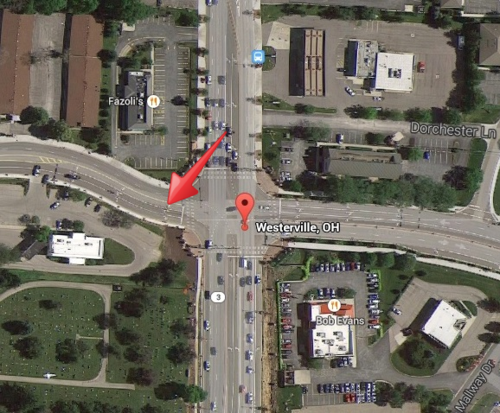
In City of Westerville v. Taylor, No. 13AP-806 (Aug. 12, 2014), the Ohio Court of Appeals concluded that it didn’t matter what professed “plans” the city had the property it took from Taylor, only that the city had taken fee simple absolute title.  

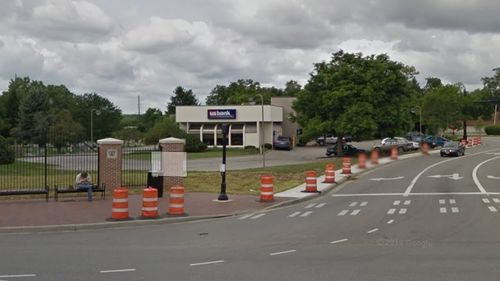
As part of a highway project, the city condemned a portion of the land shown above (red arrow), and here:

Southstatestreet

“In this case, the City appropriated two fee simple parcels from Taylor.” Slip op. at 2. Before the taking, Taylor’s property had two driveways. On appeal, the city argued that this didn’t change, because after the taking, “Taylor still had a right of access.” Id. at 4. 

The City argues that because the resolution appropriating the property in fee simple did not specify that it was taking all rights, title and interest in the property, Taylor retained his right of access to and from the property. The

Continue Reading Ohio App: You Took It, You Bought It – Taking Of “Fee Simple” Means Taking Of All Rights, Regardless Of Intent

Being a short opinion (2 pages), you could read the entirety of the New York Appellate Division’s decision in Eisenhauer v. County of Jefferson, No. 14-00510 (Nov. 14, 2014) more quickly than we could summarize it. 

But yes, the taking of private property for expansion of the runway at a public airport is a public use. 

Eisenhauer v. County of Jefferson, No. 14-00510 (N.Y.A.D. Nov. 14, 2014)

Continue Reading NY App Div: “Virtually Any Project That May Confer” Public Benefit Is Consistent With The Public Use Clause