


April 2016

Another day that we’re tied up, so there won’t be too much analysis. But we wanted to post this fascinating case out of the California Court of Appeal, Friends of Martin Beach v. Martin Beach 1 LLC, No. A142035 (Apr. 27, 2016).

As the caption of the case indicates, it involves beach access. Specifically, access to a Northern California beach that, despite some junky Yelp reviews, is apparently popular enough to spawn a “friends of” activist defense group. The Friends want access across private property owned by a really rich Silicon Valley guy. Before he owned it, they alleged, the owners let the public cross to get to the beach. The Silicon Valley guy, however, didn’t continue that practice, and the lawsuit followed.

The owner claimed he had exceptionally good title, because the land, like much land in California, could trace title back to a Spanish or Mexican

Continue Reading Cal App On Tidelands And Mexican Title: Owner Has Title In Land Used For Beach Access, But May Have Lost It By Dedication

We’re tied up today, so can’t write much, but wanted to post this recent decision from the Court of Federal Claims. Here’s the court’s own summary:

Plaintiffs Love Terminal Partners, L.P. (“Love Terminal Partners”) and Virginia Aerospace, LLC (“Virginia Aerospace”) are leaseholders of property at Dallas Love Field Airport (“Love Field”), located in Dallas, Texas. In their complaint, filed in the United States Court of Federal Claims (“Court of Federal Claims”) on July 23, 2008, plaintiffs allege that the federal government, through the enactment of the Wright Amendment Reform Act of 2006 (“WARA”), prohibited the use of their property, thereby destroying all economic value or benefit of their leasehold and effecting a taking without just compensation, in contravention of the Fifth Amendment to the United States Constitution. Plaintiffs seek compensation for the taking as well as interest from the date of the taking, attorneys’ fees, appraiser and expert witness fees

Continue Reading $133,500,000 CFC Verdict For A Categorical Lucas Taking

DSCF2762

When you think “LA” or Southern California, what comes to mind? Things like “the hills of Beverly Hills, the Hollywood Hills, and the Los Angeles basin, including the Hollywood sign, the Griffith Observatory, downtown Los Angeles, and … Mount Baldy,” perhaps?

Or maybe, like us, you think of prehistoric elephants stuck in tar.

But no matter, because our point is that each of us recognizes what we call “cliche litigation.” You know, the cases that involve just the thing you think about when you imagine a certain place. We have our beach cases in Hawaii; the south has alligator cases, for example. 

Well, here’s the LA version, Boxer v. City of Beverly Hills, No. B258459 (Apr. 26, 2016).

The City of Beverly Hills planted redwood trees in a public park. These trees apparently blocked the views from the plaintiffs’ backyards of some very So Cal-ish things like

Continue Reading Cal App: Beverly Hills Blocking Views Of The Hollywood Sign Isn’t Inverse Condemnation

The Supreme Court has declined to review the Second Circuit’s summary order upholding the dismissal of a federal court regulatory takings claim on Williamson County ripeness grounds. 

In this order, the Court denied cert, over the dissent of Justice Thomas (joined by Justice Kennedy). We’ve said here many times why Williamson County is a bad rule, and needs to be tossed aside. We filed an amicus brief in the case in support of the cert petition which covers most of the reasons why. 

The two dissenting Justices argued that the state-litigation requirements “are suspect,” and appear to be “inconsistent with the text and original meaning of the Fifth Amendment’s Takings Clause.” 

Read the entire dissent (it’s not long), but here are the highlights:

  • “In short, both the text of the Takings Clause and historical evidence cast doubt on Williamson County’s treatment of just compensation as a mere remedy,


Continue Reading Quagmire Unabated: SCOTUS Will Not Revisit Williamson County (Yet)

“Election contests” in Hawaii are pretty narrow cases, and are subject to strict rules regarding subject matter jurisdiction (the Hawaii Supreme Court has original jurisdiction), content, timing,and remedy. For more, see our earlier post “HAWSCT Confirms Election Contests Are Tough!” Thus, even when an election challenge may have merit, the road is an uphill one. 

But when it makes allegations like this, there’s not going to be much doubt about the outcome, is there? — 

…that the Republican Party is attempting to “subvert, remove, and over[]throw the constitutional powers of the office of the [P]resident,” that Presidential candidate Ted Cruz is not qualified to run for President of the United States and, therefore, the Republican Party “is guilty of election fraud [by] knowingly entering an illegal candidate,” that the Office of Elections sponsors racism by serving “whites only,” and that Governor David Ige is “responsible for bigotry and discrimination

Continue Reading Election Law Detour: Hawaii SCT Dismisses Challenge To Ted Cruz Eligiblity

Kauaipark

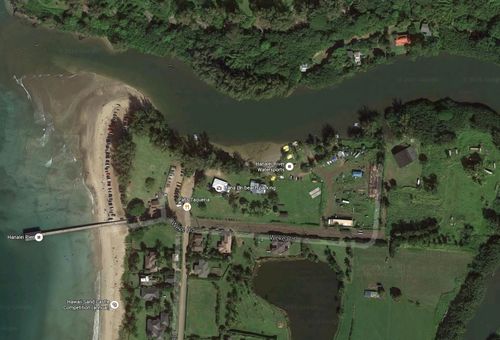
A longer post to start the week because it involves an eminent domain case, a somewhat rare occurrence from the Hawaii appellate courts. The issues determined by the Hawaii Intermediate Court of Appeals are important, and because we have an old eminent domain code and don’t have a whole lot of current decisional law applying it — and we think the ICA got some critical things wrong (even though it may not matter for this case) — we’re going hit this one in some detail.    

This one involves three parcels on Kauai — some of which were owned by a fellow who has been a thorn in the County’s side — which were condemned by the County for the expansion of a public beach park.  

In County of Kauai v. Hanalei River Holdings, Ltd., No. CAAP-14-0000828 (Mar. 31, 2016), the ICA addressed three issues:

  • Can a


Continue Reading Hawaii Court Of Appeals Draws A Bright Line In Eminent Domain: In Larger Parcel Analysis, Unity Of Contiguity Means Parcels Must Touch

Update: Oral argument audio posted above. 

Update:State’s High Court Hears Arguments In Mountain Water Appeal On Wide-Ranging Issues” 

Update:Montana Supreme Court Justices quiz lawyers on eminent domain, finances

++++++++++++++++++++++++++++++++

The condemnation of privately owned utilities is a thing these days. Seems like many local governments believe they can do it better than the private owners, and exercise the eminent domain power to force the acquisition. But in these cases, isn’t the property already being put to public use? Indeed, the exact same public use? 

This morning, the Montana Supreme Court is hearing oral arguments in a case we’ve been following that will address the meaning of the phrase “more necessary public use” in Montana Code Annotated § 70-30-111  and and what kind of proof is necessary to support such a claim. The city of Missoula is attempting to condemn Mountain Water Company, a private company which supplies

Continue Reading Montana Supreme Court Live Streams Arguments In “More Necessary” Public Use Case: Can A Municipality Seize The Local Water Utility?

The Pribeagus asserted the County’s failure to maintain a road caused their home to be flooded repeated. They sued in inverse condemnation, including in their suit a claim for damages both to their real property and their personal property. 

The trial court kept the Pribeagus from introducing evidence of the value of the personal property, believing that such damages are not recoverable in inverse condemnation, and the only thing an owner can recover is damage to real property. 

In Pribegeau v. Gwinnett County, No.A15A2026 (Apr. 13, 2016), the Georgia Court of Appeals disagreed, concluding that the term “property” is the Georgia Constitution “is a very comprehensive one, and is used not only to signify things real and personal owned, but to designate the right of ownership and that which is subject to be owned and enjoyed.” Slip op. at 7 (citation omitted). So yes, personal property is “property” and

Continue Reading Ga App: Owners Can Recover Personal Property In Inverse Condemnation Action

Continuing with our posting of the amicus briefs in Murr v. Wisconsin, No. 15-214, the “parcel as a whole” case now being considered by the Supreme Court, here is the brief filed in support of the property owner by several western states, principally authored by lawprof Ilya Somin.

Rather than summarize the brief here, we point you instead to Prof Somin’s post at the Volokh blog, “Our amicus brief on behalf of nine states in an important Takings Clause property rights case.” 

More briefs coming. 

Continue Reading Another Amicus Brief In SCOTUS “Parcel As A Whole” Case: Aggregation Has “No Basis In Text, History, Or Predecent”

The amicus briefs supporting the property owners/petitioners in Murr v. Wisconsin, No. 15-214, the “parcel as a whole” case now being considered by the Supreme Court, are rolling in.

Here’s the first one, the amici brief for the Cato Institute and the Owners’ Counsel of America. [Disclosure: we represent OCA on this filing.]

Regulatory takings are about the impact of a regulation on an owner’s use of property and how it has a similar economic impact on that property as an exercise of the government’s eminent domain power. Thus, most regulatory takings claims will hinge in large part on “the extent of the interference with rights in the parcel as a whole.” Penn Central Trans. Co. v. New York City, 438 U.S. 104, 130-31 (1978). This is also known as the denominator issue, because the size of the property often dictates the severity of the regulation’s impact.

Continue Reading SCOTUS Amici Brief: In Regulatory Takings, No Aggregation Of Separate, Commonly-Owned Parcels