


April 2016

Guam land titles can be seriously messed up. This case, Gov’t of Guam v. 162.40 Square Meters of Land, No. CVA14-011 (Mar. 17, 2016), about which we posted earlier (when it went up to the U.S. Supreme Court and was denied review) is an example. To reconfigure irregular lot lines left over from the World War II Japanese occupation and American liberation and the resulting destruction of records, Guam adopted the “Agana Plan,” which it viewed as a redevelopment plan of sorts. Or at least that’s how it was employed, even though the Plan had until 1981, never been used to take any property.

But 1981 was different. Ilagan owned land in Agana on which he ran an apartment building. Ungacta — who was then the Mayor of Agana — owned a neighboring residentially-zoned lot. In 1981, the Ungacta property did not have access to a road. Ungacta appraised a

Continue Reading Guam SCT: Eminent Domain Statute Cannot Limit Right To Just Compensation
When we talk amongst ourselves, we dirt lawyers discuss things like larger parcels, regulatory moratoria, servitudes “running with the land,” and other such fascinations. But we understand that what the average guys and gals want to know about when they chat us up at cocktail parties is their neighbor’s trees.

Like who gets the fruit from her trees that are on my side of the fence (as our colleague Mark Murakami wrote about his bananas)? Or, as in this recent opinion from the New Jersey Appellate Division, who pays when my tree’s roots bust up my neighbor’s wall.

Turns out the analysis hinges on whether the tree’s roots are a “natural condition” of the land. [Barista’s note: unless the tree is artificial, like those ubiquitous fake tree cell towers, we’re not sure how a tree really can be considered not “natural,” a question we’ve

Continue Reading NJ App Gets All Metaphysical About “Natural” Trees

First, the good part of the recent opinion issued by the New York Supreme Court Appellate Division, First Department (dun dun) in American Economy Ins. Co. v. New York, No. 16095 (Apr. 14, 2016):

Plaintiffs also established that the amendment, as applied retroactively, violates the Contract Clause of the US Constitution because it retroactively impairs an existing contractual obligation to provide insurance coverage “[w]here *** the insurer does not have the right to terminate the policy or change the premium rate” (Health Ins. Assn. of Am. v Harnett, 44 NY2d 302, 313 [1978] [internal quotation marks omitted] [asterisks in original]; see US Const, art I, § 10, cl 1). Defendants failed to show that the impairment is “reasonable and necessary to serve” “a significant and legitimate public purpose *** such as the remedying of a broad and general social or economic problem” (19th St.

Continue Reading New York Appellate Division: Applying New Workers Comp Provisions Retroactively Is A Taking

Here’s the property owners’ Merits Brief, filed earlier this week in the case in which the U.S. Supreme Court is considering the “parcel as a whole” doctrine in regulatory takings (also known as the “denominator” issue).  

The Wisconsin Court of Appeals held that the owners did not have their property taken because they also own the parcel next door. When measured against their use of the two parcels combined, the court concluded their loss of use of the single parcel — otherwise a Lucas “wipeout” — was not a taking.

The brief argues:

Under the facts of this case, there is no reason to deviate from Penn Central. Although the Murrs own two parcels that happen to be adjacent, those parcels were purchased at different times, for different purposes, and have never been considered as a single economic unit or jointly developed. Absent the effect of

Continue Reading Merits Brief In SCOTUS “Parcel As A Whole” Case – No Aggregation Of Lots Which Owners Treated As Separate

Here’s the amici brief we’re filing today on behalf of the National Federation of Independent Business Small Business Legal Center and the Hillsborough County Chapter of the NAACP in support of a cert petition now pending at the Supreme Court.

The case centers around a “class of one” Equal Protection claim in which the plaintiff/petitioner alleges that his land use requests were treated by the County differently than other “similarly situated” landowners. The District Court granted summary judgment to the County because the other owners whom the plaintiff proffered in comparison were not subject to the Keystone Community Plan as were his properties. The Eleventh Circuit affirmed.

The court held that the comparators must be “identical in all relevant respects,” and since the other owners were not subject to the Keystone CP, end of story. It didn’t matter that the applicable provisions in the Keystone CP were the same as in

Continue Reading Amici Brief: In Class Of One Equal Protection Claims, Is “Substantially Similar” A Search For Evidence, Or Unicorns?

Charlotte

Urban property at the intersection of two main thoroughfares can be pretty valuable. It’s about location, for sure, but it’s also about visibility and the ability to be seen from four directions.

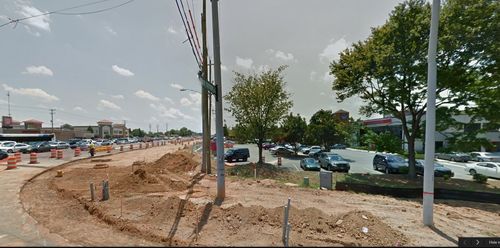
Charlotte, NC needed a part of such property for a rail line extension. The rail will be in the middle of the road, so the road needed widening, necessitating the partial taking. The rail “Bridge” will be part of that middle-of-the-road construction in an existing public right of way, but will partially block views of the owner’s remaining property (a bank branch).

But the Bridge won’t be on the condemned property, and the city asserted that means it isn’t liable for damages resulting from the loss of visibility. The trial court concluded that the jury could consider evidence of loss of visibility, and the city’s interlocutory appeal followed.

In City of Charlotte v. University Financial Properties, LLC

Continue Reading No Compensation For Bridge That Blocks View Of Taken Property, But Isn’t On Taken Property

Check this out: in this order, a Wisconsin state trial court today held that the state’s right to work law — which prohibits labor unions “from assessing dues, fees, or other charges of any kind on non-union members” — is a taking. The court concluded that unions have a property interest in the contract negotiation and related services they provide, and the law takes this interest by allowing “free riders” (nonunion members who benefit from the deals the union makes) to, well, free ride. Although the order doesn’t expressly say so, the court concludes, in effect, that the law impresses unions into public service. 

There’s going to be a whole lot more on this case, no doubt, so stay tuned. More here (“State court judge throws out Wisconsin Right to Work Law“) . Remember, Wisconsin Supreme Court justices are elected, which adds another twist.  

Order Granting

Continue Reading Trial Court: Wisconsin’s Right To Work Law Is A Taking

Here’s what we are reading today: 

  • Here’s the equivalent of law blogger nirvana: a link to one of your pieces by SCOTUSblog: “There is still more commentary on Monday’s ruling in Evenwel v. Abbott, holding that states and local governments may use total population to draw legislative districts. In posts at casetext, Robert Thomas asserts that the ruling “reaffirmed the principle that we the people mostly get to choose who will be included in ‘We The People,’ and when all are included, the federal courts will not interfere.”
  • In Oklevyeha Native American Church of Hawaii, Inc. v. Lynch, No. 14-15143 (9th Cir. Apr. 6, 2016), a panel of the Ninth Circuit concluded that a Hawaii church which uses marijuana as part of its doctrine did not have a claim under RFRA to prevent it from being prosecuted under the Controlled Substances Act. The court held that the


Continue Reading Friday Reading: SCOTUSblog’s Shout-Out; 9th Circuit Says Church Bogarted Evidence In Cannabis Claim; Are Agencies To Blame For Telescope Delay?; WWII Guam Land Seizures Case Moves Forward

In a ruling that no one who was paying attention could claim to be surprised by, the Hawaii Supreme Court yesterday issued a 4-1 memorandum opinion holding that the “agricultural lands” section of the Hawaii Constitution isn’t self-executing, and which approved the State Land Use Commission’s reclassification of land on Oahu from agricultural to urban uses for the “Koa Ridge” master-planned community:  

its constitutional history as well as the legislative history of Act 183 do not reveal an intent to require the LUC to delay reclassifying agricultural land pending formal designation of [Important Agricultural Lands].

Slip op. at 3. Justice Pollack, as he did in a prior case on the same issue, dissented.

No Surprises

We say no surprise, because only a few months ago, the same majority (Chief Justice Recktenwald, and Justices Nakayama and McKenna, joined by a circuit judge sitting for the recused — and now

Continue Reading HAWSCT Says It Again: Court Won’t Create A Moratorium While “Important Ag Lands” Process Completes

Yet another detour back to our second favorite topic, election law.

Casetext asked us to provide some commentary and analysis of the Supreme Court’s recent Evenwel opinion, and we produced this piece (“What Does Evenwel v. Abbott Mean For ‘One Person, One Vote?’), which is a refinement of our earlier blog post containing our initial thoughts on the decision.  

It’s not a long piece and we hope you read it (even you land users and takings mavens, who may be asked about this big case at your next cocktail party — all lawyers, after all, must be prepared at such events to respond to inquiries about every recent Supreme Court decision, even if they are far afield from your usual area of practice). The short answer to the question posed in the title is: 

Evenwel has transformed the “one-person, one-vote'” rule in reapportionment cases into

Continue Reading What Does Evenwel v. Abbott Mean For “One Person, One Vote?”