May 2016

This just in. The Court, in an opinion authored by Chief Justice Roberts:

The Clean Water Act regulates the discharge of pollutants into “the waters of the United States.” 33 U. S. C. §§1311(a), 1362(7), (12). Because it can be difficult to determine whether a particular parcel of property contains such waters, the U. S. Army Corps of Engineers will issue to property owners an “approved jurisdictional determination” stating the agency’s definitive view on that matter. See 33 CFR §331.2 and pt. 331, App. C (2015). The question presented is whether that determination is final agency action judicially reviewable under the Administrative Procedure Act, 5 U. S. C. §704.

United States Army Corps of Engneers v. Hawkes, No. 15-290 (May 31, 2016). 

Short answer: yes. 

The opinion is as bland as you might expect, focusing as it does on the Administrative Procedures Act. CJ had to get everyone aboard,
Continue Reading Unanimous SCOTUS: You Can Judicially Challenge A Clean Water Act Jurisdictional Determination

Doneraki

We did a post a while back about a Houston barbecue restaurant which had some troubles with the Harris County, Texas, Metropolitan Transit Authority. The court of appeals held that the restaurant’s lost profits could not be recovered in an inverse condemnation action.

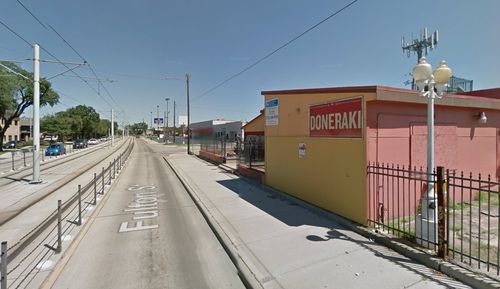
Well, that same court has rendered an opinion in a case involving a different restaurant impacted by the same transit authority. Doneraki serves Mexican fare (although our first impression was that a restaurant with “doner” in the name was probably a Turkish joint; we stand corrected). Or should we say “served Mexican fare,” because alas, the place — as the photo above shows — is now boarded up and out of business.

The owners alleged it was the Transit Authority’s construction of the rail, and the resulting rail line (also shown) that caused it to fail. The rail did not condemn any of Doneraki’s property. The

Continue Reading Tex App: Rail Construction Cutting Off Access Can Be Inverse Condemnation – Even When There’s Been No Taking

Programming note: On the day we remember our nation’s war dead, we thought we’d repost this one, about how Arlington National Cemetery came to be, and how yes, there’s a takings story there.

———————————————————

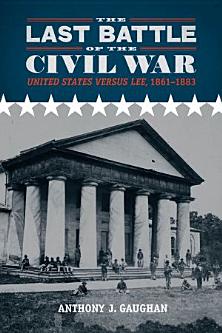
LastbattlebookYou know how we’re always saying that the provisions in the Takings Clause are “self-executing,” that even in the absence of a waiver of sovereign immunity, the Tucker Act, and section 1983, property owners would still be able to maintain a claim for compensation? Well here’s an article that explains that how that rule was first articulated, and not in a dry academic way, but with a fascinating historical story.

It’s the tale of United States v. Lee, 106 U.S. 196 (1882). We knew the land that is now Arlington National Cemetery was once owned by Robert E. Lee, but we can’t say that we gave much thought to how it became public property. We

Continue Reading Memorial Day, Arlington National Cemetery, And Takings

1

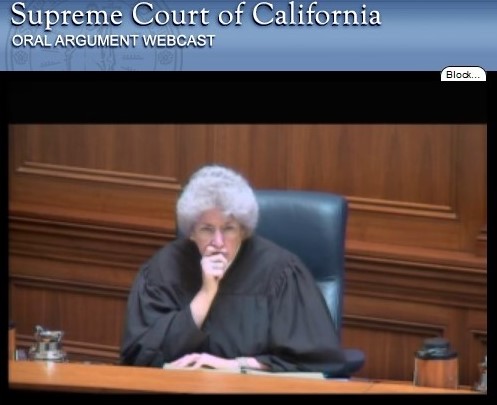
The dramatic moment of the day during last Thursday’s California Supreme Court oral arguments in City of Perris v. Stamper, No. S213468 (which we previewed here: “Cal Supreme Court Oral Argument Preview: In Just Comp Trial, Does Jury Determine Reasonable Probability Of Exaction?“), occurred during the rebuttal arguments by the city’s lawyer. The case involves whether the city can avoid paying just compensation by showing that it would, in the future, exact from the owners the very same property which the city is condemning. The only way the city wouldn’t require dedication of this property is if the owner continued to use it for agricultural purposes. 

Counsel for the city had opened her initial argument time with this:

May it please the court…The project effect doctrine, Your Honors, categorically does not apply to dedication. The city can validly get a piece of land for free because it is roughly proportional

Continue Reading Perris When It Sizzles: Why Pay When “we can get it for free” — California Supreme Court Oral Argument Recording

A short one from the Maine Supreme Judicial Court. In Pinkham v. Dep’t of Transportation, No. 2016 ME 74 (May 19, 2016), the court held that portions of the DOT’s appraiser’s report which appraised other properties being taken as part of the same project were not confidential or privileged under the state’s public records laws. 

The DOT was taking the property of Pinkham and others. It generated an appraisal report which included Pinkham’s property, and that of others. The DOT produced those parts of the report applicable to Pinkham, but claimed the parts about the other properties were “confidential” and subject to privilege, relying on a statute which provides that certain DOT records are confidential and “may not be disclosed.” The trial court agreed.

The Supreme Court reversed. Confidentiality under the state’s public records laws is not discovery in an eminent domain case. This is the “closed universe of litigation”

Continue Reading Maine FOIA Doesn’t Make Parts Of DOT’s Appraisal Reports Confidential

Tomorrow morning, Thursday, May 26, 2016, starting at 9:00 a.m., the California Supreme Court will be hearing oral arguments in an eminent domain case that sits at the intersection of jury determinations of just compensation, and the Nollan/Dolan unconstitutional conditions issue. 

Here is the link to the argument live stream

The court is now live-streaming video of oral arguments, so you can follow along in real time. We’ll post the link when it goes live at the court’s web site.

Programming note: the argument is second on the 9:00 calendar, which means that the case will most likely be called some time after 10:00 a.m., after the first case is done. 

In City of Perris v. Stamper, No. E054495 (Cal. App. Aug. 9, 2013), the Court of Appeal held that in a condemnation action, “issues surrounding the dedication requirement are essential to the determination of ‘just

Continue Reading Cal Supreme Court Oral Argument Preview: In Just Comp Trial, Does Jury Determine Reasonable Probability Of Exaction?

More on that case we reported on earlier this week, recently argued at the Hawaii Supreme Court:

  • Journalist Ian Lind posts “Hawaii Supreme Court skeptical of Office of Elections” which has links to the merits briefs in the court of appeals. These help us to understand the arguments better. Recall that with most cases granted review by the Hawaii Supreme Court, no additional briefing is taken. All the court reviews are the cert-stage briefs, the lower court briefs, and, of course, the lower court’s opinion and record. 
  • Civil Beat also has a column by Mr. Lind, “Justices Aren’t Buying That Voting Rights Weren’t Violated” (“However, the attorney representing the Office of Elections at the May 18 Supreme Court hearing ran into an unusual barrage of critical questions from all five Supreme Court justices in what Honolulu attorney and law blogger Robert Thomas called ‘as


Continue Reading More On The Election Office Snafu Case, Awaiting Decision By The Hawaii Supreme Court

Here’s the amicus brief we filed yesterday on behalf of lawprof David Callies and our colleagues at Owners’ Counsel of America in an important case involving ownership and use of the “dry sand” beach, now pending in the North Carolina Supreme Court.  

In Nies v. Town of Emerald Isle, No. COA15-169 (N.C. App. Nov. 17, 2015), the court of appeals held that the dry sand portion of the beach — the part between the mean high water mark and the dune or vegetation line — is subject to the public trust. Consequently, the Town was not liable for a regulatory taking when it allowed the public, for a fee, to drive on the beach. The Nies family, which thought it owned the property inland of the MHWM under long-standing North Carolina law, and that the public trust only applied to property seaward of the MHWM, sought compensation.  The North Carolina

Continue Reading Amici Brief: If A Legislature Or Court Moves The Public Trust Shoreline Inland, It’s A Taking

Check out this post (“Did the Sixth Circuit Unintentionally Adopt an RLUIPA Equal Terms Test?“) from RLUIPA gurus Evan Seeman, Karla Chaffee, and Dwight Merriam on their RLUIPA Defense blog, analyzing the Sixth Circuit’s recent opinion in Tree of Life Christian Schools v. City of Upper Arlington, No. 14-3469 (May 18, 2016).

We won’t go into the details because our colleagues cover them pretty well, but wanted to point this one thing out. The issue in the case was whether the city could be held liable under RLUIPA’s “equal terms” provision (which requires local governments to impose land use regulations on religious and nonreligious users on an equal basis), after it refused to allow a religious school to rezone property in an economic development zone to allow the school.

The school didn’t conform to the area master plan, which allowed only uses which would increase the government’s

Continue Reading 6th Cir: Avoid Your RLUIPA Problems By Condemning Church-Owned Property, Then Selling It “to a buyer that the government thinks offers superior economic benefits”

Photo

“Mistakes Were Made”

During last week’s oral arguments (also streaming below) in Green Party of Hawaii v. Nago, No. SCWC 14-0001313 (May 18, 2016) — arguments that ran nearly 50% over the scheduled one hour length — the justices of the Hawaii Supreme Court appeared to be searching for a practical answer to the central question in the case: since the State Office of Elections admittedly goofed up the delivery and printing of ballots during the 2012 general election (and had other well-publicized problems), what, if anything, could the court do to make sure these problems don’t recur?      

Mea Culpa, Mea Culpa

All the lawyer for the agency could offer was the Election Officer’s mea culpa, and assurances that 2012’s problems wouldn’t be repeated. She opened her portion of the arguments like this:  

At the outset I want to acknowledge the mistakes that were

Continue Reading After A Judicial Feeding Frenzy, The Hawaii Supreme Court Searches For Rules To Fix The Office Of Elections