August 2016

In the course of negotiating a successful hostage situation with tear gas, flash-bang grenades, and a bulldozer, the Spartanville, SC police department damaged a convenience store. So badly that the owners “were later asked by the City to tear it down as it did not comply with ordinances regarding vacant commercial buildings.” After the owners said no, the City demolished it. 

In Carolina Conveniece Stores, Inc. v. City of Spartanburg, No. 27663 (Aug. 31, 2016), the South Carolina Supreme Court held that this wasn’t an inverse condemnation. The court didn’t provide any substantial analysis, holding merely that the South Carolina Constitution does not contemplate that damage occasioned to private property by law enforcement in the course of performing their duties constitute a taking.” Slip op, at 4-5. Why? Because “the framers of the Constitution did not intend that law enforcement operate under the fear that their actions could lead to

Continue Reading SC: Damage Caused By SWAT Isn’t A Taking

Decade

We published our first posts on this blog on August 31, 2006, ten years ago. In law blog years, that’s a lot of time. Heck, in regular years, that’s a lot of time. In the intervening decade, we’ve nailed up quite a few posts. This one is the 3,000th, a nice even number.   

It’s been a gas to think out loud about our favorite topics, and write up our thoughts about them. But what we appreciate most are the people whom we’ve met over the years as a result of the blog. Those who send in items, who make comments, who gently prod with suggestions, or who just follow along. You’ve all been the best part of this enterprise.  Continue Reading Wrapping Up Our First Decade

IMG_1912

Our law partner, Ken Kupchak, a scientist and lawyer, spends a lot of time on the Big Island. Volcano, specifically. So when he recently circulated these photos, taken on a hike-and-bike out to where the lava meets the sea, it reminded us of an article we jointly authored a few years ago about issues of liability in situations like these, the “compensation culture,” and a famous tort decision by the UK’s House of Lords

IMG_0245

Our article, “Common Sense and Common Law – Who Does the Balancing of Social Utility?,” framed the issues in light of Hawaii Volcanoes National Park where visitors had (and apparently still have) the ability to simply walk out among the flowing lava:

Hawaii Volcanoes National Park is located on the island of Hawaii, and true to its name, its central attraction is one of the world’s most spectacularly active volcanoes, Kilauea. At

Continue Reading Visitors At The Volcano: Is The NPS Nuts?

Entry statutes are in the news lately. As we reported here for example, the California Supreme Court recently saved California’s entry statute from unconstitutionality by implying a requirement for a jury trial (and other eminent domain protections) when the entries which the condemnor seeks to undertake constitute takings.

In that case, the party seeking entry proposed to bore and fill holes on the property. Which meant that the entries were undoubtedly permanent physical appropriations. This triggered the requirement that the entry conform to the eminent domain process, such as having a jury determine just compensation. Thus, the court understood that in the absence of its reformation of the statute (i.e., rewriting it), the entry process as applied would be unconstitutional. We’ll save for another post our commentary on the California Supreme Court’s approach.    

But such details didn’t concern the North Dakota Supreme Court in its opinion applying that

Continue Reading ND: Entry Statutes Are Not Takings, Even If There’s A Physical Invasion

Kauaipark

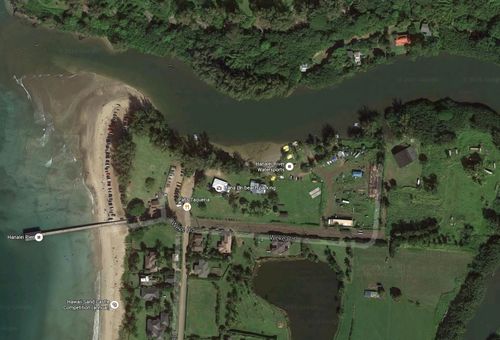
In a case we’ve been following in which the County of Kauai is condemning several Hanalei-area parcels to expand an adjacent public beach park, the Hawaii Supreme Court has accepted certiorari and agreed to review these three questions:

QUESTION NO. 1.: Must two parcels physically abut in order for the jury to consider whether they are part of a larger parcel?

QUESTION NO. 2: Where there are multiple properties being condemned from different owners, does statutory interest on a conditional deposit only accrue after each condemnee establishes an entitlement to its portion of the deposit?

QUESTION NO. 3: Does Haw.Rev.Stat. § 101-19 enable a condemnor to withdraw a portion of its estimate of just compensation after deposit with the Court and after taking possession of the property?

We filed an amici brief on Question 1, arguing that “[t]wo parcels need not abut in order for an eminent domain jury

Continue Reading HAWSCT Agrees To Review Eminent Domain Case: Larger Parcel, Interest, And Reducing The Deposit

carmanhouse

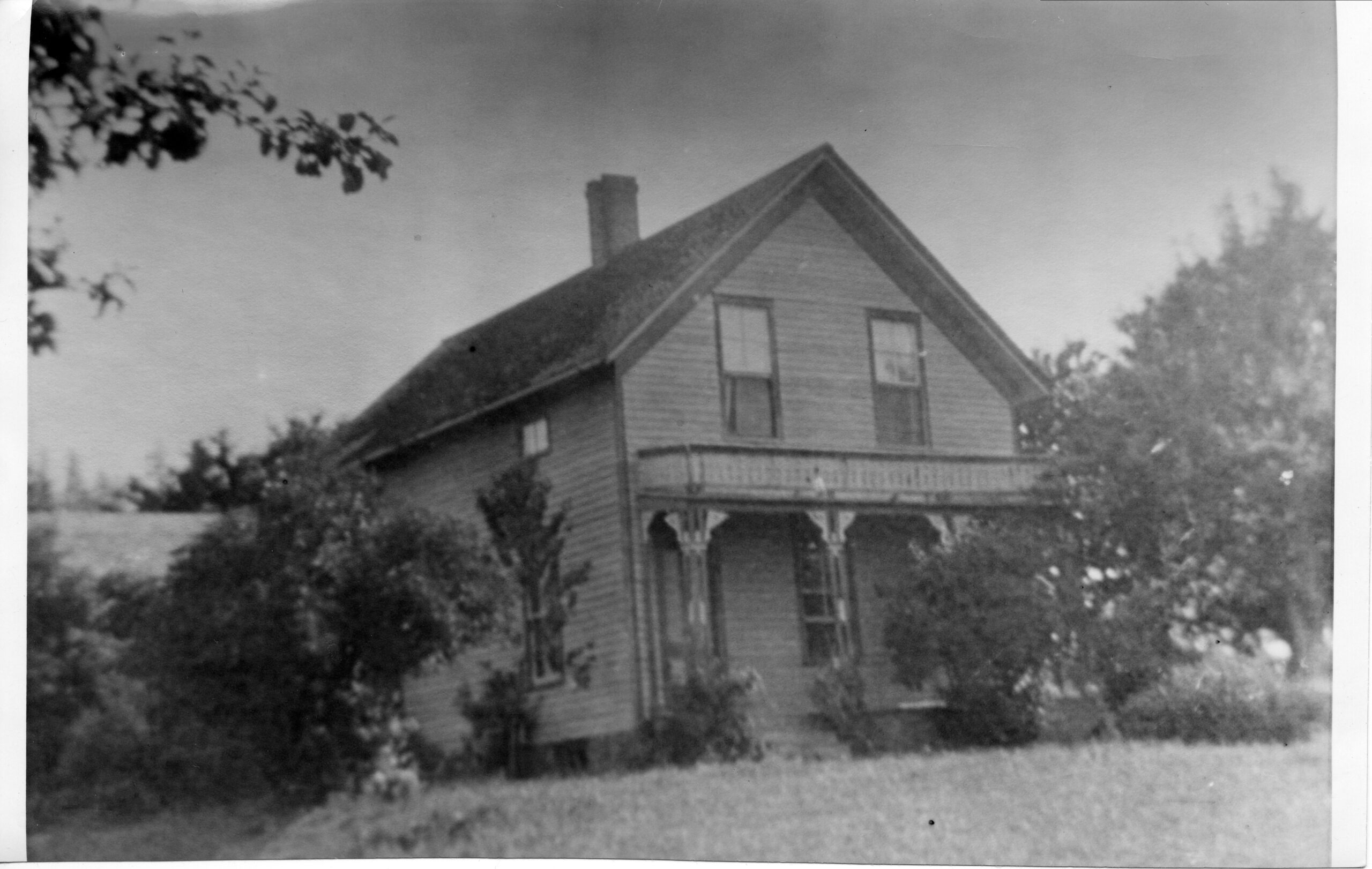
Come on, you can admit it: reading judicial opinions about grammar rules and legislative history is about as exciting as watching paint dry. Or maybe it is more appropriate in this case to talk about old paint peeling. Because the Oregon Supreme Court’s opinion in Lake Oswego Preservation Society v. City of Lake Oswego, No. S063048 (Aug. 4, 2016) is about historic preservation, and we get grammar lessons and lege history in spades. 

The issue in the case was “If a local historic designation is imposed on a property and that property is then conveyed to another owner, may the successor remove that designation under ORS 197.772(3)?” Slip op. at 117. Short answer: no.

The property in question was a “rare and valuable example of a territorial Oregon residence” and the surrounding parcel, and in the 1980’s the property caught the eye of the local preservationists. The

Continue Reading Oregon: Owner’s Right To Remove Historic Designation Vanishes When Property Transferred

You may call us anti-Holmesian, but we’re wary of any judicial opinion that has “clear and present danger” as its standard of review. Like “shouting fire in a crowded theater,” this legal meme gives more heat than light in our estimation, and doesn’t really tell you much.

But the phrase was at the heart of the Ninth Circuit’s opinion in Democratic Party of Hawaii v. Nago, No. 13-17545 (Aug. 15, 2016), issued today in the case in which the DPH challenged Hawaii’s “open primary” election.  

We’ve been following the case since its inception, and won’t go into the background and details again except to say that Hawaii is really, really blue, and the goal of the lawsuit was to exclude those who have not sworn allegiance to The Party from the only election that truly matters in our one-party state, the Democratic Party Primary. As

Continue Reading In The Bluest Of Blue States, 9th Circuit Rebuffs (For Now) Attempt To Bar Republican Voters From The Only Election That Matters

This just in, in a case we’ve been following closely.

In City of Perris v. Stemper, No. S2133468 (Aug. 15, 2016), the California Supreme Court held that the judge, and not the jury, determines the validity of a dedication which a condemnor asserts it would impose to get the condemned property “for free” if the owner ever asked it to develop the property to its highest and best use. The case involves whether the city can avoid paying just compensation by showing that it would, in the future, exact from the owners the very same property which the city is condemning. The only way the city wouldn’t require dedication of this property is if the owner continued to use it for agricultural purposes. The second issue which the court considered was the “project influence” rule, and whether the city’s dedication requirement must be ignored in determining just compensation.  

Continue Reading California Supreme Court: In Just Comp Trial, Judge, Not Jury, Determines Reasonable Probability Of Nollan-Dolan Exaction

2016 BrighamKanner Property Rights Conference Program_Page_01

As we mentioned a few weeks ago, the final agenda for the 2016 Brigham-Kanner Property Rights Conference has been released. Here’s the complete conference brochure, which has all the details, including registration information. 

This is the annual program, sponsored by the William and Mary Law School, in which there’s a day-long discussion of all things property rights among members of the academy, the bench, and the practicing bar. The Brigham-Kanner Prize is also presented “to an individual whose work has advanced the cause of property rights and has contributed to the overall awareness of the important role property rights occupy in the broader scheme of individual liberty.” The pantheon of prizewinners is a who’s-who in our area of law: Richard Epstein, James Ely, Michael Berger, Frank Michelman, Carol Rose, and Thomas Merrill, to name a few. Here’s the complete list of prizewinners

This year, the prize is being

Continue Reading Property Rights Take Center Stage At The World Court: 2016 Brigham-Kanner Conference, October 19-21, 2016, The Hague