2016

We’re meeting some deadlines today, so we don’t have much time to digest in detail the closely split decision by the Pennsylvania Commonwealth Court in In re Condemnation by Sunoco Pipeline, L.P., No. 1979 C.D. 2015 (July 14, 2016). 

The short story is that the majority upheld the power of Sunoco to take private property for a natural gas pipeline against challenges that Sunoco lacked the power to condemn, was not a public PUC-regulated utility, and that the pipeline is interstate and not intrastate. 

The court rejected the property owners’ arguments that Sunoco’s pipeline is interstate, and because the Pa PUC can only regulate intrastate commerce, the pipeline takings are not for public use. Yes, the pipeline itself goes through Ohio and West Virginia, in addition to Pennsylvania, but originally, there were no Pennsylvania “offramps” on the pipeline, and Sunoco’s plans initially were for interstate service only. But after

Continue Reading The Polar Vortex Made Us Do It: Pa Appeals Court Approves Pipeline Taking

We were all set to post our thoughts on the Illinois Supreme Court’s recent opinion in Hampton v. Metropolitan Water Reclamation District of Greater Chicago, No. 119861 (July 8, 2016), when we were beaten to the punch by Erin Baker, an associate of our colleague (and fellow U. Hawaii law alum) Julie Tappendorf. They posted “Illinois Supreme Court Addresses Takings Clause in Temporary Flooding Case” on their firm’s Municipal Minute blog.

She has all the details, and we recommend you read the post.

Short story is that land was flooded temporarily, allegedly by the Water District to avoid flooding at O’Hare airport, and the plaintiffs brought a claim for a taking under the Illinois Constitution. Since 1948, Illinois has had a judicially-created rule that temporary flooding cannot be a taking. But as we all know, the U.S. Supreme Court recently held that just because

Continue Reading Illinois Supreme Court: Temporary Flooding Can Be A Taking, But There’s No Bright Lines In Flood Takings Cases

For those of you who have always wanted a career in appellate law, or who have mused about pulling up stakes and practicing law in the rarefied air of Hawaii’s appellate courtrooms, here’s your chance:

The Appellate Division of the Hawaii Department of the Attorney General seeks to fill two vacancies for Deputy Solicitors General. The position provides a unique opportunity to specialize in civil and criminal appeals, many involving constitutional issues. Applicants must be licensed in Hawaii and possess strong analytical, research, and writing skills. Please send resume (including law school GPA and rank), writing sample, and completed Application for Deputy Attorney General (download from http://ag.hawaii.gov/employment/), postmarked by July 15, 2016:

Department of the Attorney General
Appellate Division
425 Queen Street
Honolulu, Hawaii  96813
Tel: (808) 586-1360

Come on, live the dream!Continue Reading Live The Dream, Appellate Master: Job Opening

Arlington

Here’s the amici brief we filed today in a fascinating case we told you about recently

The core issue in Brott v. United States, No. 16-1466, which is currently being briefed in the Sixth Circuit, is whether plaintiffs who allege the United States took their property in a rails-to-trails case can only bring their lawsuit for just compensation in the Court of Federal Claims. They filed suit in a U.S. District Court, and the case was dismissed for lack of jurisdiction.  

Our brief, filed on behalf of the National Association of Reversionary Property Owners, the Property Rights Foundation of America, the Pioneer Institute, and Professor Shelley Ross Saxer, supports the property owners’ arguments that they are entitled to file the case in an Article III court. The owners’ brief covers the issues very well, and we didn’t repeat their arguments.

Rather, we covered a somewhat forgotten decision

Continue Reading Amici Brief: “the hallmark of our American system is that we do not have kings lording over us who must first consent before they can be sued in their own courts.”

2010-06-08 13.10.15

In today’s per curiam opinion in Wiesenberg v. University of Hawaii, No. SCWC-15-0000711 (June 30, 2016), the Hawaii Supreme Court clarified a point of appellate procedure that has been unnecessarily vague — and therefore dangerous — for a while: whether a trial court’s entry of an amended judgment, entered after the filing of a post-judgment order, resets the time for an appellant to file her notice of appeal. The Supreme Court was reviewing an order by the Intermediate Court of Appeals dismissing an appeal for lack of jurisdiction because the appellant missed the filing deadline.

If, like us, you rejoice in these type of issues, read on. 

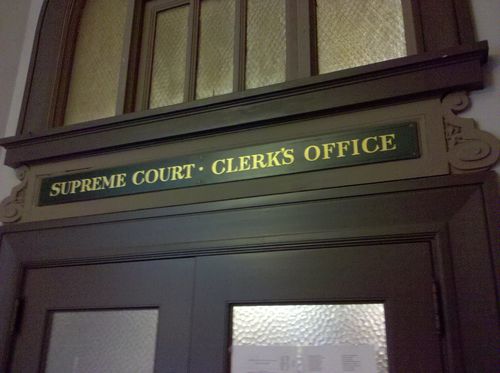
Like we’ve said before, jurisdictional deadlines like notices of appeal are the kind of things that keep we lawyers awake at night. In the past, appellate filing deadlines caused you at times to have to sprint down to the Appellate Clerk’s office

Continue Reading HAWSCT Clarifies When An Amended Trial Court Judgment Restarts The Appeal Window

Wilson-road

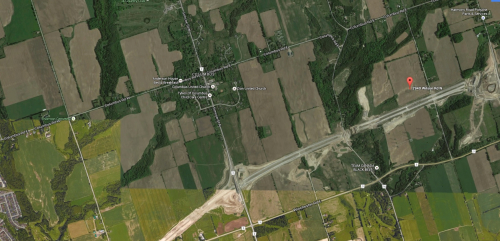
With apologies to Professor Kanner (who regularly features a “Lowball Watch” on his blog), we offer this report of Down v. Ministry of Transportation, No. LC140038 (May 12, 2016), a trial-level property owner victory by our Toronto colleague Shane Rayman (last seen in the pages of this blog winning a great case in the Supreme Court of Canada). We’ve been meaning to post the decision for a while, but got caught up in other things. We probably should have waited at least another couple of days for Canada Day, but oh well.

But before we get into today’s case, we want to digress a bit with this bit of Canadiana. Or at least our one story about that True North strong and free, that played into every one of our preconceptions.

Many years ago, while living in New York City, we got the bright idea one dark

Continue Reading Lowball Watch: That’s A Lot Of Bucks, Even If They’re Canadian Dollars

IMG_4369

Here’s one we’ve been waiting for, but had been hoping for a better result.

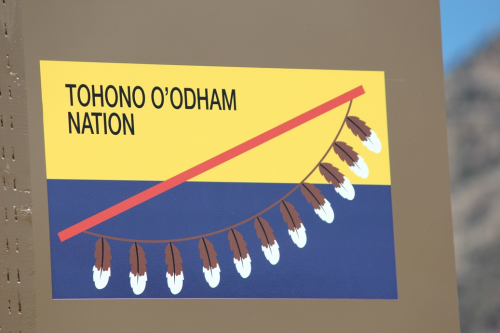
In Resource Investments, Inc. v. United States, No. 15-802 (cert. petition filed Dec. 16, 2015), the U.S. Supreme Court was being asked to consider the issue it left open after United States v. Tohono O’odham Nation, 131 S. Ct. 1723 (2011), whether takings claims must be excepted from the rule in Tohono that the Court of Federal Claims is deprived of jurisdiction in any case which is based on the same operative facts “pending in any other court any suit or process.”

Tohono was not a takings case, but rather a non-takings claim for damages. The Supreme Court upheld the dismissal of the claim by the CFC on jurisdictional grounds, because the at the time the Nation filed its CFC complaint against the United States for money damages, the District Court was considering the Nation’s

Continue Reading SCOTUS Denies Cert In Last Hanging Takings Case – Tohono’s Jurisdictional Ambush Remains Lurking

Here’s the latest in a case we’ve been following, and that could be hugely important. This is a case about federal court jurisdiction and takings claims against the federal government.

We reported on the of Brott v. United States when it commenced: it’s a rails-to-trails takings case, so it would be understandable if you thought this was going to be another one of those dry posts about Court of Federal Claims and Federal Circuit jurisdiction. But it isn’t.

Because, you see, our colleague Thor Hearne and his team brought the case in the United States District Court for the Western District of Michigan, where the property is located. But wait, you say, they can’t do that, because they are seeking more than $10,000 in just compensation, and that means the CFC, an Article I court, has exclusive jurisdiction over the complaint.

Or does it? Not according to this brief,

Continue Reading “Juridical Garlic,” The Takings Clause, And Magna Carta: Sixth Circuit To Consider Jury Right And Article III Courts For Federal Reg Takings Claims

Free CLE credit, and a free lunch — who can top that?

Join two experts, U. Hawaii Law School Dean Avi Soifer, and Professor John Eastman (Chapman Law, and former clerk to Justice Clarence Thomas), in downtown Honolulu, tomorrow, Tuesday, June 28, 2016, for “United States Supreme Court Review – October 2015 Term.”

Among the topics they will be discussing are the big immigration, union dues, affirmative action, and Clean Water Act cases decided by the Court. 

Details:

Date: Tuesday, June 28, 2016
Time: 11:30 a.m.
Location: the offices of Carlsmith Ball, 1001 Bishop Street
RSVP: fedsochawaii@gmail.com

And did we mention a free credit of CLE (and lunch)? 

Hawaii Lawyers’ Chapter, Federalist Society: U.S. Supreme Court Review October 2015 Term (June 28, 2016) 

Continue Reading Tomorrow, June 28, 2016, Downtown Honolulu: U.S. Supreme Court Term In Review

The power company needed an easement across Hylton’s land for a transmission line. It made him an offer, backed by an appraisal. But that appraisal didn’t account for Hylton’s mineral rights, although it acknowledged that the property did contain two coal deposits, at least according to Hylton.

The parties “signed an agreement granting [the utility] the right to enter Hylton’s property and construct the transmission line.” But the following month, the utility filed an eminent domain action to condemn the easement, which alleged that it had fulfilled its “statutory obligation” and made a “bona fide offer to purchase,” one of the prerequisites to its filing of the condemnation action.  

Not quite, countered Hylton. The offer wasn’t sufficient — those coal deposits were rendered worthless as a result of the taking — so the offer which was based on an appraisal which didn’t account for the mineral rights wasn’t “bona

Continue Reading Virginia: An Unacceptably Low Offer Of Compensation Is Still A “Bona Fide” Offer