2016

Today’s post is by colleague William Wade, an economist in Nashville, Tennessee, who has thought a lot — and written extensively — about the just compensation and damages available in inverse condemnation and regulatory takings cases.

He provides his thoughts on a recent trial court decision in a closely-watched Texas water case, in which the appellate court earlier applied the Penn Central test to find liability, resulting in a remand to determine just compensation. As the title reveals, Bill takes issue with the way the issues were framed, and the conclusions the court reached. You may or may not agree with his conclusions, but Bill always considers these issues deeply, and his writings are always thought-provoking.  

Find him online at energyandwatereconomics.com

Bragg:  Wrong Question, Wrong Result in Texas to the Detriment of Sustainable Water Supply

by William W. Wade, Ph. D.[1]

Earlier in March, the Medina County Texas
Continue Reading Guest Post: Bragg – Wrong Question, Wrong Result In Texas, To The Detriment Of Sustainable Water Supply

20160131_103348

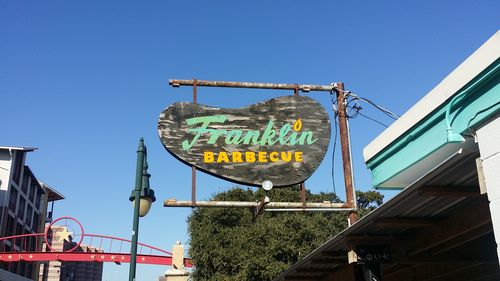
The photo above has pretty much nothing to do with today’s case, except it also involves a Texas barbecue joint. More on the photo after a short review of the Texas Court of Appeals’ decision in Lenox Barbeque and Catering, Inc. v. Metro. Transit Authority of Harris Cnty., No. 14-14-00383-CV (Feb. 23, 2016).

Lenox Barbeque, a “Houston landmark” according to its owner” (stickler’s note: landmark it may be, but we don’t care for that spelling of “barbecue”) sued the Transit Authority for inverse condemnation for lost profits resulting from the authority’s earlier exercise of eminent domain to take a portion of land Lenox owned for a road widening project. That earlier condemnation action resulted in a settlement between the Authority and Lenox under which Lenox got approximately $600 grand for its land and costs, and resulted in a partial demolition and reconstruction of the barbecue’s building. Lenox

Continue Reading Eminent Domain, Inverse Condemnation, And Texas Barbecue: Selling Property To Transit Authority Precluded Later Inverse Condemnation Claim For Lost Profits

One from the California Court of Appeal that may be interesting even though it is about municipal law, and not eminent domain or takings.

We present to you San Diegans for Open Gov’t v. City of San Diego, No. D067578 (Mar. 3, 2016, published Mar. 16, 2016), because the court concluded that an appraiser, hired by a tenant to value property leased from the city, was an “independent fee appraiser” as required by the city’s municipal code.

The code requires that when the city leases property it owns, an “independent fee appraiser” must value the property. BH, which owns and operates the Bahia Resort Hotel on city-owned land, wanted to extend its lease for another 40 years. The city council approved, and BH hired an appraiser to value the property. The city didn’t do its own appraisal, but the director of the city’s real estate assets division stated that

Continue Reading Appraiser Is “Independent” Even Where One Side Is Paying Him

The U.S. Court of Appeals for the D.C. Circuit doesn’t handle too many takings, eminent domain, or property rights related cases. But after today’s announcement that the Chief Judge of the Circuit was nominated for the vacant spot on the U.S. Supreme Court, we did a search through the legal databases anyhow, just in case we missed any.

The search came up empty, with nothing of interest to report decided by the nominee in those areas, or in the land use or due process context. So we can’t really make a solid, supported-by-his-prior-decisions prediction on how he’d rule on those issues if he is confirmed. But really, we kind of know, don’t we? 

Maybe as others have written, he’s the best we can expect

Our guess is that he’s a stalking horse, and that the real goal is Nominee #2, a much younger, much less “centrist” pick.

We are Continue Reading No Property Rights Intel On The New SCOTUS Nominee

We usually don’t cover decisions under California’s Environmental Quality Act. You could spend your entire legal career doing these kind of cases, and there are other forums which ably follow CEQA

But we had to make a mention of the California Court of Appeal’s recent opinion in Preserve Poway v. City of Poway, No. D066635 (Mar. 9, 2016), which concluded that a property owner’s transformation of his land from a horse boarding facility to 12 residences did not implicate CEQA, because it shows just how far these “environmental” arguments can go.  

The owner of the “Stock Farm,” a horse boarding facility, wanted to close it. In its place? Twelve homes on one-acre lots. This is Poway, (“The City in the Country“), so the homes would have “enough room for horses.” Apparently, there is no shortage of horse boarding facilities in the area. All

Continue Reading Reverse NIMBY? Allowing Horse Boarding Facility To Close Isn’t An “Environmental” Issue

No real surprise here: in Southeast Arkansas Hospice, Inc. v. Burwell, No. 15-1946 (Mar. 10, 2016), the U.S. Court of Appeals held that the statutory cap on Medicare reimbursements for hospice care isn’t a taking of the excess over a facility’s actual costs, because the facility voluntarily opted-in to the program:

SEARK has not met its burden to prove the demands for repayment based on the statutory cap are a taking. First, the reimbursement cap allocates the government’s capacity to subsidize healthcare. See H.R. Rep. 98-333, at 1 (1983), reprinted in 1983 U.S.C.C.A.N. 1043, 1043-44 (“The intent of the cap was to ensure that payments for hospice care would not exceed what would have been expended by Medicare if the patient had been treated in a conventional setting.”). Second, SEARK presented no evidence to suggest the cap makes it impossible “to profitably engage in their business.” Keystone Bituminous Coal

Continue Reading 8th Circuit: Medicare Reimbursement Cap Isn’t A Taking

IMG_0459

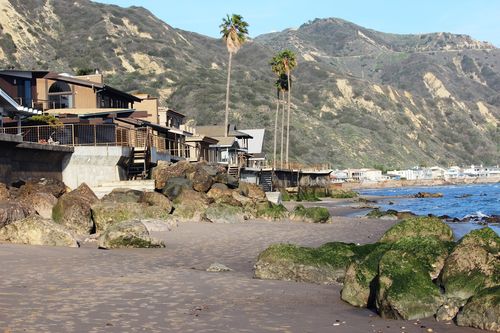
The Nollans own a beachfront lot in Ventura County, California. A quarter-mile north of their property is Faria County Park, an oceanside public park with a public beach and recreation area. Another public beach area, known locally as “the Cove,” lies 1,800 feet south of their lot. A concrete seawall approximately eight feet high separates the beach portion of the Nollans’ property from the rest of the lot. The historic mean high tide line determines the lot’s oceanside boundary.

Nollan v. California Coastal Comm’n, 483 U.S. 825 (1987)

From time-to-time, and when we’re in the neighborhood, we like to drop by the sites of familiar (and famous) takings and land use cases. Like Kaiser Aetna (in our own backyard), Dolan, and PruneYard. We’ve been there, done that. 

So there we were in Central California (Ventura County to be exact), and we’re driving up the coastal highway when

Continue Reading Another Takings Pilgrimage (Unconstitutional Conditions Technically, But Close Enough)

Read this: “The Accidental Abstention Doctrine: After Thirty Years, the Case for Diverting Federal Takings Claims to State Court Under Williamson County Has Yet to Be Made,” by R.S. Radford and Jennifer Fry Thompson, published in the most recent edition of the Baylor Law Review.  

If the title weren’t enough to tell you what this article is about, here’s a summary:

The Supreme Court has never directly reviewed the question of whether, as a general matter, abstention is required or even appropriate in Fifth Amendment takings cases. Yet in a seemingly unrelated decision handed down more than a decade after Williamson County, the Court held that dismissing such cases would be improper under its express abstention doctrines. The Court has thus created a doctrinal paradox: couched in terms of “ripeness,” Williamson County in fact created a de facto abstention doctrine that applies under circumstances in

Continue Reading Today’s Must Read: “The Accidental Abstention Doctrine: After Thirty Years, the Case for Diverting Federal Takings Claims to State Court Under Williamson County Has Yet to Be Made”

The roof collapsed and damaged the building. In the view of the City, that created an immediate danger so it demolished it. But the building owners had plans to fix it up, and claimed the demolition was a taking. Trial court said no, the Connecticut Appellate Court affirmed:

On the basis of our review of the record, we conclude that the court properly determined, in light of the circumstances shown by the evidence presented at trial, that demolition of the plaintiff’s building pursuant to the defendant’s police power did not amount to a taking. Lawson, Sr., testified that he purchased the subject property for $65,000 in August, 2009, with a goal of renting out eighteen apartment units. At the time of trial, the plaintiff still owned the subject property. There was no testimony or other evidence indicating that ‘‘no reasonable use may be made of the [subject] property’’; (internal quotation marks

Continue Reading Emergency Demolition Of Damaged Building Not A Taking

The land use and zoning game can be pretty strange to the uninitiated. If that description includes you, here’s your chance to get initiated. The American Planning Association is sponsoring a webinar about “Rules of the Game: A Framework for Fair and Effective Zoning Hearings,” on Monday, March 7, 2016. Here’s the description:

This webinar will cover the legal requirements for public hearings, including constitutional due process considerations, and provide tips on how to more effectively manage these hearings.

Details here. Thanks to colleague Evan Seeman at RLUIPA Defense blog for the heads up.  Continue Reading Upcoming Webinar: Playing The Zoning Game