May 2017

The Florida Supreme Court’s opinion in Hardee County v. FINR, II, Inc., No. SC1501260 (May 25, 2017), is pretty Florida-specific, because it involves the interpretation of that state’s Bert Harris Act (something we wish we had in our arsenal), but there are lessons in the case that make it worth reading — it’s pretty short — for the rest of us. 

The facts are straightforward: FINR (a “neurological rehabilitation center”) applied for, and the County approved, a “Rural Center” land designation for FINR’s land, which normally would have resulted in a quarter-mile setback on adjacent properties. The County, however, granted an adjacent phosphate mining company an exception which shrank the setback to as little as 150 feet. FINR sued the County under the Bert Harris Act for the loss in value of its property as a neurological rehab center. 

The trial court concluded that since the County wasn’t

Continue Reading Florida: To State A Claim Under The Bert Harris Act, It Must Be The Plaintiff’s Property Being Overregulated

Here’s the amici curiae brief we filed today on behalf of Owners’ Counsel of America, NFIB Small Business Legal Center, Cato Institute, and Professor David Callies in support of a cert petition which we detailed here.

The case is a regulatory takings claim, and involves wet and dry sand beaches, public trust, and other favorite topics. The case arose because the N.C. Legislature by statute moved the “public trust” shoreline landward, and allowed the public to use what had formerly been private beach.  

Here’s the Summary of Argument from our brief:

The North Carolina Court of Appeals permitted the Town of Emerald Isle (Town) to impress into public service the portion of the Nies family’s property above the mean high water mark as a road and park. North Carolina law has never subjected this dry sand to public ownership, through the public trust doctrine or otherwise.

Continue Reading SCOTUS Amicus Brief: States May Be Able To Rewrite Property Law, But They Can’t Avoid Paying For The Change

IMG_20170526_144554

Welcome to a new entry in the eminent domain and takings blogosphere, Texas colleague Clint Schumacher‘s Eminent Domain Podcast. Yes, you don’t have to read to get your takings updates, you can listen while you work, while you work out, or while you drive or fly. Go here to subscribe or download episodes via his website, or here for iTunes.

Clint has formatted his program very cleverly, with an Opening Statement, Direct Examination (in-depth discussion of the topics), Cross-Examination (a “lightning round” quick-question-and-answwers), and Closing Arguments.

He was kind enough to ask me to be his inaugural guest, and we spent some quality time discussing the Honolulu rail project, recent interesting cases, the “three unities” test, the annual ALI-CLE Eminent Domain Conference, and … Kevin Bacon. Don’t miss that.

Click here to open this first episode in a new window

Clint and his firm also produce

Continue Reading Clint Schumacher’s New Eminent Domain Podcast

Here’s the latest in a case we’ve been tracking, the City of Missoula, Montana’s takeover of a privately-owned water system. Last year, the Montana Supreme Court held that the city could exercise its power of eminent domain to take the property for a “more necessary” public use. The court allowed the city to take the company, and on remand, the lower court determined compensation. But the case is not yet final, and the final order of condemnation has not issue. Which means that title and possession still remain with the water company and not the city.

The follow up, Mountain Water Co. v. Montana, No. 16-0469 (May 16, 2017), involves the question of who is responsible for paying property taxes. After the city instituted the taking, the water company asked the Montana Department of Taxation agree that the company was not liable for the payment of property taxes. The

Continue Reading Who Owes And Who Pays Taxes On Property Being Condemned?

We don’t normally post trial court decisions, particularly ones which simply dismiss a case. But the U.S. District Court for the Eastern District of Pennsylvania’s recent memorandum order in The Property Management Group, Ltd. v. City of Philadelphia, No. 17-1260 (May 23, 2017), which deals in part with a somewhat unusual takings claim, is posted here for two reasons. First, Williamson County. Second, the opening paragraph.  

The case involves Philadelphia’s notorious parking situation, something that — if you have ever parked a car on the street in that city — can be a real exercise in frustration and even fear. Predatory towing, ransoming cars, private spaces, and the like. The city council, apparently responding to towing abuses (see page 2 of the slip opinion, for example), adopted an ordinance which added a “ticket-to-tow requirement” which required that a law enforcement officer first certify that a vehicle

Continue Reading Federal Court Dismisses Removed Takings Claim Under Williamson County … And That’s OK

Seattle

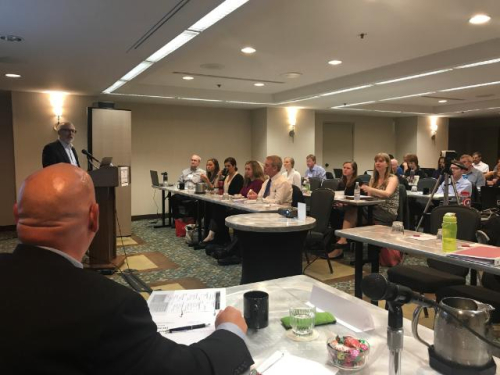
My thanks to Bart Freedman (K&L Gates) and Kinnon Williams (Inslee Best Doezie & Ryder) for asking me to speak on national takings and inverse condemnation issues at yesterday’s Eminent Domain conference in Seattle.

As you can see, the room was packed and standing room only. Here are the cases and issues I mentioned during my talk, “National Takings Trends, Hot Practice Areas, and Property Rights in the Age of Trump:”


Continue Reading Cases And Links From Washington Eminent Domain Conference

Here’s a rundown of the commentary on Bay Point Properties, Inc. v. Mississippi Transportation Commission, No. 16-1077 (cert. petition filed Mar. 3, 2017), a case which seeks review of a decision by the Mississippi Supreme Court. We represent the petitioner.


Continue Reading Commentary On Bay Point: SCOTUS Should Review This Just Comp Case

Kauaipark

Yesterday, the Hawaii Supreme Court issued a unanimous opinion opinion authored by Justice Nakayama in an eminent domain case we’ve been following. We filed an amicus brief in the case supporting the property owner on one of the three issues presented, too. More on that below. 

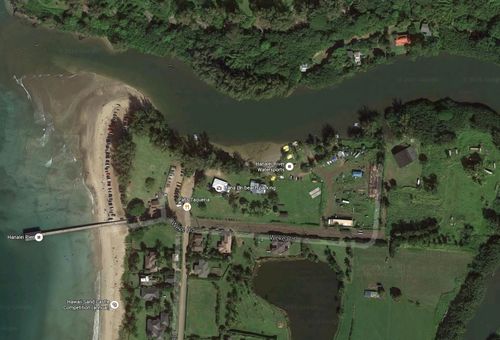
The case involves three parcels on Kauai — one of which is owned by a fellow who has been a thorn in the County’s side — which were condemned by the County for the expansion of a public beach park. The County was taking Parcels 49, 33, and 34. Sheehan owned 49, and HRH, an entity incorporated in the Cook Islands, owned 33 and 34. Sheehan asserted his use of Parcel 49 stretched across 33, 34, and Area 51 — a portion of another Parcel but not a separate record lot. He claimed to use Area 51 pursuant to an easement. 

The owner sought

Continue Reading Hawaii Supreme Court – Major Eminent Domain Opinion: Larger Parcel, Deposit

We’re back in meme territory today, with the Georgia Supreme Court’s opinion in Abramyan v. Georgia, No. No. S17A0004 (May 15, 2017), a case about takings, taxi medallions, and (you guessed it), ridesharing and the “sharing economy.”

After the Georgia legislature adopted a statute that made it easier for ridesharing services to operate by limiting the power of local governments to regulate ridesharing and taxi services, owners of taxi medallions sue, alleging this was a taking of their property, the taxi medallions.

This claim fared as well as similar claims in other courts (see here and here, for example), meaning the trial court dismissed and the Georgia Supreme Court affirmed. No property interest, no taking. 

The court’s opinion, which is short (9 pages of large font type) is a quick read, and the bottom line rationale is that the taxi medallions didn’t give them an “unalterable monopoly” on

Continue Reading Georgia SCT: “You keep using ‘taxi medallion.’ I do not think it means what you think it means!”

Facepalm

We all have had those moments, haven’t we?

Today’s linked story is more land-usey than eminent domain-ey, but still interesting for you condemnation lawyers on the line (besides, condemnation lawyers really do have to know land use law, don’t they?).

Honolulu can is a tough place to be, with our status as one of the most expensive places in the world to live, and the high cost of housing is one of the prime reasons for that. In Honolulu Civil Beat, Stewart Yerton has a story on the legal risks triggered when a City Council member suggested that the council might deny development permits if the permitted condos were sold to Chinese nationals instead of local residents. 

In “Opposition To Foreign Condo Sales Raises Legal Questions,” In addition to national experts on such things like Professor Eugene Volokh, the article quotes us about those times we have

Continue Reading Land Use Facepalm