March 2019

Here’s the cert petition filed recently in yet another case (seeking review of the Eleventh Circuit’s opinion) which challenges a federal court issuing an injunction in a Natural Gas Act taking allowing a private condemnor to obtain immediate possession of the land being condemned, even though the NGA does not delegate to pipeline condemnors the quick-take power. 

You know where we are on this issue. If not, check out our amicus brief which we filed in the Third Circuit which has the details of why we think this is wrong. 

There’s another cert petition on the same issue pending, and another likely coming.

Here’s the Question Presented:

The Court has long emphasized the strict construction of condemnation statutes, especially as against corporate delegates of this sovereign power. By the plain, undisputed terms of the Natural Gas Act, 15 U.S.C. § 717f(h), a pipeline company obtains title and

Continue Reading Another Cert Petition Challenging Quick-Take-By-Injunction In Gas Pipeline Takings
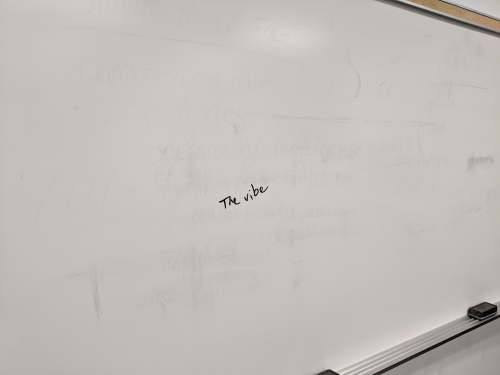

IMG_20190313_211723
After-class graffiti. My students know me too well.

As anyone who follows this blog consistently must understand by now, perhaps our favorite courtroom scene in a law-related movie is The Castle‘s closing argument by Dennis Denuto, Esq.

In summing up, it’s … the [Australian] constitution, it’s Mabo, it’s justice, it’s law, it’s the vibe, and … ah …  no, that’s it, it’s the vibe.

I rest my case.

The “Mabo” case he refers to is the famous decision by the High Court of Australia, Mabo v. Queensland (No. 2), (1992) 175 CLR 1 (1992), in which the court held that Australia was not terra nullius (land owned by no one) when westerners arrived, but that the aboriginal people recognized the concept of property ownership and therefore possessed certain property rights.  

As part of learning about Eminent Domain and Property Rights in William and Mary Law School’s Law

Continue Reading It’s The Vibe Of It: High Court Of Australia Confirms Compensation Due For Loss Of Native Land Title

2wnyt3

Pop quiz: Quick! Name the races in the Triple Crown of horse racing… There’s the Kentucky Derby (check) … the Belmont Stakes (check) … and … oh yeah, the Preakness Stakes. We always almost forget that last one. 

But the City of Baltimore sure hasn’t. Because the home city of Pimlico racetrack and the aforementioned Preakness Stakes has sued the owner of the race and track in eminent domain, to take the race so it doesn’t leave town like the Colts did when they bolted for Indianapolis literally in the middle of the nightFool me twice, says Baltimore … shame on me!

Read that again. Baltimore is trying to condemn a horse race. A freaking horse race. (Before we posted this, we checked our calendar to make sure it wasn’t April 1. Suspected we were getting pranked. Nope. Then we checked with news sources. Found a bunch.

Continue Reading All Your Race Are Belong To Us: Baltimore Is Condemning The Preakness Stakes (We’re Serious)

We’ve been meaning to post the U.S. Court of Appeals for the Eleventh Circuit’s opinion in Hillcrest Property, LLP v. Pasco County, No. 16-14789 (Feb. 13, 2019), mostly because of the provocative way it starts off: 

The question before us is whether a litigant in this Circuit has a substantive-due-process claim under the Due Process Clause of the Fourteenth Amendment when the alleged conduct is the unlawful application of a land-use ordinance. The answer to that question is a resounding “no”—an answer that this Court delivered in McKinney v. Pate, 20 F.3d 1550 (11th Cir. 1994) (en banc), 24 years ago and has reaffirmed ever since. We held in McKinney that executive action never gives rise to a substantive-due-process claim unless it infringes on a fundamental right. A land-use decision is classic executive, rather than legislative, action—action that, at least here, does not implicate a fundamental right under

Continue Reading 11th Cir: The Use Of Land Isn’t A Fundamental Right, Even If “What happened to [the owner] here was pretty doggone s[tink]y.”

IMG_0123

Last week, author Howard Mansfield joined us at the William and Mary Law School for two sessions about his recently-published book, “The Habit of Turning the World Upside Down – Our Belief in Property and the Cost of That Belief.”  His book is about property, property rights, and what he has discovered about how these ideas are processed by the American psyche.

The first session was open to the entire student body, faculty, and public, and the highlight was Mr. Mansfield reading some of his favorite passages from his book. The second session was a student-only chat about some of the themes that he emphasizes. 

If you were not able to join us in-person, listening will be able to give you a sense of why we think this book is a timely rumination on what “property” means, both good and not-so-good. 

If you can’t stream the audio above, Continue Reading Audio: Readings From “The Habit of Turning The World Upside Down”

Here’s the amici brief we signed onto for Owners’ Counsel of America, filed last week in a regulatory takings case we’ve been following.

This brief, one of several filed which urge the Court to review the Federal Circuit’s conclusion there was no taking (despite a Court of Federal Claims verdict that there was), argues that categorical rules are not useful in regulatory takings cases for the most part, and economic realities often mean that a property owner can suffer a taking even if it has not yet realized a positive cash flow from its investment in the property:

But the Federal Circuit has now pronounced a categorical rule—one that arbitrarily insulates government from takings liability no matter how strongly the Penn Central factors might otherwise militate in favor of a takings claimant. Love Terminal Partners, L.P. v. United States, 889 F.3d 1331, 1344 (Fed. Cir. 2018). What

Continue Reading New Amici Brief: Investment, Not Profit, Is What The Takings Clause Recognizes

Header image LUI 2019

Come join us at the 33rd Annual Land Use Institute, in Baltimore, Maryland, April 11-12, 2019.

As the brochure notes:

This Annual Land Use Institute program is designed for attorneys, professional planners, and government officials involved in land use planning, zoning, permitting, property development, conservation and environmental protection, and related litigation. It not only addresses and analyzes the state-of-the-art efforts by government to manage land use and development, but also presents the key issues faced by property owners and developers in obtaining necessary governmental approvals. In addition, the entire approach of the program is to provide practice pointers that give immediate “take home value” by focusing on topics relevant to the average practice of the attendee.

The keynote will be delivered by Dennis Archer, former mayor of Detroit (and former Justice of the Michigan Supreme Court, and former President of the ABA), speaking about “Detroit’s New GM Plant from

Continue Reading 33rd Annual Land Use Institute: Baltimore April 11-12, 2019

Remember Fowler v. Guerin, the decision in which a panel of the Ninth Circuit rebuffed the usual trope that the court isn’t receptive to property owners? In that case, the court concluded that Washington state officials’ failure to return interest that was allegedly skimmed from the plaintiffs’ state-managed retirement accounts was a taking. 

The court rejected the district court’s dismissal for Williamson County ripeness, for 11th Amendment immunity, for RookerFeldman problems, and for being issue precluded.

The part of the Ninth Circuit’s opinion which really stood out to us, however, was its conclusion that the plaintiffs possessed property. The State argued that the Washington appeals court had concluded that the statute in question didn’t require the payment of interest as the plaintiffs argued. Thus, the plaintiffs had no property as defined by Washington law. With no property, no taking.

The Ninth Circuit rejected that argument, concluding instead: 

We rejected a similar argument in Schneider v. California Department of Corrections, 151 F.3d 1194 (9th Cir. 1998). There we observed that “constitutionally protected property rights can—and often do—exist despite statutes . . . that appear to deny their existence.” Id. at 1199. Citing the Supreme Court’s opinion in Phillips, we noted that “a State may not sidestep the Takings Clause by disavowing traditional property interests long recognized under state law.” Id. at 1200 (quoting 524 U.S. at 167). We then held that there is “a ‘core’ notion of constitutionally protected property into which state regulation simply may not intrude without prompting Takings Clause scrutiny.” Id. This “core” is “defined by reference to traditional ‘background principles’ of property law.” Id. at 1201. In that case, we concluded that interest income earned on an interest-bearing account falls within this class of fundamental property rights. Id.

We now clarify that the core property right recognized in Schneider covers interest earned daily, even if payable less frequently. The rule that interest accrues de die in diem—“from day to day”—has an impressive common law pedigree, see, e.g., Wilson v. Harman, 2 Ves. Sen. 672, 672, 27 Eng. Rep. 189, 189, and has been widely adopted by American courts, see, e.g., Mann v. Anderson, 32 S.E. 870, 871 (Ga. 1899); Owens v. Graetzel, 126 A. 224, 227 (Md. 1924); Clapp v. Astor, 2 Edw. Ch. 379, 384 (N.Y. Ch. 1834); In re Flickwir’s Estate, 20 A. 518 (Penn. 1890). Indeed, in the state-court proceedings, DRS did not dispute that “at common law, interest was deemed to accrue daily, regardless of when it was payable.” Probst, 271 P.3d at 970 n.6 (citing 32 Halsbury’s Laws of England § 127, p. 78 (4th ed. 2005)). Because the right to daily interest is deeply ingrained in our common law tradition, this property interest is protected by the Takings Clause regardless of whether a state legislature purports to authorize a state officer to abrogate the common law. See Schneider, 151 F.3d at 1201.

We hold that the Teachers state a takings claim for daily interest withheld by DRS.

Slip op. at 10-11. 

Short version: certain “core” or “fundamental” attributes of property (sticks for those of you who like the bundle metaphor) are not completely dependent on state law, and thus cannot be defined out of existence by the state without just compensation. We’ve made that same point in several briefs over the years, including this one. The panel held that daily interest is one of those core (federal?) property rights.

The state asked for panel rehearing and rehearing en banc, in this order, the court denied it.

But two judges dissented from the denial of en banc review. First, Judge Bennett stood alone on the grounds that the injunction to order Washington officials to stop withholding interest was really a backdoor way of getting damages for which a state cannot be sued in a federal court under the Eleventh Amendment. If that issue floats your boat, check out pages 8-13 of the dissent. 

But in his dissent on the property issue, Judge Bennett was joined by Judge Ryan Nelson — both recent Trump nominees — and concluded that the panel’s holding that the “Plaintiffs have a constitutionally protected property interest in daily interest earnings, notwithstanding clear state law to the contrary,” is “unprecedented.” Dissent at 13-14 (footnote omitted). The dissenters further noted that “[i]t is an odd constitutional right the panel creates.” Id. at 14 n.3. 

States, these judges would have held, are free to define and redefine property interests: “It may be that interest de die in diem was the default at common law, but states are free to modify common law default rules, and the panel never explains why this rule is any different.” Dissent at 17. State law, and state law alone, defines property they concluded, and the legislature is free to modify state law, even to the point of eliminating the right entirely. Id. at 18. See also id. at 19 (“And the fact that no court has, before now, held that state governments cannot modify the daily interest rule when they hold cash strongly suggests that the rule is not so deeply ingrained in our tradition that states may not modify it without running afoul of the Takings Clause.”).

The dissent concluded:

Nor should we as a court create a property right to daily interest when nothing in the precedents of the Supreme Court or this court have ever even suggested that when a state awards interest, it must do so daily. The effects of the panel’s novel holding will be felt around the country in the form of legal challenges to state and federal retirement plans that similarly award interest less frequently than daily. We should have taken this case en banc to correct our errors.

Dissent at 21. 

Will there be a cert petition by the State of Washington? Seems likely, and Judges Bennett and Nelson have already written it. 

Order (denying en banc rehearing), Fowler v. Guerin, 16-35052 (9th Cir. Mar. 13, 2019)

Continue Reading Ninth Circuit Denies En Banc Review In Case Upholding “Core” And “Fundamental” Property Rights, But Two Trump Judges Dissent

Here’s the cert petition we’ve been waiting to drop.

If you follow this blog, you know we are all over the issue of the quick-take-by-injunction scheme that private condemnors have cooked up, and which a majority of federal courts go along with. 

Here’s the issue: can a private condemnor exercising the delegated eminent domain power under the Natural Gas Act may obtain prejudgment possession of the property to be condemned by way of a preliminary injunction, when Congress has not delegated the ability to obtain prejudgment possession? 

Knowing nothing else, you might think the obvious answer was “no.” When Congress doesn’t delegate the power to obtain prejudgment possession, the courts can’t grant prejudgment possession. But a host of federal appeals courts have held otherwise. Recently, the Fourth, Sixth, and Eleventh Circuits have joined the Third Circuit in allowing a NGA condemnor to obtain prejudgment possession of property, even

Continue Reading New Cert Petition: No “Take-First-Pay-Later” In Natural Gas Act Condemnations

It’s easy when legal cannabis or medical marijuana is involved to make a joke.

But (for now) we’ll resist that temptation and simply tell you about a webinar our colleagues at the American Planning Association are putting on about our favorite thing … Land use law. (What did you think we might say?)

Thursday, March 21, 2019 from 2:00 – 3:30pm, ET is where you want to be:

This webinar will explore how various land use and natural resource regulations shape the development of the legal cannabis industry. The scope of the conversation will range from regulatory options municipalities may consider as the legal cannabis industry develops to how individual businesses are fostered or stifled as a result of certain regulations. One goal of this webinar is to help practitioners identify key cannabis industry issues they should consider in working with either government officials or business owners.

More information including

Continue Reading Upcoming Webinar: How Land Use and Natural Resource Regulations are Shaping the Legal Cannabis Industry