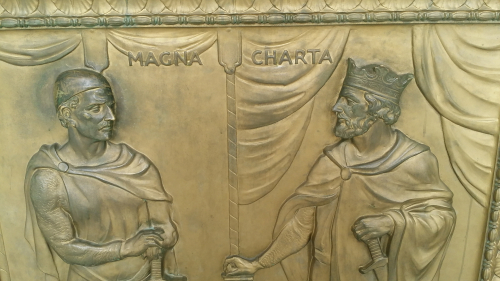
Yes, this is detail from the Supreme Court’s front door.
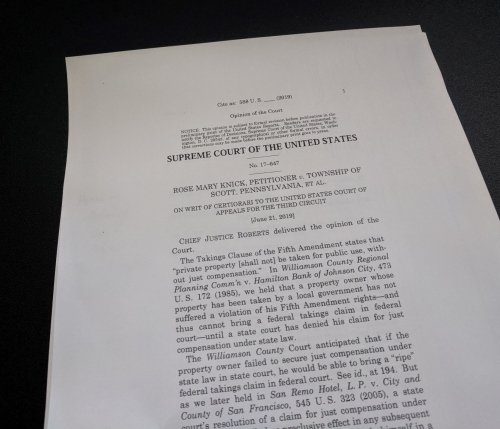
This is the first in what will be a short series of five posts with thoughts on the landmark decision in Knick. In this installment, a crash course in the extensive doctrinal background necessary to understand why the Knick Court did what it did. Here are the related posts:
- Part II: The Court Finds A Vehicle In A Zombie-Zoning Case
- Part III: What It Means To “Take” Property Without Compensation
- Part IV: Why Not Let Sleeping Dogs Lie? The Dissent and Stare Decisis
- Part V: What’s Next?
* * * *
The opinions in last week’s ruling by a sharply-divided Supreme Court, Knick v. Township of Scott, No. 17-647 (June 21, 2019) employed a lot of very evocative language: “aborning,” “Catch-22,” “loot,” “shaky,” “sue me,” “overthrows,” “smashes,” “smithereens” “first crack,” “points for creativity.” But ultimately, the most important