2019

The recent opinion of the Texas Court of Appeals (First District) in University of Houston v. Jim Olive Photography, No. 01-18-00534 (June 11, 2019) addressed a fascinating (and still unsolved) question: does intellectual property qualify as “property” for purposes of the takings clause? 

The court held “no,” but that answer isn’t definitive.  

The facts of the case are pretty simple: Jim Olive took a photograph which — shame on them — the University used on its website without compensating Mr. Olive. He sued the University in a Texas state court for taking his intellectual property, seeking compensation. 

If your first instinct was to say this looks like copyright infringement, you’d be right. Problem is, copyright claims are brought in federal court. But state cannot be sued for damages there. And copyright claims are “tort-y” which means that if a copyright holder sues the state government for damages in state

Continue Reading Public University’s Rip-Off Of Photograph Is Copyright Infringement, Not A Taking
In Cranston Police Retirees Action Committee v. City of Cranston, No. 2017-36 (June 3, 2019), the Rhode Island Supreme Court concluded that a municipal ordinance “the promulgated a ten-year suspension of the cost-of-living-adjustment (COLA) benefit for retirees of the Cranston Police Department and Cranston Fire Department who were enrolled in the City of Cranston’s pension plan” was not a taking of the pension plans’ members property.

Takings mavens should skip to page 27 of the opinion for the good stuff. First, the court assumed that the plan members possessed “property.” A COLA benefit, once vested, is property, and the parties did not challenge the trial court’s conclusion on that issue. Second, the court rejected the contention that the suspension of COLA benefits was a physical invasion or a Lucas economic wipeout. Slip op. at 30-31. This was a regulatory taking, analyzed under Penn Central‘s three-part ad hoc test.

Continue Reading RI: Ten-Year Suspension Of Pension’s COLA Adjustment Not A Penn Central Taking

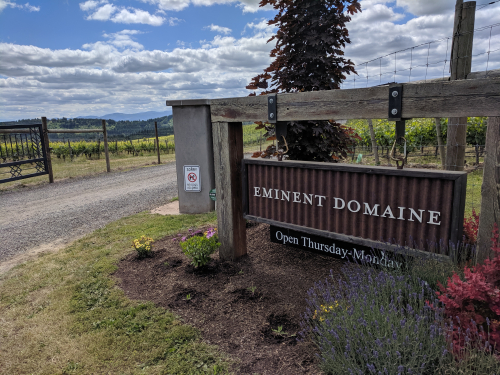
IMG_20190608_141839_1

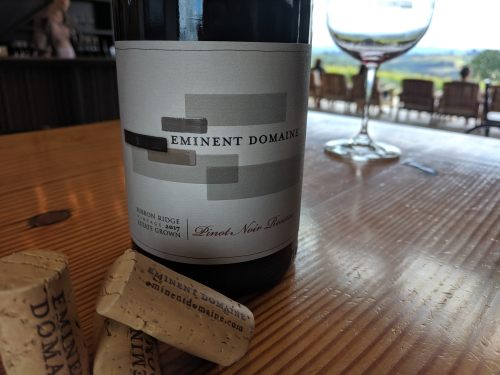
The title of this post isn’t poetic or figurative (like the windmills of your mind), it’s literal: for a field trip after the recent Oregon Eminent Domain Conference, we paid a visit to a nearby winery which — given its name, “Eminent Domaine” — we naturally could not resist. Besides, we already like their wines

The winery and estate vineyards are only a short drive from downtown Portland. Go past suburban Tigard (of Dolan v. City of Tigard infamy). Beyond the metro urban growth boundary. Avoid the guy living in an old jetliner parked in the woods.

Turn off the main road. 

IMG_20190608_160230

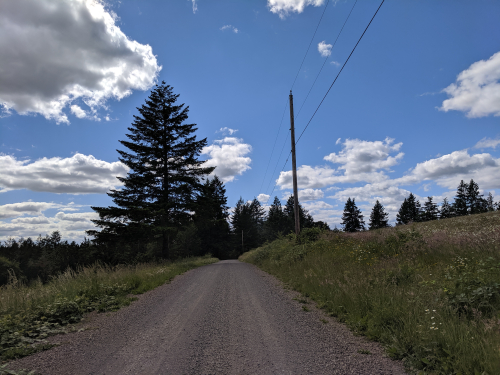
After leaving the pavement, you’ll end up on a gravel road which continues on just long enough for you to question whether you’ve perhaps strayed off the correct path. 

IMG_20190608_152129

You haven’t. You’ve just entered the Ribbon Ridge AVA, and in

Continue Reading A Detour To The Vineyards Of Eminent Domaine

A must-read for takings mavens. Property rights gurus Professor Gideon Kanner and Michael Berger have published a new article, The Nasty, Brutish, and Short Life of Agins v. Tiburon, 50 Urb. Lawyer 1 (2019). It’s the lead article in the latest volume of The Urban Lawyer, the law journal of our Section of the ABA, the Section of State and Local Government Law.

Barista’s note: since TUL ended its long-time editorial relationship with UMKC Law School last year, the journal has been published in-house, and we’ve taken on the role of Editor-in-Chief, in-between our lawyering and teaching day jobs. We recognize the efforts of our ABA editor, as well as our team of volunteer Associate Editors (our fellow lawyers who took on the responsibility of tech editing the pieces) in producing the journal. 

Kanner and Berger have written an informative (and entertaining) tour-de-force of modern regulatory takings law.

Continue Reading New Must-Read Article: Kanner & Berger, “The Nasty, Brutish, and Short Life of Agins v. City of Tiburon”

Our friend and colleague Dwight Merriam recently published this piece about the looming Knick v. Township of Scott decision. Yes, ripeness, and how SCOTUS will treat regulatory takings. We posted our own prognostications here (“Shaka, When The Walls Fell: Yes, Knick Will Be About Takings, But It Will Be More About Federalism“).

Awaiting ‘Knick” … Will SCOTUS Fix the Ripeness Mess?

by Dwight Merraim

The decision in an important takings case, Knick v. Township of Scott, Pennsylvania, reargued Jan. 16, is soon to be released. Be watching for it, because it could have a major impact on how governments regulate land use, and on the willingness of private property owners to challenge government regulation that overreaches. As an added bonus, we will get to see where Justice Brett Kavanaugh may position himself on property rights issues.

The issue is one of “ripeness;” specifically, whether the court should

Continue Reading Merriam: “Awaiting ‘Knick’…Will SCOTUS Fix the Ripeness Mess?”

The Colorado Supreme Court issued an opinion in a case we’ve been following on public use in eminent domain. in which it reframed the Questions Presented.

In Carousel Farms v. Woodcrest Homes, No. 2018SC30 (June 10, 2019), the court reversed the court of appeals’ conclusion that a taking lacked a public purpose because even though the public might use the roads and sewers which the utility district (formed for the specific purpose of taking the property which the private-benefitted developer could not acquire by negotiation) said it would install in the future did not outweigh the overwhelming private benefit in the present. In the Court of Appeals’ words, “[w]hen the primary purpose of a condemnation is to advance private interests, even if there will be an eventual public benefit, the condemnation is not for a public purpose.” 

The Supreme Court turned that analysis upside down, concluding that a

Continue Reading Colorado: A Lot Of Private Benefit Today Does Not Overcome Smattering Of Possible Public Future Benefit

The details are yet to be posted on the web, but mark your calendars now for an upcoming (two weeks from today, on Friday, June 21, 2019) Federalist Society teleforum, produced by the Environmental and Property Rights Practice Group, about an issue that we’ve been following that is the subject of at least three recent cert petitions (two denied, one on the way): whether federal courts can issue preliminary injunctions in takings under the Natural Gas Act which allow private pipeline condemnors to obtain immediate possession of property, even though Congress has withheld the federal quick take power in the NGA.

Stay tuned for the details which will be posted soon. Our speakers will be Chris Johns (Texas) who is preparing the forthcoming petition, and Jeffrey Simmons (Wisconsin), who will present the condemnors’ viewpoint.  We’ll be moderating the program. 

Details on the way. Continue Reading Mark Your Calendars: Federalist Society Teleforum On Preliminary Injunctions In Natural Gas Act Takings: Is “Take Now, Pay Later” Unconstitutional? (Friday, June 21, 2019)

0606191053_HDR

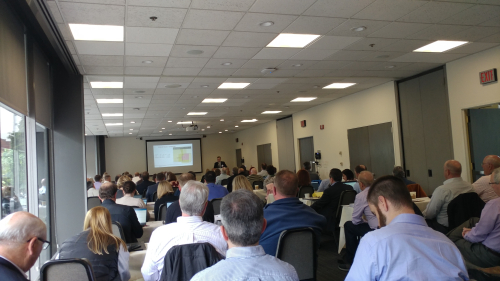
Here are the links to the cases which were not in your materials. Theme of the day: amateurs! 

Our thanks to colleagues Jill Gelineau and Paul Sundermier for asking us to present. It was good to see our Oregon friends again. 


Continue Reading Links From Today’s Portland Eminent Domain Conference

A forthcoming article in the Cornell Law Review (“Virtual Briefing at the Supreme Court“) argues that it’s an “open secret” that the way to influence a SCOTUS case is to hit up social media:

The open secret of Supreme Court advocacy in a digital era is that there is a new way to argue to the Justices. Today’s Supreme Court arguments are developed online: They are dissected and explored in blog posts, fleshed out in popular podcasts, and analyzed and re-analyzed by experts who do not represent parties or have even filed a brief in the case at all. This “virtual briefing” (as we call it) is intended to influence the Justices and their law clerks but exists completely outside of traditional briefing rules.

On the heels of that comes this: a web page and Twitter account devoted (for now) solely to a case we’ve been following that

Continue Reading Twitter Is The New Cream

In Berry v. City of Chicago, No. 1-18-0871 (May 22, 2019), a divided Illinois court of appeals reversed the dismissal of an inverse condemnation claim, holding that even though the potential damage was widespread, the plaintiffs might be able to show that they incurred damage beyond those incurred by the general public.

The case should be interesting to both inverse and straight takings mavens because the court split on how the “public in general” is defined: does it mean, as the majority essentially concluded, everyone served by the alleged condemnor, or (as the dissenting justice concluded) just those who were subject to the action which is claimed to be a taking (or, in eminent domain terms, the project)?

The complaint alleged: 

[T]he City embarked on a project to replace water mains and water meters throughout Chicago. In replacing the water mains and meters, however, plaintiffs allege that the City

Continue Reading How Is “The Public” Defined When It Comes To Special Damages?