February 2020

It’s Friday (and Valentine’s Day), so we’ll make this quick, even thought this is one of those cases with a fact pattern that you just can’t digest quickly: In Day v. Idaho DOT, No. 45552 (Feb. 14, 2020), the Supreme Court of Idaho held that only the property owners at the time of the taking may assert an inverse condemnation claim. That, standing alone (pun intended), is not surprising.

But skip forward to page 7 of the slip opinion where the court determined when the taking occurred (at the time the government action alleged to be a taking — here, an interchange — was “substantially completed,” not on the date the infrastructure project was actually completed):

This begs the following question: When did the taking in this case occur? The district court’s opinion states that “the parties stipulated that the taking occurred on December 5, 1997, when the Isaacs Canyon
Continue Reading Idaho: Only The Owners At The Time Of The Taking Have Standing To Pursue Inverse Claim (Because It Is A “Personal Claim” & Doesn’t Run With The Land)

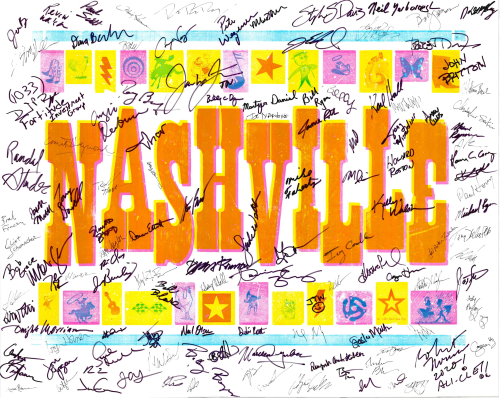
NashvilleALICLEposter

Each of the three big presentation rooms was full at our recent ALI-CLE Eminent Domain & Land Valuation Litigation Conference in Nashville. Nearly 300 lawyers, judges, appraisers, professors, students, relocation experts, and others eminent domain professionals coming together for 3 days of programming and fellowship. I have uploaded all of the photos that I took during the conference here

To celebrate another successful and enjoyable conference, we also signed the above commemorative poster from the famous Hatch Show Print shop which was just down the street.  

Can you locate your signature? (high-res pdf here) If you missed out, you’ll have a chance to join us in January 2021 in Scottsdale

Nashville 2020 ALI-CLE Commemorative Poster (signed) 

Continue Reading Thank You To All Who Joined Us In Nashville For The 37th Annual ALI-CLE Eminent Domain Conference!

A group of property owners acquired several parcels in the Windsor, Ontario (Canada) area over the years, “with the aim of developing the lots for residential purposes.”

The city had other ideas: it wanted the area for a “natural heritage area known as the Spring Garden Complex.” The property owners believed they were entitled to more for the parcels than the city offered, so the city instituted expropriation actions. After some up-and-down in the appeal chain, 

applying the concept which we further south call the “project rule,” the Appeal Tribunal concluded that its task was to determine the value of the expropriated property in the absence of the expropriation. See slip op. at 5 (“The Tribunals’ responsiblity in this case is to assess what impact, if any, the requirements of the PPS would have on the market value of Claimants’ lands if the impacts of the scheme are screened

Continue Reading Highest And Best Use And The Project Rule, Canadian Style

6a00d83451707369e20240a4699139200c-800wi

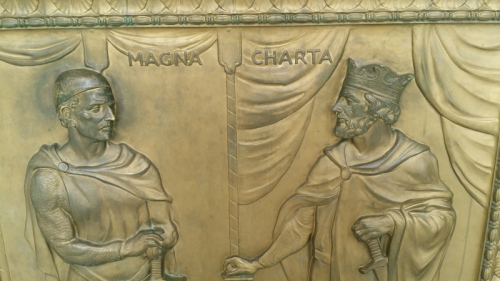
Check out these two amici briefs, just filed in a case we’ve been following, about what a property owner who is awarded just compensation in a state court eminent domain lawsuit is supposed to do if the local government that is ordered to pay the just compensation judgment … doesn’t. 

The property owner sued the local government — a Louisiana Port District — in U.S. District Court, alleging a violation of 42 U.S.C. § 1983. That court dismissed for failure to state a claim. The property owner appealed to the Fifth Circuit. 

Several amici have joined together to file two briefs in support of the property owner: 

The IJ brief focuses on the long-standing requirement that just

Continue Reading Amici Briefs: What Do You Do With A Recalcitrant Condemnor Who Won’t Pay The Judgment? Magna Carta ‘Em!

W Su cover page

Be sure to download and read this article, recently published in the Virginia Law Review by legal scholar Wanling Su with the deceptively simple title, “What is Just Compensation?

The article delves into the history of ad quod damnum and concludes that “just” compensation means a jury must determine compensation. That’s an issue that we’ve addressed here before, but the Supreme Court has declined to decide

Here’s the abstract:

The Supreme Court has held that “[t]he word ‘just’ in [‘just compensation’] . . . evokes ideas of ‘fairness.’” But the Court has not been able to discern how it ensures fairness. Scholars have responded with a number of novel policy proposals designed to assess a fairer compensation in takings.

This Article approaches the ambiguity as a problem of history. It traces the history of the “just compensation” clause to the English writ of ad quod

Continue Reading New Must-Read Article: “What is Just Compensation?” (Wanling Su, Virginia L. Rev.)

You all know the movie trope of the good guy setting off an explosion and then coolly turning and (in slow-motion) walking away framed by the blast (so cleverly parodied above)? Well, here’s the judicial equivalent.

In UGI Sunbury LLC v. 1.75 Acres, No. 18-3126 (Feb. 11, 2020), the U.S. Court of Appeals concluded that in a bench trial to determine valuation for the taking of property for a pipeline easement under the Natural Gas Act, an expert who opined on behalf of the property owner that the proximity of a pipeline to the remainder property resulted in “stigma damages,” should not have been allowed to testify about this “damaged goods” theory. The district court abused its “wide discretion” under Federal Rules of Evidence 702 and Daubert by allowing the testimony. 

Rather than paraphrase the Third Circuit’s reasons for reaching this conclusion that the expert’s testimony was “speculative and subjective,”

Continue Reading Cool Courts Don’t Look At Explosions: Third Circuit Rejects Stigma Damage Theory For Adjacent Gas Pipelines

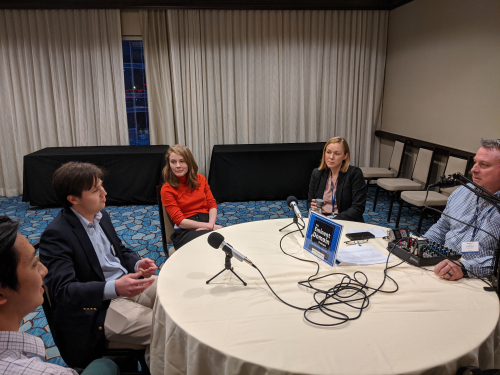
IMG_20200123_170539

L to R: Benming Zhang, Andrew Parslow, Kelsey Abell,
Kacie Couch, Clint Schumacher

At the recent ALI-CLE Eminent Domain and Land Valuation Litigation Conference in Nashville, our colleague Clint Schumacher set up his portable studio and recorded future episodes of his Eminent Domain Podcast. (Barista’s note: Clint was also one of the three featured presenters for Friday’s Ethics panel, and the feedback we’ve been receiving on that program is uniformly excellent.)

Eight of my William and Mary Law School students took several days out of their busy Spring semester schedule to travel to Nashville and participate in-person in the Conference, applying the theories and concepts we learned in the fall semester’s class (Eminent Domain and Property Rights) to the real world of lawyering. (More on their Conference participation in a future post.)

Between sessions, they had a chance to sit down individually and in groups

Continue Reading Eminent Domain Podcast Interviews William & Mary Law Students

Recall that recent Third Circuit decision which held that a private condemnor exercising federal eminent domain authority pursuant to the Natural Gas Act could not sue the State of New Jersey in federal court to take the state’s property for a pipeline? The court based its conclusion on the Eleventh Amendment immunity states enjoy. 

That ruling, however, was no impediment to this recent Order by FERC (Federal Energy Regulatory Commission) which — at least on its face — seems to address the very same question. In the Order, a 2-1 FERC majority concluded that the NGA permits a private condemnor to sue a state in federal court to take its property. For more details on the FERC Order, see “Divided FERC Finds Pipeline Companies Can Seize State-Owned Interests,” by Addisah Sherwood

And what about the earlier ruling by the Third Circuit? Not a problem, according to a majority

Continue Reading Less Meaningful Than The Iowa Caucuses: FERC Invokes Chevron Deference, Rules That Under NGA, Private Condemnors May Take State-Owned Land

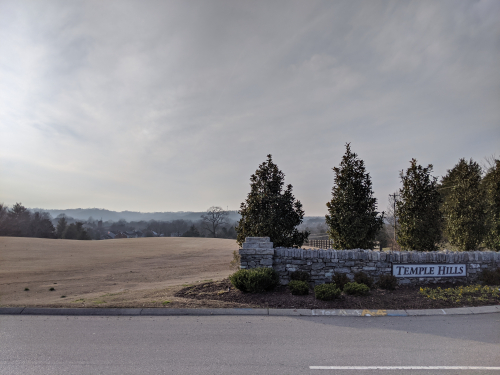
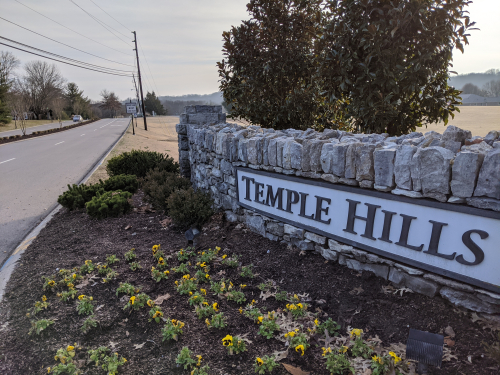
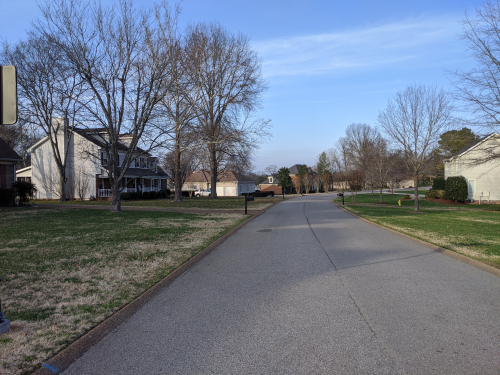
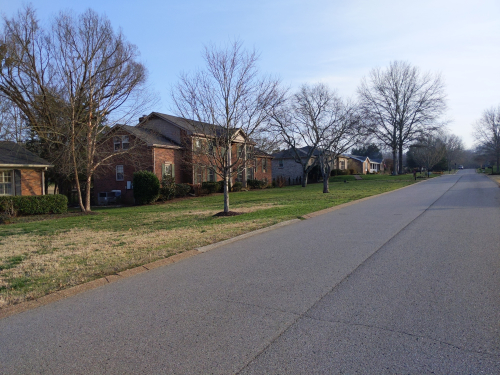
As we briefly noted in this post, before we departed the ALI-CLE Eminent Domain and Land Valuation Litigation Conference in Nashville, we just had to stop by the subdivision that was at issue in the Williamson County litigation. 

Frankly, there’s nothing especially special or noteworthy about this place, and only takings nerds will truly appreciate these pics. But given our propensity to make “takings pilgrimages” to the sites of famous property cases (see here (Claude Monet), here (Loretto), here (Chicago, B & Q RR), here (Dolan), here (Seneca Village), here (High Line), here (Hadacheck), and here (Nollan), for example), we just could not resist. 

So dig it, takings mavens. 

IMG_20200128_155300

There’s a golf course, of course. (There’s always a golf course.)

IMG_20200128_155147_1

“Temple Hills” beats “Glengarry Glen Ross”

PANO_20200128_154217.vr

A panorama of the main drag

IMG_20200128_154406

Up the street 

IMG_20200128_154302

Down the Continue Reading Williamson County, In Pictures

You know how the process is supposed to work. A condemnor exercises its eminent domain power and files a lawsuit to take property for public use. If the owner believes the condemnor’s price is too low, the court adjudicates the just compensation that must be paid. As we know, the point of that lawsuit is to establish the price. If the price eventually adjudicated is too dear (from the condemnor’s perspective), it isn’t required to acquire the property (unless, in some jurisdictions, it has taken advantage of the quick-take or immediate possession process). But if the condemnor wants the property, it must pay the adjudicated compensation. So far, so good.   

But what about those cases where the court adjudicates the price the condemnor must pay to acquire the property, and the condemnor actually takes the property — but the condemnor does not actually pay the compensation adjudicated by the

Continue Reading Does A Property Owner Have A § 1983 Claim If A Condemnor Doesn’t Pay A Just Comp Judgment In A Reasonable Time?