2020

Here’s the recording of last week’s program we did for the King Kamehameha V Judiciary History Center, “Constitutional Law and States of Emergency: Lessons from Hawaii’s Judicial History for the COVID-19 Pandemic.”

Links to the cases and other materials we referred to in the presentation are posted here.

Tomorrow, we’ll be joining Honolulu lawyer Jeff Portnoy, and Dr. Keli‘i Akina for a free, open-to-the-public program sponsored by the Grassroot Institute of Hawaii, “Lockdowns, testing and tracking: Are they all really legal?

Jeffrey Portnoy and Robert Thomas will talk about what we can expect as the state and counties slowly lift their seemingly endless stay-at-home orders, which have discriminated between “essential” and “nonessential” workers, mandated “social distancing” and mask-wearing, and imposed 14-day quarantines on arriving airport passengers, both tourists and residents returning home.

During the hourlong event, Portnoy and Thomas will consider whether businesses destroyed or

Continue Reading Judiciary History Center Program Recording: “Constitutional Law Lessons from Hawaii’s Judicial History for the COVID-19 Pandemic”

It’s been a long week, and it’s Friday with a filing coming up. So we’re not going to spend a lot of time digesting the Federal Circuit’s opinion in Alford v. United States, No 19-1678 (June 19, 2020). Plus, it is a short one (11 pages) that makes one major point.

Short story: after an unusual amount of rain, to save a levee from a predicted 95% chance of breach, the Corps of Engineers decided to raise the normal levels of Eagle Lake, causing damage to the plaintiffs’ lakefront properties. Their land was flooded for three months. The CFC agreed this was a taking, and awarded $168,000 in just compensation.

The Federal Circuit reversed (opinion by Judge Dyk, are you that surprised?). The court held that on the whole, the property owners should be grateful that the Corps flooded their lands, because the “relative benefits” doctrine. If the government

Continue Reading Federal Circuit: Be Grateful Your Property Was Flooded (It Could Have Been Worse)

KamV Jud History Center

Here are the links and other materials which we spoke about in this afternoon’s program for the King Kamehameha V Judiciary History Center, “Constitutional Law and States of Emergency: Lessons from Hawaii’s Judicial History for the COVID-19 Pandemic.”

“Emergency does not create power. Emergency does not increase granted power or remove or diminish the restrictions imposed upon power granted or reserved. The Constitution was adopted in a period of grave emergency. Its grants of power to the federal government and its limitations of the power of the states were not determined in the light of emergency and they are not altered by emergency. What power was thus granted and what limitations were thus imposed are questions which have always been, and always will be, the subject

Continue Reading Links And Materials From Judiciary History Center Program: Constitutional Law and States of Emergency: Lessons from Hawaii’s Judicial History for the COVID-19 Pandemic

Supreme Court of the Kingdom of Hawai‘i

M. GIBSON, PRESIDENT BOARD OF HEALTH,

    v.

THE STEAMER MADRAS.

JANUARY TERM, 1884.

February 26, 1884.

APPEAL FROM DECISION OF JUDD, C. J., IN ADMIRALTY.

JUDD, C. J., MCCULLY and AUSTIN, JJ.

OPINION OF THE CHIEF JUSTICE.

The decision of the Chief Justice, appealed from, was as follows:

This is a libel in admiralty by the President of the Board of Health of the Hawaiian Kingdom against the steamer Madras, whereof W. H. Bradley is master, filed on the 12th of June. Attachment was made on the same day. On the filing of a bond, deemed sufficient by the libellant, the vessel was released from attachment.

The libel recites, in substance, that the steamship Madras arrived at the port of Honolulu on the 8th of April, 1883, upon a voyage from Hongkong, in China, with 745 Chinese passengers, of whom 600, more

Continue Reading Gibson v. The Steamer Madras, 5 Haw. 109 (1884)

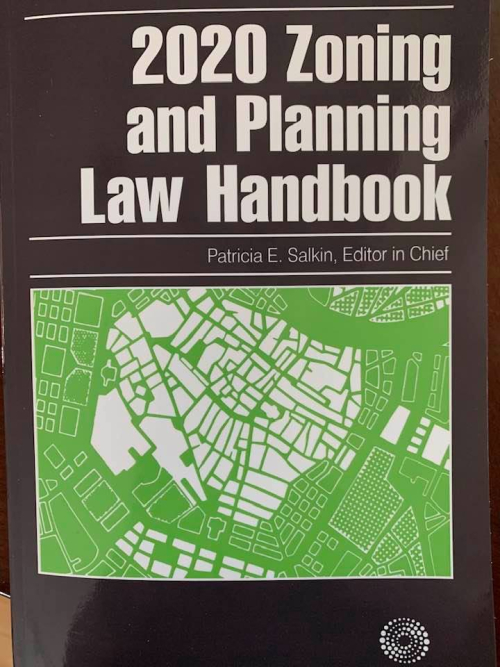
104481738_2170057539806372_2938554143515873721_nphoto: Patricia Salkin

Just published: the 2020 Zoning and Planning Law Handbook (Green Book). The first section of the Summary of Contents is about Takings, and includes as the lead piece Professor Gideon Kanner and Michael Berger’s tour-de-force article, “The Nasty, Brutish, and Short Life of Agins v. City of Tiburon.” It also includes my articles on Murr, “Restatement (SCOTUS) of Property: What Happened to Use in Murr v. Wisconsin?”

Check it out. The Green Book is a one-stop shop for the best articles on land use in a given year, and this edition includes chapters on housing, agriculture, cell tower placement, RLUIPA, and (of course) zoning.

Our thanks to Dean Patty Salkin who edited the volume for including us.

Summary of Contents, 2020 Zoning and Planing Law Handbook (Green Book)

Continue Reading Available Now: 2020 Zoning and Planning Law Handbook (Green Book)

One more to add to your reading queue. The latest complaint alleges, among other claims, that the Illinois governor’s coronavirus shut down orders for businesses deemed “non-essential” result in takings. 

The list of similar challenges keeps growing. See here, here, here, here, here, here, here, here, here, here, here, here and here, for example. The longer this thing goes on, the more like this we’re going to see.

join us later today, Wednesday, June 16, 2020 at 5:30pm Hawaii Time, when we’ll be speaking about this question in a program for the King Kamehameha V Judiciary History Center (open to the public, more details here). Our thoughts on the takings aspects of the shutdowns orders: Evaluating Emergency Takings: Flattening The Economic Curve.

Complaint at Law, Nowlin v. Pritzker, No. 1:20-cv-01229-MMM-JEH (C.D. Continue Reading The Hits Keep Coming: New Complaint Alleges Illinois’ Lockdown Order Is A Taking

Here’s the latest lawsuit challenging a government’s response to the coronavirus pandemic. This one challenges the California Judicial Council’s Emergency Rule 1, which indefinitely closed the courthouse doors to eviction proceedings (what California calls “unlawful detainer”).

This one does not employ a takings rationale, but takes a separation-of-powers approach. It’s concisely drafted, so we recommend you read the entire document. 

Here’s the Introduction:

On April 6, 2020, the California Judicial Council responded to the coronavirus pandemic by issuing 11 emergency rules of court. Among these was Emergency Rule 1 (“ER 1”), which violates the fundamental rights of property owners by indefinitely suspending their right to initiate unlawful detainer actions. The rule creates the perverse incentive for all tenants, whether they face financial hardship or not, to refuse to pay their rent during the crisis. And it immunizes from eviction even tenants who create nuisances, damage property, conduct illegal activity

Continue Reading New Lawsuit Challenges California’s Indefinite Eviction Moratorium

Sorry

Update: our thoughts on the Hawaii-law claims in this article, “Hoist the Yellow Flag and Spam® Up: The Separation of Powers Limitation on Hawaii’s Emergency Authority,” 43 U. Haw. L. Rev. ___ (forthcoming 2020).

+++++++++++++

Here’s the second complaint filed in the U.S. District Court for the District of Hawaii challenging the governor’s coronnavirus shut down orders. Back in March, the governor issued a proclamation declaring an emergency, and since then has issued nine “supplemental” declarations, re-upping the end date which is now the end of July). Here’s the first complaint (in that case, the plaintiffs dropped their request for a TRO, and the court has scheduled a hearing on a motion for preliminary injunction for June 26, 2020).

There’s a Fifth Amendment claim (sorry, not a takings claim, but a right to travel), as well as a host of federal constitutional claims (due process, equal protection, section

Continue Reading New (Hawaii) Complaint: Coronavirus Orders Violate Right To Travel, Equal Protection, Due Process (And More)

MVIMG_20191108_125325

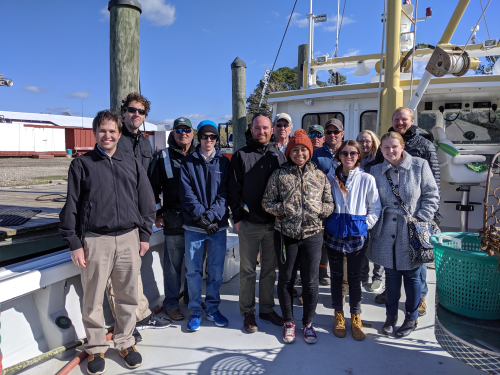
Here’s the latest in a case we’ve been following (we visited the site last November with our William and Mary class), the property owners’ Opening Brief in  a case being considered by the Virginia Supreme Court.

This is a case at the intersection of property and takings law, and environmental protection. Several Nansemond River oystermen own a lease from the state for the riverbed, which among other things, allows them to harvest some of the oysters that Virginia is so well known for. But they were forced to bring an inverse condemnation claim in state court, asserting that the City’s dumping of wastewater in the river — and prohibiting the harvesting of oysters during those times — was a taking under the Virginia Constitution’s taking or damaging clause (article I, § 11).

The trial court sustained the City’s demurrer, accepting the City’s argument that it has the right to

Continue Reading Property Owners’ Brief In Virginia Supreme Court “Oyster Takings” Case

Here’s the latest complaint challenging coronavirus-related orders (in this case, the City of Los Angeles’ rent payment and eviction moratoria) as a taking.

More here from the LA Times: “Landlord group sues city of L.A. over coronavirus anti-eviction protections.”

You should probably read the entire document, as it is drafted well. But it is long (48 pages – it even has a Table of Contents and a Table of Authorities), so here are the key parts of the Introduction in case you don’t have time to digest the whole complaint:

1. In the wake of the novel coronavirus, Defendants City of Los Angeles, City Council of the City of Los Angeles, and Mayor Eric Garcetti (collectively “City” or “Defendants”) hastily instituted a series of ordinances which prohibit lessors and landlords, such as Plaintiff’s members, from exercising their contractual remedies where tenants refuse to pay rent on the

Continue Reading New Fed Ct Complaint: Coronavirus Rent Freeze And Eviction Moratorium Is A Taking